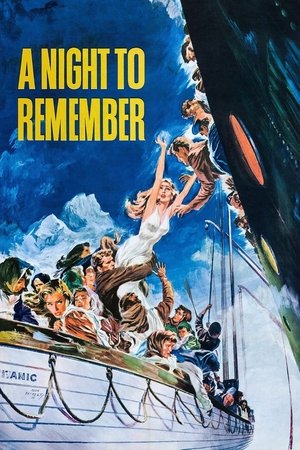
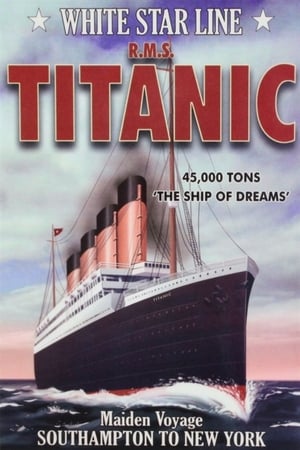
The sinking of the Titanic is presented in a highly realistic fashion in this tense British drama. The disaster is portrayed largely from the perspective of the ocean liner's second officer, Charles Lightoller. Despite numerous warnings about ice, the ship sails on, with Capt. Edward John Smith keeping it going at a steady clip. When the doomed vessel finally hits an iceberg, the crew and passengers discover that they lack enough lifeboats, and tragedy follows.
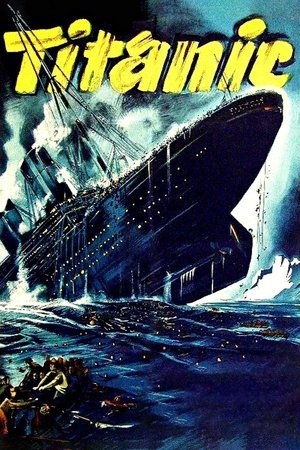
In 1912, the Titanic embarks on its inevitable collision course with history. In the wake of the over-spending required to build the largest luxury ship in the world, White Star Line executive Sir Bruce Ismay schemes to reverse the direction of his company's plummeting stock value. Onboard the Titanic, brave German 1st Officer Petersen struggles to convince his self-important British superiors not to overexert the ship's engines.
Documentary about the preservation of Brazilian films on celluloid.
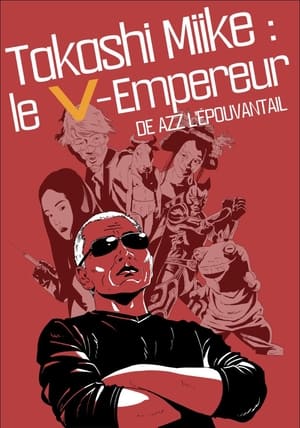
Takashi Miike is a cinema monster. Let's return to his filmography, his main themes, the framework of his monumental universe.
In 1967, Luiz Sergio Person and Jean-Claude Bernardet wrote the screenplay for Hora dos Ruminantes ("The Hour of the Ruminants"), which was never filmed. Os Ruminantes ("The Ruminants") tells this story—about Brazilian cinema in the 1960s and 70s and the political issues surrounding it.
Schauburg Mon Amour
A contemporary history of Korea(s) from a unique point of view that embraces the inner history of both South and North Korea in a single narrative.
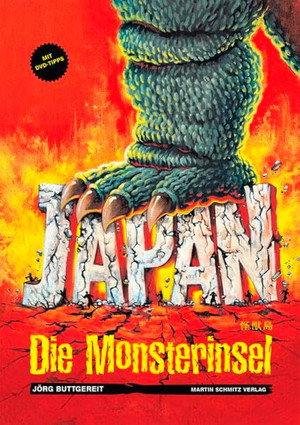
Jörg Buttgereit, a lifelong fan of Japanese monster movies, as he travels to Japan to explore the world of Kaijū cinema — including iconic figures like Godzilla and Gamera.
Mein Besuch in Nordkorea
The chronicle of Ugandan dictator Idi Amin and his tyranic rule from 1971 to his overthrow in 1979.
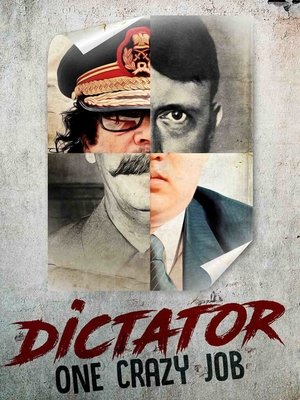
They’ve become the human face of inhuman barbarity. Leaders like Hitler, Idi Amin Dada, Stalin, Kim Jong Il, Saddam Hussein, Nicolae Ceausescu, Bokassa, Muammar Kadhafi, Khomeini, Mussolini and Franco governed their countries completely cut off from reality. These paranoid leaders were driven to abuse their power by the pathology of power itself. Dictators are driven by a relentless, thought-out determination to impose themselves as infallible, all-knowing and all-powerful beings. But they are also men ruled by their caprices, uncontrollable impulses, and reckless fits of frenzy, which paradoxically render them as human as anyone else. The abuses they committed were clearly atrocious, yet some of them were as outlandish as the characters portrayed in the film The Dictator. They sunk to depths worthy of Kafka: so incredibly absurd, they are outrageously funny.
From 1950 to 1953, one hundred thousand children were orphaned by the Korean War. With no resources to mend the wounds, the two sides, North and South, took different paths to find homes and families for the war orphans. While the children of South Korea were sent to Europe and the United States through ‘International Adoption’, the children of North Korea were distributed across Eastern Europe through a method called ‘Commissioned Education’. As a result, more than five thousand children from the North had to spend nearly a decade living in foreign lands across Eastern Europe. This story is a record of their lives, which used to be kept hidden from the rest of the world. There is a key to understanding how North Korea's closed political structure began and how the ‘Juche ideology’ was formed in this documentary movie. Understanding North Korea in the 1950s is an important way to understand North Korea at present.
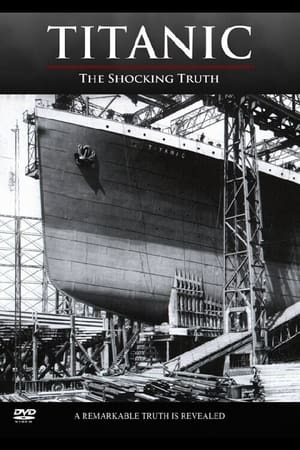
TITANIC: THE SHOCKING TRUTH explores the conspiracy theory that the Titanic never sank to the bottom of the Atlantic/. Evidence is documented to support the theory that the Titanic and her sister ship, the Olympic were swapped and the weakened Olympic tragically sank. Were White Star Line and the British government responsible for possibly one of the greatest frauds and sea tragedies in living history?
Having been granted special permission to film inside one of the most secretive countries in the world, Britain's fastest snowboarder sets off to experience first hand this country we know so little about.
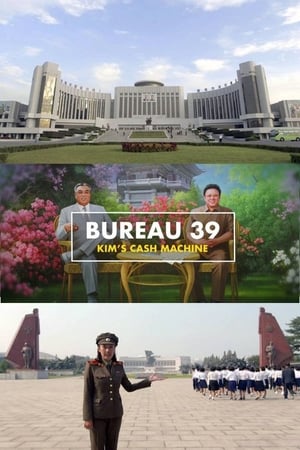
How is it possible that North Korea, one of the poorest countries on earth finances a nuclear weapons program large enough to challenge the USA? The answer: Bureau 39, a legendary organization nestled deep inside the government apparatus. Its aim is to procure foreign exchange by any means possible to provide Kim Jong-un’s regime with money.
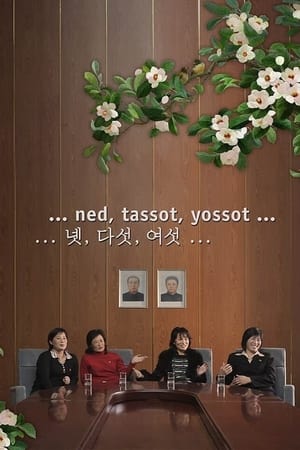
About five years after her film, Hana, dul, sed ... (2009), filmmaker Brigitte Weich returns to North Korea to ask four women on the national football team how their lives have evolved. In a friendly and congenial cooperation between the filmmaker and her protagonists, a work arises that not only tells about the concrete life of a professional athlete in North Korea, but also poses the question of the images that we all make of ourselves to give meaning to our lives and the world.
Amarás al líder sobre todas las cosas
On April 10, 1912, the RMS Titanic embarked on its maiden voyage, sailing from Southampton, England, to New York City. One of the largest and most luxurious passenger liners at the time, the Titanic was also equipped with watertight compartments, which led many to consider the ship unsinkable; an anonymous deckhand famously claimed that “God himself could not sink this ship.” On April 14, however, the ship struck an iceberg, and early the next day it sank. Some 1,500 people perished.
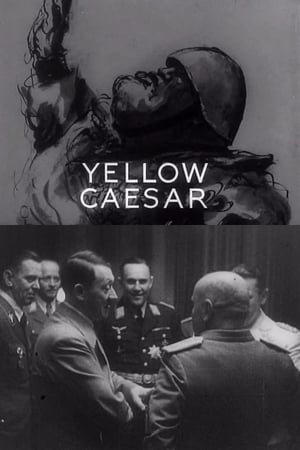
Using edited archive footage, mockery is made of Italy's dictator Benito Mussolini.
At the end of the last civil-military dictatorship, a camouflage operation took place in the Information Service, an office of the former Rosario Police Headquarters that operated as a clandestine detention center in the heart of the city. This architectural intervention, not recorded in the plans, obscures the survivors' accounts and hides the traces of crimes against humanity. Drawing on images, previously unpublished archives, and survivor testimonies, the documentary explores the scars of political repression and highlights the importance of preserving memorial spaces to ensure the transmission of fundamental events in our contemporary history.