Uncover the insidious ways in which our daily lives are being surveilled by the state. In a gripping chase, Ronan Farrow travels across the world following breadcrumbs and finally exposing a dark world of spywares, hacking, and peddling of private information, where activists and journalists are persecuted, and no one is protected from the watchful and vicious eyes of authoritarianism.
Gaza Fights for Freedom depicts the ongoing Great March of Return protests in the Gaza Strip, occupied Palestine, that began in 2018.
Over the past few years, Israel's ongoing military occupation of Palestinian territory and repeated invasions of the Gaza strip have triggered a fierce backlash against Israeli policies virtually everywhere in the world—except the United States. This documentary takes an eye-opening look at this critical exception, zeroing in on pro-Israel public relations efforts within the U.S.
The inside story of the bitter clash between President Obama and Israeli Prime Minister Netanyahu. Amid violence in the Middle East, the film traces Netanyahu's rise to power and his high-stakes fight with the president over Iran's nuclear program.
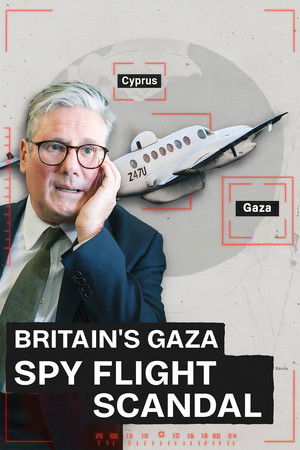
This feature length investigation by Al Jazeera’s Investigative Unit exposes Israeli war crimes in the Gaza Strip through the medium of photos and videos posted online by Israeli soldiers themselves during the year long conflict. The I-Unit has built up a database of thousands of videos, photos and social media posts. Where possible it has identified the posters and those who appear. The material reveals a range of illegal activities, from wanton destruction and looting to the demolition of entire neighbourhoods and murder. The film also tells the story of the war through the eyes of Palestinian journalists, human rights workers and ordinary residents of the Gaza Strip. And it exposes the complicity of Western governments – in particular the use of RAF Akrotiri in Cyprus as a base for British surveillance flights over Gaza.
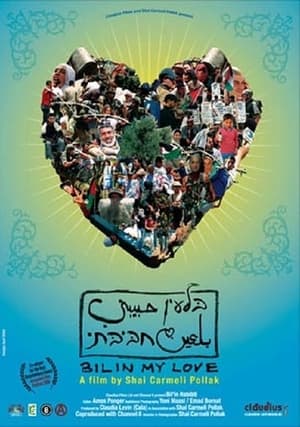
The Israeli filmmaker Shai Corneli Polak records the building of the 'security wall' through Palestinian territory at the village of Bil'in. The villagers protest mostly peacefully, while the Israeli army doesn't react peacefully. By now the Israeli High Court has ruled that the building of the wall was illegal.
The Killing Roads is a gripping documentary that exposes the terror unleashed on October 7, 2023, when Hamas launched coordinated attacks across the roads of southern Israel. Through raw, unfiltered stories from victims, survivors, and first responders, the film reveals the unimaginable violence that turned Israel’s peaceful roads into scenes of horror.
Writer-actor Aaron Davidman embodies seventeen different characters in and around the sacred city of Jerusalem as he takes us on an eye-opening journey into the heart of the Israeli-Palestinian story. Exploring universal questions of identity and human connection, the film is about one man's effort to embrace a multiplicity of conflicting viewpoints, chronicling a brave exploration of the complex humanity at the heart of one of the world's most troubling conflicts.
When many people think of Israel, it is often in terms of modern war or ancient religion. But there is much more to the Jewish state then missiles and prayers. In his debut as a documentary filmmaker, adult-film entrepreneur and political columnist Michael Lucas examines a side of Israel that is too often overlooked: its thriving gay community. Undressing Israel features interviews with a diverse range of local men, including a gay member of Israel's parliament, a trainer who served openly in the army, a young Arab-Israeli journalist, and a pair of dads raising their kids. Lucas also visits Tel Aviv's vibrant nightlife scene-and a same-sex wedding-in this guided tour to a country that emerged as a pioneer for gay integration and equality.
After Hamas kidnapped 251 people from Israel on October 7, and as Israel’s war in Gaza unfolded, a conflict thousands of miles away erupted on New York’s walls. TORN captures the emotional fallout of the now-iconic “KIDNAPPED” poster campaign - a grassroots act of solidarity that quickly became a flashpoint, igniting fierce confrontations between pro-Israel and pro-Palestinian New Yorkers. Through the voices of artists, activists, and hostage families, the film unpacks the motivations behind those putting up and tearing down the posters, exposing a complex proxy war fought in stickers, slogans, and torn paper. By revealing how a distant war fractured daily life in one of the world’s most diverse cities, the film forces a reckoning with identity, free speech, and empathy in an age of polarization.
Since the start of Operation Iron Sword, provoked by Hamas’ attack on Israel, conditions in Gaza have become apocalyptic. After months of offensive, most of the territory is an uninhabitable field of ruins. 1.5 million people are displaced, forced to constantly relocate by the advancing Israeli army. Barely a third of the hospitals are functioning. According to Unicef estimates, a child is injured or killed every 10 minutes in Gaza.
It's war. War against an invisible enemy that is not as deadly as we are told. The world is changing rapidly. Disproportionate measures are taken worldwide that disrupt society as a whole. A dichotomy in society forced vaccinations and restrictions on freedom. Have we had the worst? Or is there something more disturbing to awaiting us.
October 7, 2023 was one of the deadliest days of fighting ever in Israel, with around 1,200 people killed after Hamas launched its attack and 250 taken hostage – many of whom have either died in captivity or not yet released. The project features testimony from four victims and first responders, who witnessed the massacre and its aftermath: a farmer who helped rescue young people, a young survivor of the Nova music festival who took refuge in a shelter only to witness friends being murdered, an ultra-orthodox musician who volunteered to identify victims, and a mother whose son was kidnapped and taken to Gaza. A sentence uttered by the musician, who had seen 100 dead bodies in a single day, was the inspiration behind the title.
An Israeli film director interviews fellow veterans of the 1982 invasion of Lebanon to reconstruct his own memories of his term of service in that conflict.
Paper Dolls follows the lives of transgender migrant workers from the Philippines who work as health care providers for elderly Orthodox Jewish men and perform as drag queens during their spare time. It also delves into the lives of societal outcasts who search for freedom and acceptance.
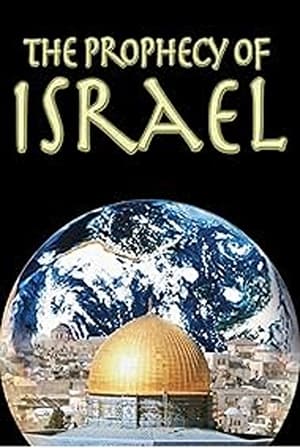
Bible expert Bill Gallatin explores biblical prophecies from the Book of Revelation that have transpired, with a discussion of whether these events signify that we are now living in the End Times preceding the return of Jesus Christ. Gallatin touches on events such as the increasingly acute difficulties in the Middle East, numerous environmental catastrophes, earthquakes and more, explaining how they connect to scriptural writings.
During May 2001, Chilean filmmaker Miguel Littin traveled through historic Palestine, documenting everyday life amid the war—more precisely, the existential distance between a child throwing stones with a slingshot and tanks filled with artillery.
The inside story of the Palestinian-Swedish band Kofia, told through film and music. Singer-songwriter George Totari fled Palestine during Israel's 1967 war and founded a band dedicated to liberation. Bringing the sounds and struggles of the Palestinians.
On October 7, 2023, Hamas inflicts its biggest military defeat on Israel since 1948. The myth of the invincibility of the Israeli Defense Forces is cracking. What happens in this army that thought it was prepared for anything? Senior commanders and soldiers emerge from the shadows and tell the story of Zahal– and their own at the same time.
Following the October 7th massacre and allegations that UNRWA staff were involved in the kidnappings, the agency made headlines around the world. Israel enacted legislation to suspend cooperation with UNRWA, despite the ongoing humanitarian crisis in Gaza. The film presents a historical examination of UNRWA’s role—a temporary agency, initially mandated to resolve the refugee crisis following the 1948 war, which has never ceased its operations and, after 75 years, continues to perpetuate generations of refugees