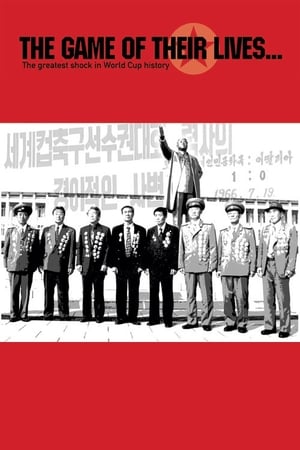
A BBC documentary producer is given unprecedented access in North Korea to chronicle the story of the famed 1966 World Cup team from the North that advanced to the quarterfinals. The feature includes interviews with surviving members of the team, English fans and soccer pundits who saw the North Koreans upset Italy, 1-0.
An anti-western propaganda film about the influences of American visual and consumption culture on the rest of the world, as told from a North Korean perspective.
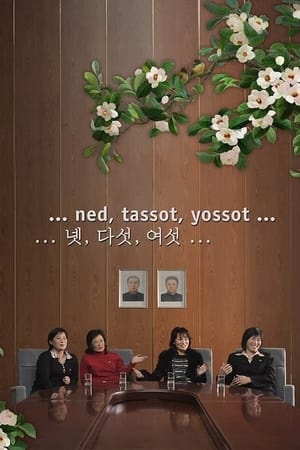
About five years after her film, Hana, dul, sed ... (2009), filmmaker Brigitte Weich returns to North Korea to ask four women on the national football team how their lives have evolved. In a friendly and congenial cooperation between the filmmaker and her protagonists, a work arises that not only tells about the concrete life of a professional athlete in North Korea, but also poses the question of the images that we all make of ourselves to give meaning to our lives and the world.
The engrossing one-hour special uses evocative archive and a cast of charismatic political experts and former members of Trump's administration, to unpick how, in just 140 characters, Twitter has changed the way political communication takes place in the US. It is the story of a social medium platform and the first social media president, which reveals how both Twitter and Trump have grown their brands at the same speed over the course of the last decade. Each tweet is a window into the context of our times, and the mind of Donald J. Trump. In chronological order, they take us on a journey into some of the most important stories, events and issues of the modern world - an election result that polarized a country, the first ever meeting of a US president with a North Korean leader, immigration, pandemics, race relations, impeachment, and the 2020 presidential race.
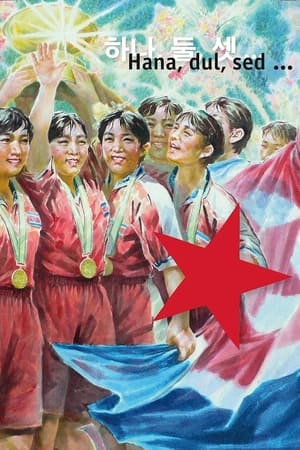
A film about four young women in Pyongyang who share a passion for football. The documentary follows their journey from national team players to retirement, highlighting their friendship and the impact of football on their lives.
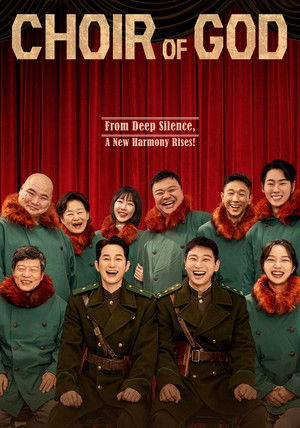
North Korea, facing international sanctions, seeks assistance from a Hungarian NGO to build churches in Pyongyang as a way to bypass the sanctions. The NGO proposes organizing a revival meeting with international Choir organizations, leading the Ministry of 5 Securities to apprehend believers. The "Victory Orchestra," a replacement ensemble, is actually composed of underground Choir members. As they sing hymns openly for the first time, their true identity as underground believers is revealed, creating moments of laughter, tears, and emotion.
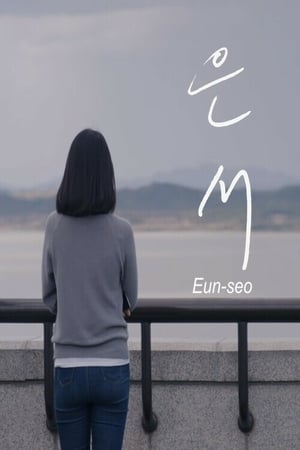
North Korean Refugee Eunseo has been living in South Korea for 20 years. Now she is almost South Korean. No one knows she came from North Korea. Then her mother, who has been out of contact, comes to South Korea, and gets to live with her. People get to know that Eunseo came from North Korea, and Eunseo starts to feel uncomfortable with her mother.
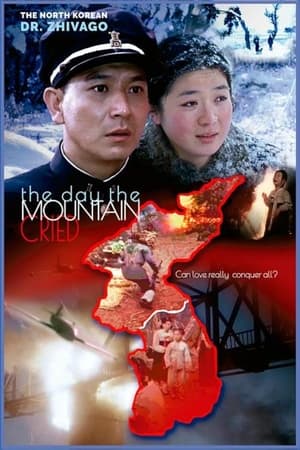
In 1950s North Korea, during the war with South Korea, Son-a, a stunningly beautiful young girl, saves the life of Il-kyu, a wounded soldier left behind after a brutal battle. Despite being thrown together by tragic circumstances, the innocent young lovers' relationship blossoms, only later to be cruelly severed due to being born into opposing sides of a fight. When Il-kyu leaves to save his mother, he promises to return and Son-a waits for him for a lifetime. Separated by war and countries between them, broken hearted Il-kyu tries everything to return to her in the North. But political realities between the countries make their reunion impossible. As the years go by and their youth slips away, Il-kyu finally gets an unexpected opportunity to fulfill his wish and return to her.
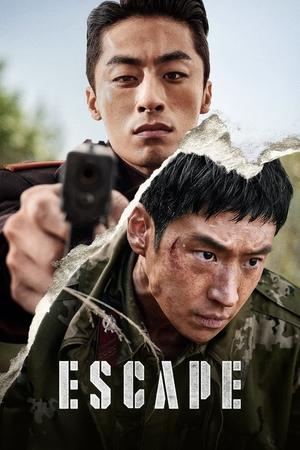
After completing his required decade of military service and being honored as a hero, a North Korean sergeant makes a sudden shocking attempt to defect to the South, risking life and limb for the chance to finally determine his own destiny.
A film about a bulldozer driver who worked hard in reorganizing and developing the land in Hwanghae-namdo to make up for his father's wrongdoings during Korean War, and finally became a member of the Korean Workers' Party (Chosŏn Nodongdang) in North Korea.
After defecting from North Korea, Loh Kiwan struggles to obtain refugee status in Belgium, where he encounters a dejected woman who has lost all hope.
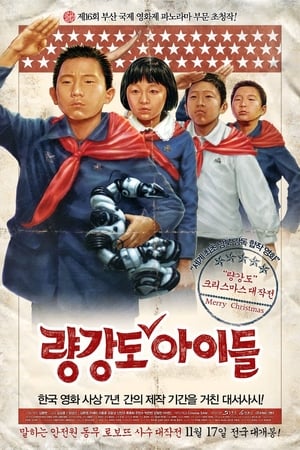
When a boy from North Korea finds a unique Christmas gift sent up from South Korea, he suddenly becomes the most popular child in his small town. But how long will it take for his new toy to attract the wrong kind of attention?
North Korea Animation that teaches the importance of learning Geometry.
A backstage and on-stage look at Nicki Minaj's career during the Pink Friday Tour, festivals, and more.
Throughout history, regimes have used terror attacks as a means of control over their populations, and for the last 100 years, Western governments have employed the same measures.
2 Degrees is about nothing less than the fight for the health of the planet we call home. The abstract idea of climate change is explored through the weaving of real and emotional journeys an audience can relate to. Our characters battle to mitigate the potential disasters of climate change and fight for climate justice, for it will be the developing world that bears the brunt of our profligacy and short sightedness. While An Inconvenient Truth alerted us to the problems facing the earth, 2 Degrees is the gripping and vital fight for a solution.
Von Haider zu Hader
During the more than a quarter of a century that her husband spent in jail, Winnie Mandela was persecuted by the white authorities, first to put pressure on her husband, and then because she developed as a leader in her own right. Under enormous constraints, Winnie Mandela slowly developed a heroic public relations campaign that kept Nelson's image alive, and the attention of the world on South Africa.
Documentary made as part of the exhibition “Materiais de Construção” (FCG, 1998). The exhibition's curator, Jorge Molder, and the participating artists, Markus Raetz and Pieter Laurens Mol, are interviewed. Topics such as the artists' biography and the works presented are covered. Includes images from the exhibition (CAM Gallery and Hall).
Hollywood film music has its roots in Europe. Three composers who fled war and National Socialism to the USA created the sound that still shapes film music today: Erich Wolfgang Korngold, Max Steiner and Franz Waxman. In the early 20th century, these classically trained composers transformed the methods acquired in Vienna and Berlin into a new American art form: film music. They balanced the relationship between image and sound and developed techniques and dramaturgical tricks to achieve the greatest possible effect on the viewer. Their influence is visible in the work of contemporary US composers such as John Williams and Jerry Goldsmith. Today, Oscar winner Hans Zimmer, Ramin Djawadi and Harold Faltermeyer continue this tradition. Their melodies are part of humanity's collective memory and reflect the combined traditions of European and American musical history. The documentary accompanies composers in their work and explores the European roots of Hollywood.