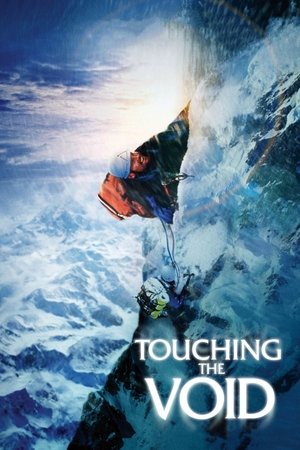
The true story of Joe Simpson and Simon Yates' disastrous and nearly-fatal mountain climb of 6,344m Siula Grande in the Cordillera Huayhuash in the Peruvian Andes in 1985.
Focuses on an open-pit mining operation. Shows huge haulage trucks, pointing out existing and potential hazards involved in their operation. Re-enacts common accidents, explains their causes and outlines the steps necessary to prevent their re-occurrence.
Information film about freeways, their interchanges, and driving safely on them.
The film emphasizes the importance of safety when using power tools in a workshop. It outlines key safety practices, such as using guards, securing materials, and wearing protective gear like safety glasses. The film also covers specific tool usage tips, including the correct handling of cutting machines, drills, grinders, and lathes, stressing that safety precautions should never be neglected. Proper maintenance and awareness of tool settings are crucial to prevent accidents.
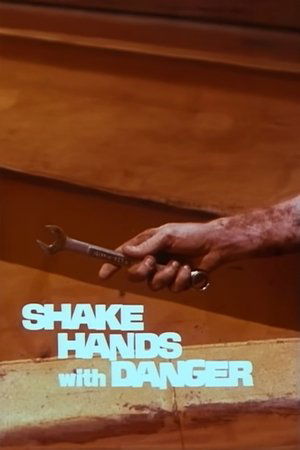
The film emphasizes the importance of safety when using hand tools in a workshop. It discusses the significance of keeping tools sharp and in good condition, proper handling techniques, and the need for safe storage. The film also covers guidelines for using specific tools like saws, chisels, screwdrivers, and wrenches, highlighting the dangers of using dull or damaged tools. Additionally, it stresses the importance of maintaining a clean and organized workspace, wearing appropriate protective gear, and being aware of one’s surroundings to prevent accidents.
This color educational film is a driver's safety film about city driving. There is no copyright at the beginning or end of the film so the date of the production appears to be the mid to late 1970s.
This late 1940s/early 1950s rather graphic color film about carelessness and safety operating heavy machinery is presented by Caterpillar.
A series of interviews with students living in London reveals the dangers present in the capital's nightlife.
Dramatizes the plight of a young adventure seeker whose canoe is capsized by a wall of water during a flood. Shows community flood preparations, pointing out that a flood's predictability usually allows ample warning time to save lives. Designed to stimulate discussion on civil preparedness for floods
Intercuts scenes from Jack London's To build a fire with modern urban and rural winter scenes to point out the dangers of winter storms and low temperatures. Designed to stimulate discussion on civil preparedness for winter storms.
Portrays the challenges of creating a film about nuclear disaster amid public apathy. It captures behind-the-scenes moments as the crew discusses the gravity of nuclear threats, the importance of preparation, and the emotional impact of a nuclear attack. The narrative emphasizes the need for individuals to take responsibility for their safety and community in the event of an attack, blending factual information with a call to action.
A surrealistic look at the future if man does not learn to control pollution.
Released by the Defense Civil Preparedness Agency in 1972, Your Chance to Live is a series of films which cover threatening events, from forest fires, to floods, tornadoes and nuclear disasters. Hurricane tells the story of two parents who revisit the beach town where their children were killed in a violent storm the previous summer.
The film highlights the dangers of extreme heat and the importance of staying hydrated and cool. It portrays a conversation between two friends, one of whom insists on playing basketball despite the oppressive heat. The narrative emphasizes that heat-related illnesses can be avoided by recognizing the body's signals and taking necessary precautions, such as drinking water and staying indoors. The film concludes with a report of record-breaking temperatures, underscoring the seriousness of heat exposure.
The Defense Civil Preparedness Agency began an informational campaign in 1972 called Your Chance to Live. As part of the campaign, a series of films was released along with a companion book. Each installment covers a different disaster scenario, including tornadoes, blizzards, earthquakes, forest fires, blackouts and a nuclear disaster. The California Department of Education helped produce the films and hosted a workshop of educational professionals to discuss the best ways to present the desired emergency preparedness information to school age audiences. The process was filmed and assembled, along with clips from each production, and distributed as an Instructor's Guide in 1975.
This 1974 film is dedicated by the Chlorine Institute to the public interest. It is specifically intended to assist firefighters and other emergency services. The techniques demonstrated are appropriate for emergency use; different circumstances might require modified or additional procedure. The information is drawn from sources believed to be reliable. The Institute, its members any organizations cooperating in the development of this film, jointly or severally, cannot be responsible for how the information is used and must make this legal disclaimer. This is a 1960s era, color movie about Chlorine and emergency workers… specifically, firefighters. The film is intended to show firefighters what chlorine is, what a chlorine emergency might involve, how a company can plan ahead and how an emergency can be handled safely.
“The Mystery Crash” discusses the dangers of drinking and driving especially as it pertains to the seemingly harmless “social drinker.” This film was produced by Jack Lieb Productions Inc, Chicago and sponsored by the National Safety Council. It is part of a series of films, with each episode describing a different element of driving and road safety.
The movie explores the origin of the Ukrainian language and persecution of those who defended its authenticity. Using examples of other countries, creators of the film prove that a nation cannot exist without a language.
POLICE OFFICER JIM BYRNE, Canada's most honoured Safety Education Specialist brings you his famous TEN RULES, with which he has personally tested more than 25,000 students. Learn key strategies now taught in many schools and used by police working with the full NEVER BE A VICTIM Institutional Study Program. Develop your own personal streetproofing skills so you can train and test your family. Robert Gordon, who created this remarkable program in partnership with Metropolitan Police introduces this family video library against a backdrop of today's troubled society. TEACHING LIFE SKILLS FOR A SAFER COMMUNITY OFFICER JIM'S TEN RULES FOR STREETPROOFING • STRANGER MYTHS • ABDUCTION • BEING FOLLOWED • DANGEROUS PLACES • AVOIDING CARS AND VANS • GOOD TOUCHING-BAD TOUCHING
Sid James learns of the joys of owning a budgerigar.