Filmed in the jungles of Peru, shaman Don Jose Campos introduces the practices and benefits of Ayahuasca, the psychoactive plant brew that has been used for healing and visionary journeys by Amazonian shamans for at least a thousand years.
Aya: Awakenings' is an experiential journey by journalist Rak Razam into the world and visions of ayahuasca, a powerful hallucinogenic plant medicine from the Amazon, capturing the experience and the western dynamic around it in unprecedented detail.
James, giving himself 12 months before he has "a license to kill himself," sets off to the Amazon rainforest with hopes of finding a shaman who can save his life.
The Amazon rain forest, 1979. The crew of Fitzcarraldo (1982), a film directed by German director Werner Herzog, soon finds itself with problems related to casting, tribal struggles and accidents, among many other setbacks; but nothing compared to dragging a huge steamboat up a mountain, while Herzog embraces the path of a certain madness to make his vision come true.
A botanical expedition in Ecuador's Amazon becomes a medium for an indigenous Huaorani community to remember the genocidal colonization it suffered in the 1960s. Meanwhile, a group of ecologists from the capital tries to stop oil exploitation in the last remaining forests where the isolated Huaoranis still live, who to this day refuse to come into contact with civilization.
‘Tuire Kayapó’ (First Contact) is a moving portrait of the most important female chief of the Kayapó people, known for her environmental activism in the Brazilian Amazon since the late 1980s. In her first interview ever, which took place on January 13th, 2017 in her village in Kaprankrere, Tuire speaks about the issues of the Kayapó people such as deforestation, expansion of the cities towards the Indigenous territories, demarcation, discrimination, national agricultural policies, public administration, corruption and infectious diseases as a result of all this.
Follows Martin Strel as he attempts to cover 3,375 miles of the Amazon River in what is being billed as the world's longest swim.
An enigmatic presence haunts the depths of the Amazon rainforest, where an indigenous Achuar teenager has disappeared. During the search for the young man, his family decides to consult with a Shaman, who, immersed in trance, reveals that the young man was taken by the devil, but that he has intervened by showing him the way back to his home. While waiting for his return, secrets of the rainforest and Amazonian visions of life after death are touched, vanishing the documentary filmmaker’s concepts of reality.
Don Emilio is a humble, 63-year-old man who lives in the Amazon rainforest, seven miles from the city of Iquitos, Peru. For all of his adult life he has worked as a curandero and vegetalista, a traditional healer. He estimates that in his career he has treated more than 2,500 clients. Through the camera lens of anthropologist Luis Eduardo Luna, Don Emilio tells us about his practice, his beliefs, his community, and his life. He shows us how he prepares ayahuasca and other herbal medicines. Finally, we see Don Emilio treat a man who has come to him for help, and hear from a poor woman who has brought her infant son for medical care.
Hamilton Souther is the founder of Blue Morpho Tours, a company that caters to ayahuasca tourists in the Peruvian Amazon. Souther talks about the events that led him to Amazonian shamanism. Five first-time ayahuasca drinkers on a nine-day retreat with Blue Morpho relate their experiences.
After a plane crash, four indigenous children fight to survive in the Colombian Amazon using ancestral wisdom as an unprecedented rescue mission unfolds.
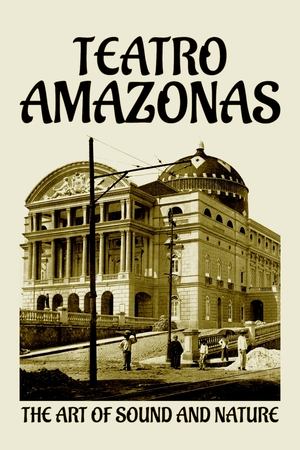
Documentary by Portuguese Silvino Santos, about the Amazon, its flora, fauna, its inhabitants and among other wonderful images from the beginning of the 20th century with alternating close-up shots of caimans, jaguars and tropical flora with footage of Indigenous rituals--including some of the earliest known moving images of the Indigenous Witoto people--and longer sequences showcasing the region’s extractive industries: rubber, the Brazil nut, timber, fishing, even the egret feathers that were a staple of women’s fashion at the time.
Luis Tayori is an indigenous Harakbut descendant whose origins trace back to the depths of the Peruvian jungle. Years after the first contact with Dominican missionaries, Luis recounts the memories of his childhood and those of his grandparents.
The Amazon is the river of superlatives: the longest - 7,025 km, the most powerful, the most indomitable - no dam possible over hundreds of kilometres. Its waters cross the largest tropical forest in the world: the Amazon, “the lungs of the earth”. Going against the current of this gigantism, this documentary is betting on approaching this extraordinary natural space through one of its tiniest productions: the cocoa bean. Scientists, chocolate makers, producers and farmers, many are those who, faced with the deforestation of this unique ecosystem, use this chocolate seed to recreate, on a small scale, human exploitations in harmony with nature. This film tells us about the fight of those who decided to make cocoa the spearhead of environmental defense in Brazil.
No animal in the Amazon is more feared and more respected than the 'spirit of the river' - The Anaconda
Amazonie, les murmures de la forêt
Explore the mysterious Amazon through the amazing IMAX experience. Amazon celebrates the beauty, vitality and wonder of the rapidly disappearing rain forest.
Narrated by Academy Award winners Sissy Spacek and Herbie Hancock, River of Gold is the disturbing account of a clandestine journey into Peru's Amazon rainforest to uncover the savage unraveling of pristine jungle. What will be the fate of this critical region of priceless biodiversity as these extraordinarily beautiful forests are turned into a hellish wasteland?
In May 2003, around 30 women and children were murdered in the Ecuadorian jungle. The victims belonged to the Taromenani clan, an uncontacted indigenous group in Ecuador. The massacre was left in impunity and oblivion. This documentary explores the history of contact with the Huaorani decades ago, the death of Alejandro Labaka in 1987 and recent attacks on loggers in the area, to discover that these events are linked to the history of uncontacted peoples in Ecuador.
In powerful images, alternating between documentary observation and staged sequences, and dense soundscapes, Luiz Bolognesi documents the Indigenous community of the Yanomami and depicts their threatened natural environment in the Amazon rainforest.