Proyecto Ibera
An excellent display of how humans can rehabilitate and restore an area where a heavy industry polluted the water so severely that it was unsuitable to sustain any kind of life. A a film showing how birds returned to an environment once devastated by industry. The lakes around the northern Slovenian town of Velenje, placed in the Central Europe, are geographic center of the film. They emerged as the land above the lignite mines subsided and the depressions were filled with water. The mines started operating at the end of the 19th century. In the mid 20th century a power plant was built that caused a severe pollution of the lake waters to the extent of the lakes not being fit for any kind of life. As a consequence many birds moved from these parts. After a long ecological restoration that started in the mid 1980s, life returned to the water. Gradually the birds returned as well, including some there were previously never observed in this area.
Conservation biologist Tim Shields sees urgency in the field and finds that traditional conservation practices are lacking when it comes to saving desert tortoise populations from ravens. He goes rogue, employing an arsenal of lasers, exploding model turtles, drones and desert rovers as a means of protecting the tortoise's dwindling numbers.
Nóouhàh-Toka’na, known as swift fox in English, once roamed the North American Great Plains from Canada to Texas. Like bison, pronghorn and other plains animals, Nóouhàh-Toka’na held cultural significance for the Native Americans who lived alongside them. But predator control programs in the mid-1900s reduced the foxes to just 10 percent of their native range. At the Fort Belknap Indian Community in Montana, members of the Aaniiih and Nakoda tribes are working with the Smithsonian’s National Zoo and Conservation Biology Institute and other conservation partners to restore biodiversity and return Nóouhàh-Toka’na to the land.
Wildlife biologist Karsten Heuer and his wife, environmentalist Leanne Allison follow a herd of 120,000 caribou on foot across 1500 km of Arctic tundra, hoping to raise awareness of the threats to the caribou's survival. Along this journey, they brave torrid conditions, dangerous wildlife and treacherous terrain all in the hopes of learning the truth about this epic migration.
A doctor's efforts to live a green life near the Appalachian Mountains lead to the development of a radical idea to use green burials to conserve one million acres of land and to create wildlife reserves.
Etienne-Jules Marey, a French inventor who turned a gun into a camera. A hand-drawn hunter whose weapon, instead of firing ammunition, shoots photographs. Carlos, a Mexican wildlife photographer who used to be a real life hunter until he chose to get rid of all his guns. All come together in this poetic yet approachable animated documentary short film.
In the mountains of Sichuan, China, a researcher forms a bond with Qian Qian, a panda who is about to experience nature for the first time.
Le Temps des vautours
70 years after the last wolves roamed the national park, a total of 41 wolves were reintroduced between 1995 and 1997. A globally unique experiment that had many supporters, but also resolute opponents, then as now.
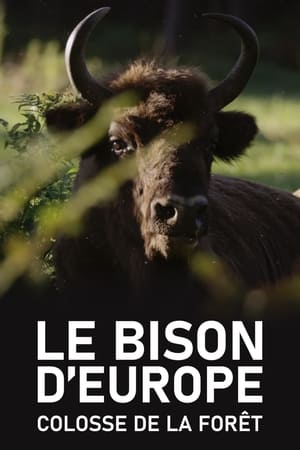
Robi Watkinson and Emma Hodson travel across Britain and the Netherlands documenting the story of the rewilding movement from its inception, to the return of the beaver, bison and perhaps one day, the lynx to Britain.
In 2009, the underwater world around the Central Polynesian Sporades in the eastern Pacific was intact. But a few years later, the corals died massively. Now they have recovered.
A passionate conservation biologist brings together a river bushman fearful of losing his past and a young scientist uncertain of her future on an epic, four-month expedition across three countries, through unexplored and dangerous landscapes, in order to save the Okavango Delta, one of our planet's last pristine wildernesses.
Following Sir Brian May over a decade-long journey to understand the crisis caused by bovine tuberculosis and his opposition to the controversial badger cull, implemented to curb the spread of the disease in cattle. It’s a story surrounded by controversy, but one little known to many - a tale of tragedy for both humans and animals.
In the jungles of north west India, there lives a remarkable wild tiger family. Now, using 50 years of footage, the story of their matriarchal clan is pieced together.
In Namibia, conservationist Maria Diekmann found herself on the frontline of the battle to save these wanted animals after unexpectedly becoming a surrogate mother to an orphaned baby pangolin named Honey Bun. On an emotional journey, Diekmann travels to Asia to better understand the global issues facing pangolins, before joining forces with a Chinese megastar to help build a campaign to bring awareness to the plight of these surprisingly charming creatures.
A short documentary where we learn about the endangered lemurs, owls and otters from the Knockhatch Conservation staff.
Canadian wildlife specialists work to preserve and nurture the creatures that remain in our wilderness areas - species such as the whooping crane, prairie falcons, bighorn sheep, bison, polar bears, and grizzlies.
Sudan was someone Zacharia Mutai spent years with, someone he knew better than his own children, someone he loved. Sudan’s death was tragic, but not a surprise. Zacharia, the head rhino caregiver at the Ol Pejeta Conservancy in northern Kenya, was caring for one of the last remaining northern white rhinos on the planet. But this is not just the story of Zacharia’s loss or of the death of a rhino. This is the story of the death of a species. A loss of such magnitude is a loss for all of humanity. Without these creatures, we suffer more than just the loss of ecosystem health. We suffer a loss of imagination, a loss of wonder, a loss of beautiful possibilities.
As wolves repopulate Washington, conflict is heating up with rural ranching communities. Daniel Curry’s job is to patrol wild areas on horseback, creating a buffer between wolves and the cattle herds that graze on public lands. Whenever these wild carnivores are suspected of killing livestock, the consequences can be fatal. As illegal poaching and state-sponsored kills take a heavy toll, can Daniel prove that coexistence between ranchers and wolves is possible?