The film discusses the evolution and potential of using light waves, particularly coherent light, for communication. It highlights the development of lasers at Bell Telephone Laboratories, explaining how they produce a highly controlled and intense beam of light that could revolutionize communication. The film emphasizes the vast possibilities of lasers, including applications in telecommunications, surgery, and exploring the universe, suggesting that this technology represents a significant step in humanity's understanding and use of light.
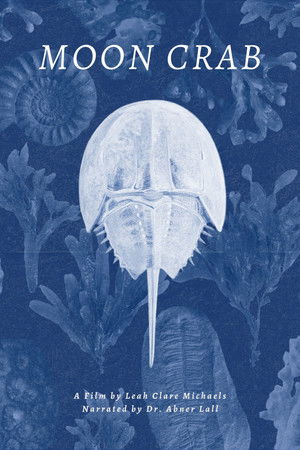
Moon Crab is a meditation on the horseshoe crab, one of Earth's oldest living species now struggling with extreme population decline. Blending reflections on nature's cycles with experimental visuals, the film employs an array of techniques, including eco-processed film developed with seaweed, to immerse the viewer in the crab's subaquatic world. Narrated with intimate depth by physiologist Dr. Abner Lall, the filmmaker’s neighbor, this documentary captures a timeless story of resilience and fragility, urging us to reconsider our connection to the natural world.
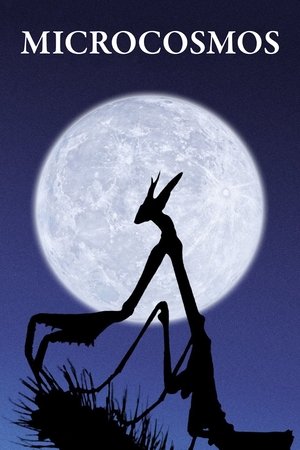
A documentary of insect life in meadows and ponds, using incredible close-ups, slow motion, and time-lapse photography. It includes bees collecting nectar, ladybugs eating mites, snails mating, spiders wrapping their catch, a scarab beetle relentlessly pushing its ball of dung uphill, endless lines of caterpillars, an underwater spider creating an air bubble to live in, and a mosquito hatching.
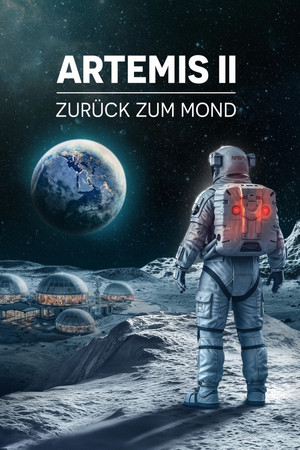
For the first time since the legendary Apollo missions over 50 years ago, humans are once again setting out for the Moon on April 1, 2026. NASA’s Artemis II mission marks the beginning of a new era in space exploration, and Germany will play a key role. This documentary follows the four astronauts during their preparations and offers exclusive insights into the Orion spacecraft. German astronauts Alexander Gerst and Matthias Maurer, along with other space experts, explain how the mission will proceed and why it is being undertaken. It's a journey that blends science, adventure, and the fundamental question: Why do people risk their lives to reach other celestial bodies and distant worlds?
Before the internet. Before social media. Before breaking news. The victims of Thalidomide had to rely on something even more extraordinary to fight their corner: Investigative journalism. This is the story of how Harold Evans fought and won the battle of his and many other lives.
Survival! is a 22-minute, Alan Madison-directed instructional wilderness survival film focusing on safety techniques. It is often described as a surprisingly cinematic, educational piece. Four scenarios depict the dangers of hyperthermia and hypothermia and how common sense, being prepared and following a few important tips can save your life: Scenario 1: A fisherman falls in icy water and suffers from hypothermia. Scenario 2: An unprepared family hikes into the mountains and is surprised by a sudden change in the weather. Scenario 3: A couple guys make multiple mistakes in the desert and experience the consequences. Scenario 4: A hunter gets lost in the forest during a winter storm.
Človíčkové
A short look at the world of artist Arthur Lismer. He is followed through his classrooms, as he teaches, and shows his painting technique.
A team of scientists search for the lost island of Testerep in front of the Belgian coast, venturing into artificial landscapes and virtual realities.
Six California kids test their brains and talents against students in Odyssey of the Mind, a problem-solving competition requiring mechanical, creative and intellectual skills. With little money and zero adult participation, the teens build a robot to tell a story about bullying, exclusion and mental health. But how does their solution measure up?
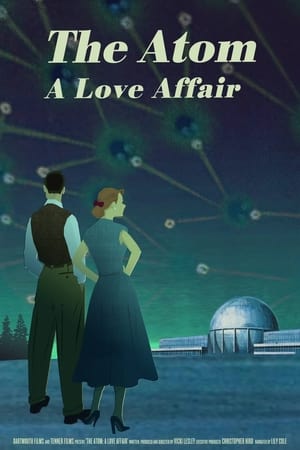
With a wealth of fantastic archive footage and a series of revealing interviews with those who had first-hand experience, filmmaker Vicki Lesley tells the turbulent story of the West’s love-hate relationship with a nuclear power over the past seventy years. Capturing both the tantalising promise and the repeated disappointments of this singular technology, the film reveals how the post-war, romantic fantasy of an Atom-powered future developed into the stormy, on-off relationship still playing out today. A tale of scientific passion and political intrigue all wrapped up in the packaging of a sentimental screen melodrama.
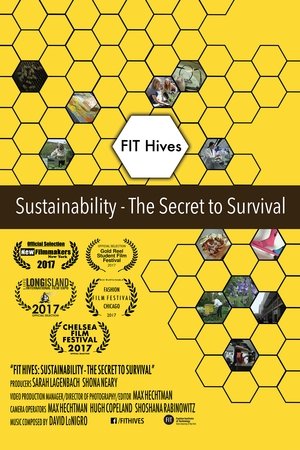
A documentary that introduces FIT Hives, a student-run organization whose mission is to educate the FIT community about the importance of bees to the environment, the use of bee-derived resources in the industries related to the majors at FIT and its goal to put a beehive on the roof. FIT Hives is a recipient of an FIT Innovation Grant which also supported the making of this documentary.
At Arcata, California, testing technology for landing planes in fog. Also: a high-tech barber shop in Westwood Village, California; manufacture of precision steel gauge blocks in Eskilstuna, Sweden.
For more than 30 years, scientist, broadcaster and environmental activist David Suzuki has served as the host of The Nature of Things, a CBC program that is seen in more than forty nations. Suzuki Speaks is an hour of thought-provoking television. David Suzuki delivers one of the most powerful messages of his career - the relationship between the four "sacred" elements and their influence on the "interconnectedness" we feel individually, with each other and with the rest of the world.
A variety of scientific subjects, including the laboratory of a plastic surgeon in London, and his method for applying permanent makeup; a new school for kiddies employing finger paint so they can express their urge to put things on paper; Army aviation, showing the latest development in blind landing. Produced in Cinecolor.
An inside look at the notorious Sing Sing Correctional Facility, where one of the U.S.’s only in-prison college programs, Hudson Link, offers long-time inmates an education – and a new lease on life.
The Estonian national team is the first Baltic team to participate in the Bridgestone World Solar Challenge, the solar car world championship in Australia. This is a competition with a 35-year history, which has been launched to push the boundaries of both green technology and the capabilities of young talents. The documentary follows young Estonian engineers and software developers and tells the story through their eyes of how the solar car is developed, built and prepared for the challenge in one of the most complex competitions in the world. Young people have to face tough competition conditions, technical and mental challenges and competitors from the world's top universities.
Follows directors journey to discover the life and times of Antonio José Martínez, an activist priest dedicated to the enlightenment ideals of representative democracy and public education in 19th century New Mexico.
Documentary film exploring the rise of mechanistic philosophy and the exploitation of human beings under modern hierarchical systems. Topics covered include behaviorism, scientific management, workplace democracy, schooling, frustration-aggression hypothesis, and human experimentation.
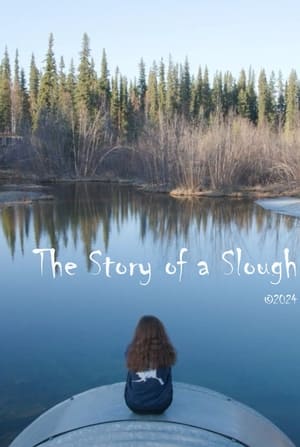
When the Tanana River bridge was installed in Salcha, Alaska, the community worried about the levee's effects on fish wildlife. Salcha Elementary School, along with the help of Tanana Valley Watershed Association, conducted a 10-year scientific project with students to study the effects the levee had on Piledriver Slough. Tori Brannan - the filmmaker's mother - is a retired principal at Salcha Elementary and was the project's centerpiece. She shares her experiences with the project, the community, and how her daughter's involvement strengthened their relationship.