In this short documentary, a Musqueam elder rediscovers his Native language and traditions in the city of Vancouver, in the vicinity of which the Musqueam people have lived for thousands of years. Writing the Land captures the ever-changing nature of a modern city - the glass and steel towers cut against the sky, grass, trees and a sudden flash of birds in flight and the enduring power of language to shape perception and create memory.
A zebu disappears while children are drawing it. They find it again in the woods. The notes of a harp accompany their multi-coloured joy. This short was made with children from a nursery school in Mantua. Playing with colours, the children seem to conquer the world.
Dick Perez, official Baseball Hall of Fame artist for over 20 years, painted the game's history and every inductee - a project he continues in his 80s. This childhood immigrant's portraits changed commemoration of America's iconic pastime.
Alma W. Thomas lived a life of firsts: the first Fine Arts graduate of Howard University (1924), the first Black woman to mount a retrospective at the Whitney Museum of American Art (1972), and the first Black woman to have her paintings exhibited in the White House (2009). Yet she did not receive national attention until she was 80.
THE STORY WON’T DIE, from Award-winning filmmaker David Henry Gerson, is an inspiring, timely look at a young generation of Syrian artists who use their work to protest and process what is currently the world’s largest and longest ongoing displacement of people since WWII. The film is produced by Sundance Award-winner Odessa Rae (Navalny). Rapper Abu Hajar, together with other creative personalities of the Syrian uprising, a post-Rock musician (Anas Maghrebi), members of the first all-female Syrian rock band (Bahila Hijazi + Lynn Mayya), break-dancer (Bboy Shadow), choreographer (Medhat Aldaabal), and visual artists (Tammam Azzam, Omar Imam + Diala Brisly), use their art to rise in revolution and endure in exile in this new documentary reflecting on a battle for peace, justice and freedom of expression. It is an uplifting and humanizing look at what it means to be a refugee in today’s world and offers inspiring and hopeful vantages on a creative response to the chaos of war.
Every day, at sunrise, the Sítio Porto Alegre School students arrive by boat for another school day. As Professor Rui seeks to catch the attention of the 3rd grade children, new principal Leidi and school boatman Raimundo try to solve the lack of fuel problem caused by the little money sent by the government. These are rainy days in Curralinho township, on Marajó Island, where a school community resists.
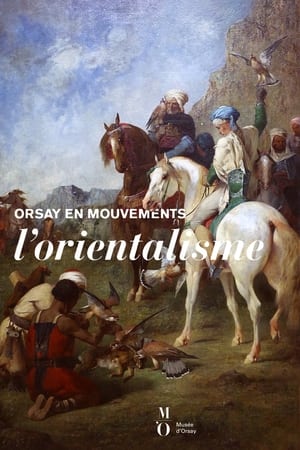
Orientalism is a literary and artistic movement born in Western Europe in the 18th century. Through its scale and popularity, throughout the 19th century, it marked the interest and curiosity of artists and writers for the countries of the West (the Maghreb) or the Levant (the Middle East). Orientalism was born from the fascination of the Ottoman Empire and followed its slow disintegration and the progression of European colonizations. This exotic trend is associated with all the artistic movements of the 19th century, academic, romantic, realistic or even impressionist. It is present in architecture, music, painting, literature, poetry... Picturesque aesthetics, confusing styles, civilizations and eras, orientalism has created numerous clichés and clichés that we still find today in literature or cinema.
Chuck Close, an astounding portrait of one of the world's leading contemporary painters, was one of two parting gifts (her second is a film on Louise Bourgeois) from Marion Cajori, a filmmaker who died recently, and before her time. With editing completed by filmmaker Ken Kobland, Chuck Close lives the life and work of a man who has reinvented portraiture. Close photographs his subjects, blows up the image to gigantic proportions, divides it into a detailed grid and then uses a complex set of colors and patterning to reconstruct each face.
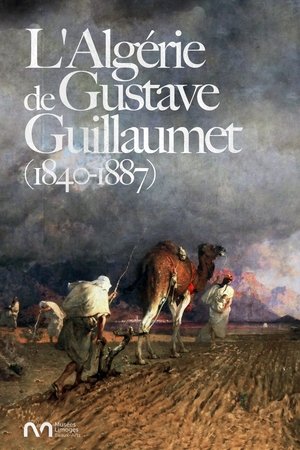
Born on March 25, 1840, Gustave Guillaumet discovered Algeria by chance when he was about to embark for Italy. Over the course of his ten or eleven trips and extended stays, he established a familiarity with this space. Traveling through the different regions from north to south, he never ceases to note the differences. He is also the first artist, apart from Delacroix's Women of Algiers, to penetrate into female interiors and reveal the reality, far removed from the harem fantasies that reigned in his time. Fascinated by the country, its deserts and its inhabitants , going so far as to live like the Algerians, Gustave Guillaumet devoted his life and his painting to this country, breaking with the colorful and exotic representations of the time. The painting The Famine in Algeria, restored thanks to exceptional fundraising, was dictated by the events of the years 1865-1868, and well illustrates his knowledge of the country, in a manner that is at once demanding, sensitive and serious.
Van Gogh, deux mois et une éternité
For the first time, four DC youth play in mountain streams, sing under the stars, and confront the entrenched abuse of their past. As they return to the city, each faces an unforgiving series of roadblocks that challenge their efforts to build a better life. From street corners to mountaintops, Fly By Light is an intimate exploration of the emotional journey to rewrite a young person's future.
La Lucha follows five students navigating trauma, poverty, and broken systems as they fight to graduate. With expert voices and national stats, the film challenges us to rethink education from the ground up
Les chiens-loups
The film graphically calls attention to the brutal dangers of playing on top of elevators in public housing high-rise 30-story buildings in New York City. The slang is called "elevator surfing", "elevator action" or "elevator chicken" and it is a deadly game in which groups of children ride up and down the elevator shafts on top of a moving elevator car and jump from one moving car to the top of another. At times, a child waits in the pit of the elevator shaft. When a car pauses on the lowest floor, he grabs the electrical cable and rides upward. "Children Are Too Young To Die" begins with a bloody reenactment of an elevator accident in which a 10-year-old boy gets his arm cut off by the counterweight in an elevator shaft. The story unfolds and reveals real issues and deaths resulting from such dangerous activities.
Hardly anyone knows the artist, but almost everyone knows her paintings: Tamara de Lempicka, icon of the 1920s. Her art deco paintings of women in cars or in evening dress adorn book covers and break auction records. But who was she? The ARTE documentary by Grimme Prize-winning author Sylvie Kürsten ventures a self-portrait of Lempicka, narrated and played by Nicole Heesters.
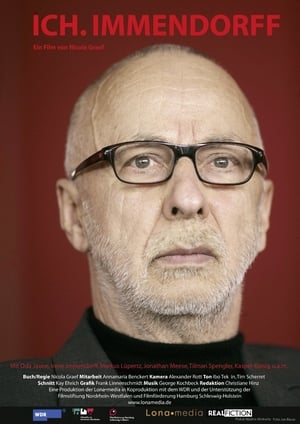
Documentary film about the painter and sculptor Jörg Immendorff who ranks among the most important German artists. The filmmakers accompanied Immendorff over a period of two years – until his death in May 2007. The artist had been living for nine years knowing that he was terminally ill with ALS. The film shows how Immendorff continued to work with unabated energy and how he tried not to let himself be restrained by his deteriorating health.
A visual journey into the life and legacy of one of Australia's most celebrated artists, Brett Whiteley.
A Calling to Care is the inspiring story of 55 year-old Grace Stanley, a Canadian nurse who left her home and prestigious career behind to answer a calling halfway around the world in Karachi, Pakistan. Teaching nursing to local women in a strict Muslim culture that forbids them to even to touch men is a formidable task. However, Grace challenges her own values and belief systems to find common ground with her students, helping them to excel and feel respect for themselves in a culture that doesn't respect them. Whether it is getting her hands painted with henna, swimming fully-clothed in the ocean, or marching bravely with them on International Women's Day, Grace bonds with her students in a very special way, and ultimately discovers how the West can learn a lot more from the Third World than she ever thought.
In America, the prison system has become a place of retribution, not restoration. Inmates are often treated as sub-human, and often find themselves feeling hopeless. But a small midwest college decides to give inmates an opportunity to earn a bachelor's degree. Experience the journey of the resilient inmates as they fight incredible odds to change their lives – and change the system.
The Cinema According to Dalí