Karan and Rohan, two biracial brothers raised in a marginal environment, are finding ways to get stimulated on a normal summer day. They embark on a trip to buy candies to avoid boredom. This film plays with the sense of boundaries between what is real and what is fiction. It is a film about the love of two brothers and their singular reality in the countryside of Quebec.
Barred from racing for breaking stride, a trotting horse finds a new career as a police officer's mount in Boston.
What's it like to "make a family" when you're not part of the traditional hetero couple? Can two best buddies living on the same floor become a family? Océan and his best friend Sophie-Marie Larrouy will question their friendship, their desire for children and their ability to commit to each other, going to meet people who have made families "differently" to draw inspiration from them and invent their own model.
In Uganda, AIDS-infected mothers have begun writing what they call Memory Books for their children. Aware of the illness, it is a way for the family to come to terms with the inevitable death that it faces. Hopelessness and desperation are confronted through the collaborative effort of remembering and recording, a process that inspires unexpected strength and even solace in the face of death.
A year after Thadd and Shannon gave birth to their son, A Conversation Between Parents highlights a climactic conversation in their lives -- as both young parents grasp at the last threads of their ideal family. On an afternoon off of work, the couple sits on their couch, while their son sleeps in his crib, and the family grapples with their limited options one last time. Dietrich’s camera ties the couple’s painful conversation together with flashbacks of both parents’ precious memories of their first year with Jasper, attempting to find a way to articulate their struggles in the last conversation they have together as a couple.
Arctic Tale is a 2007 documentary film from the National Geographic Society about the life cycle of a walrus and her calf, and a polar bear and her cubs, in a similar vein to the 2005 hit production March of the Penguins, also from National Geographic.
After learning to 'write what you know,' in film school, Half-Filipino and Half-White aspiring filmmaker Andrew Orticio travels back to his father's village in the Philippines to understand his mixed identity.
In Our Mothers' Gardens celebrates the strength and resiliency of Black women and Black families through the complex, and often times humorous, relationship between mothers and daughters.
ZAAD tells the autobiographical story of Dries Meddens. After the death of his mother, the care for Dries' bipolar father falls on his plate. He discovers how crudely and ruthlessly society and psychiatry treat patients. His father eventually dies in solitary confinement. While emptying his parent’s home, Dries discovers an old letter from his grandfather. The man appears to have led a busy, productive life. He is the founder of an internationally renowned seed breeding company and still has time to paint, write diaries and conduct intensive correspondence. Dries finds similarities between his grandfather, his father and himself. Slowly the fear grows that his father's psychiatric illness might be hereditary. Strolling through the family’s film and photo archives, with dramatic and sometimes hilarious finds, Dries tries to find answers. He also consults a psychiatrist. Together the consultations and reviewing of his archival material help Dries look at bipolarity with new eyes.
After a spell cast by Grandma Faraway, the oldest son of a small family encounters the ghost of his late Grandma Maria still living in her old house, and they chat as they used to.
Travel back to Victorian Britain and wander the cobbled streets of Haworth to the sites that inspired the great Brontë sisters’ classic novels.
Serenade für Fanny
The Mejia family emigrated from Oaxaca to Fresno, California 40 years ago. Filmmaker Trisha ZIff filmed the family in 1996, and returns now to see the changes that have settled over them, and follows the family on their return to Mexico.
The documentary's title translates as "to be and to have", the two auxiliary verbs in the French language. It is about a primary school in the commune of Saint-Étienne-sur-Usson, Puy-de-Dôme, France, the population of which is just over 200. The school has one small class of mixed ages (from four to twelve years), with a dedicated teacher, Georges Lopez, who shows patience and respect for the children as we follow their story through a single school year.
Perpetuating art was the main objective in the life of visual artist, filmmaker and cultural manager Chico Liberato, who died in January, 2023. A pioneer of animation cinema in Bahia, he left a legacy for the area, and even in his family.
The filmmakers' 21-year-old daughter journeys from locked-down psych wards and diagnostic labels toward expansive worlds of creativity, connection, and greater meaning. Featuring insights from trauma experts and others, the film challenges the widespread idea that mental illness should be understood purely in biological terms, revealing the myriad ways that madness has meaning beyond brain chemistry.
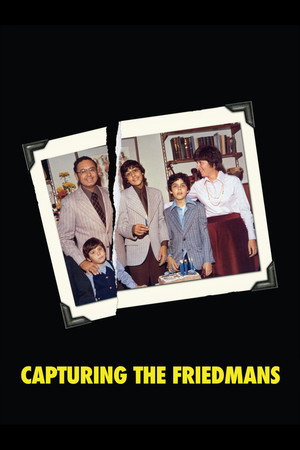
An Oscar nominated documentary about a middle-class American family who is torn apart when the father Arnold and son Jesse are accused of sexually abusing numerous children. Director Jarecki interviews people from different sides of this tragic story and raises the question of whether they were rightfully tried when they claim they were innocent and there was never any evidence against them.
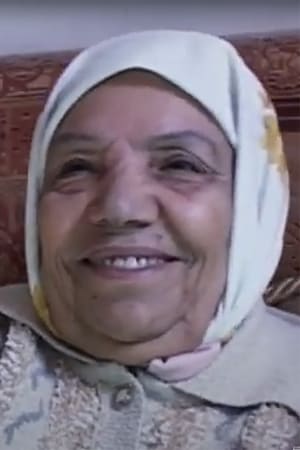
In Mahdia, Tunisia, Maram embarks on an intimate journey through the ancestral customs that have shaped her life, exploring matrimonial traditions, and highlighting the Henna, where the bewitching songs of the Machtat resound. Tracing her childhood memories, guided by Latifa and Habiba, two prominent Machtat, she uncovers the maternal essence of tradition, where the bond between mother and bride is at the heart of these intimate celebrations.
En el recuerdo habita el olvido
Mémé