80 years of Air Army
A dramatization to promote the Territorial Army.
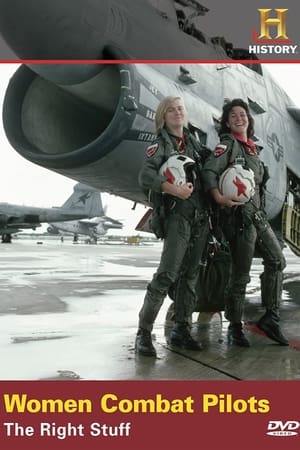
It wasn't until 1993 that American women were officially allowed to fly combat aircraft. Learn about the struggles, the accomplishments, and contributions of women pilots of the past, present, and future.
Here is the hair raising, seat-of-the-pants tale of men who dared to fly their planes, unescorted, to the heart of enemy held Romania to blast the source of German oil. It's also the story of long, low level flights over water, searching for the tell tale sliver of a U-boat periscope. It's a tribute to an underdog that became the most versatile, widely used bomber of World War II. This is THE B-24 LIBERATOR! Aviation A.V. Library brings you this battling classic in a hell-raising video adventure that we call "THE FIGHTING LIBERATOR." From the Bismark Sea to dirt airstrips in China to the exhilaration of the great push on D-Day the Liberator was there, fighting her way over, around and through the Axis ranks.
Letci brání vlast – Letecký den
Engineer Dr Hugh Hunt revisits the little-known story of the First World War's Blitz, when the Zeppelin waged an 18-month terror campaign on the people of London.
Transports Exceptionnels: La Route des Avions
For the first time in 40 years African skies resound to the roar of a flying boat. Alexander Frater boards a wartime Catalina in search of the romance and adventure of Imperial Airways' legendary route from Cairo to the Cape - down the White Nile to the Rift Valley lakes of Kenya and on to the astonishing Ilha de Mocambique - the forgotten jewel of the Indian Ocean.
100% Planes features amazing stories of aviation and flying. From military planes to recreational planes to stunt planes, we fly high and learn more about the world's 400,000+ aircraft from the pilots and engineers that work closely with them. Discover the most versatile military plane that can dogfight and bomb in a single mission. Take an aerobatic stunt lesson with a 25-year veteran pilot. And tour a luxurious private jet, rumoured to cost up to half a billion dollars.
On September 11, 2001, the unimaginable transpired when devastating attacks on the World Trade Center forced the shutdown of the entire U.S. airspace. Thousands of kilometres away in Gander, Newfoundland, a group of Nav Canada air traffic controllers suddenly had the lives of 33,000 people in their hands and had to think fast to find a place for them to go. Discovery uncovers how these unsung heroes managed to safely land 224 planes in four hours, without incident.
This latest Air Canada program is hosted by the airline's Sr Director of Flight Operations Captain Rick Allen who takes you on Air Canada's nonstop service from Toronto to Hong Kong and back becoming the longest route in the World Air Routes series! For close to 4 and a half hours you will be informed as to all aspects of the Polar Operation from the planning stages by the dispatcher building the flight plan to all the details the crew needs to execute this trip before and during the 15hour flight. Enjoy this latest Flight in the Cockpit!
Air France was an early operator of the Boeing 747 taking delivery of its first 747-100 in 1970. A dozen years later it operated well over 30 "Jumbos" and eventually had one of the world's largest 747 fleets. Until a few years ago it had operated most types of the aircraft including the 100, 200B, 200F, 300, 400, 400ERF and 400BCF. Soon though the type will be leaving the fleet with most aircraft already gone, freighter service is scheduled to end in 2015 and passenger service sometime in 2016 ending nearly 50 years of operation! AirFrance 747s have been seen nearly everyone on earth! We are very lucky to have Captain George Mercovik, a 747 instructor, on this program. He and is 2 copilots will give you a great tour and presentation of this fantastic aircraft!
A poem starts as an artist who tries to recreate meaning for an abandoned Thai Post Office but loses his own instead. Through a deteriorating journey of the mind, he encounters a signpost, a plane, delirium, an aquarium, and a specific type of ghost.
"Flight Photographers" is an engaging look at the dynamic world of aviation photography, showcasing the passion and skill of both enthusiasts and professionals. Exciting stories and breathtaking images, highlight the art and adventure of capturing the beauty of flight.
Adolf Hitler's Nazi megalomania knew no limits. The most daring of his plans World War II involved German fighter planes crashing into Manhattan's skyscrapers as living bombs, like the Japanese kamikazes. Hitler understood the huge symbolic power of Manhattan's skyscrapers. He believed suicide bombing would have a devastating psychological impact on the American people and the U.S. war effort.
Clouds 1969 by the British filmmaker Peter Gidal is a film comprised of ten minutes of looped footage of the sky, shot with a handheld camera using a zoom to achieve close-up images. Aside from the amorphous shapes of the clouds, the only forms to appear in the film are an aeroplane flying overhead and the side of a building, and these only as fleeting glimpses. The formless image of the sky and the repetition of the footage on a loop prevent any clear narrative development within the film. The minimal soundtrack consists of a sustained oscillating sine wave, consistently audible throughout the film without progression or climax. The work is shown as a projection and was not produced in an edition. The subject of the film can be said to be the material qualities of film itself: the grain, the light, the shadow and inconsistencies in the print.
Going from 0 to 150 mph in three seconds, withstanding three Gs of force, and taking off from what's often called "the most dangerous place on the planet" are just parts of everyday life for an aircraft carrier pilot-and it's no different for the crew aboard the USS Enterprise. After being stationed in the Middle East for a year, these pilots have seen heavy action in Afghanistan and Iraq. Now, finally, they're returning home. With amazing personal stories and real-time footage from missions, this is an exciting insider's peek at life onboard a wartime aircraft carrier.
Lorraine Kelly returns to the small Scottish border town of Lockerbie to find out how the residents coped with the aftermath of Europe's deadliest terror attack. Lorraine was one of the first TV reporters to arrive at the scene after Pan Am Flight 103 exploded mid-air, killing all 259 people aboard and 11 on the ground. Before the police cordoned off the area, she saw first-hand the shocking aftermath of the disaster.
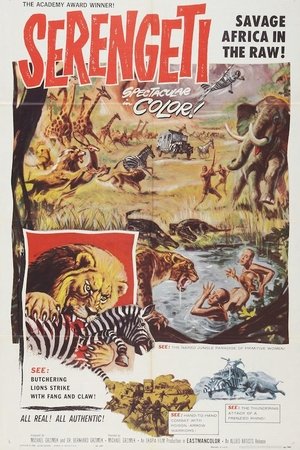
The film tells of the beginnings of the Serengeti National Park in Tanzania. At the end of the 1950s, the Tanzanian National Park Administration wanted to fence in the protected area around the Ngorongoro Crater. Bernhard and Michael Grzimek were invited by the national park administration in 1957 to get a precise picture of the animal migrations and to provide the national park administration with the values they needed for their project. Using a new counting method with two airplanes, the Grzimeks found out that the migration of the herds was different than assumed.
In 1916, while France was bogged down in trench wars, a young engineer named Marcel Bloch was inventing a revolutionary propeller, the Eclair propeller. It would prove very effective in air combat. Today, Dassault Aviation, named after the moniker its founder took on after the war, is among the jewels of the worldwide aeronautics industry. From astonishing growth to unexpected crises, the Dassault group's destiny is closely linked to the history of France and the saga of modern aviation. As it marks its first century of existence, the company continues to fly in civil and military aviation, still following the path of its founder's visionary spirit, Marcel Dassault.