A pragmatic U.S. Marine observes the dehumanizing effects the U.S.-Vietnam War has on his fellow recruits from their brutal boot camp training to the bloody street fighting in Hue.
A celebration of those still flying the last remaining Grumman Albatross, a seaplane from a long-lost era of adventure and romance.
On February 21, 1945, the Royal Canadian Air Force Halifax bomber NP711 with a crew of seven men took off from the Linton-on-Ouse air base in England for a bombing raid over Worms, Germany. The bomber never made it to its target. The Halifax was struck by anti-aircraft fire and crashed into a mountainside near Leistadt, Germany. All crew members were killed. The crash was so horrific that the wreckage was strewn over 1,000 meters. Seventy-seven years later the wreckage was recovered and the site was deemed a gravesite for the perished crew. This documentary film examines the last days of the seven-member crew and the recovery of the wreckage of Halifax NP711.
A brief history of British aviation and the development of both civil and military aircraft. Made for the Festival of Britain.
Documentary describing events leading up to the February 1996 shoot down by Cuban Air Force Migs of 2 U.S. registered Cessna 337 aircraft operated by the Cuban exile organization Brothers To The Rescue based in Miami, USA.
Reg Sherren revisits the players and the places that were critical in the Gimli Glider incident of July 1983.
A Nazi propaganda film about the lead up to World War II and Germany's success on the Western Front. Utilizes newsreel footage of battles and fell into disfavour with propaganda minister Goebbels because of it's lack of emphasis on Adolf Hitler.
There were two wars in Iraq--a military assault and a media war. The former was well-covered; the latter was not. Until now... Independent filmmaker, Emmy-award winningTV journalist, author and media critic, Danny Schechter turns the cameras on the role of the media. His new film, WMD, is an outspoken assessment of how Pentagon propaganda and media complicity misled the American people...
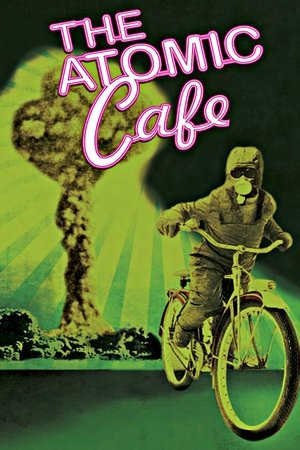
A disturbing collection of 1940s and 1950s United States government-issued propaganda films designed to reassure Americans that the atomic bomb was not a threat to their safety.
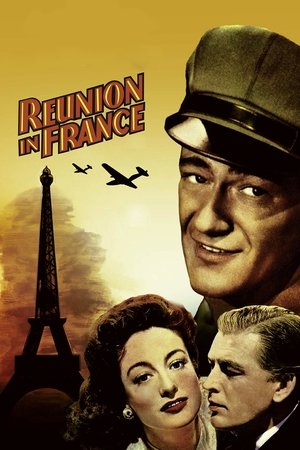
Frenchwoman Michele de la Becque, an opponent of the Nazis in German-occupied Paris, hides a downed American flyer, Pat Talbot, and attempts to get him safely out of the country.
Director Quentin Tarantino tasked Eli Roth to craft a mini-movie called Stolz der Nation (Nation's Pride) that will be included in the theatrical cut of Inglourious Basterds. To help promote Inglourious Basterds via the film-within-a-film, Roth has slapped together a trailer for Nation's Pride blending black and white photography with modern multi-layered camera effects.
A documentary about how Russia has been using popular culture as a weapon against Ukraine for decades. Together with industry participants, the film's narrator, musician Albert Tsukrenko, explores the financial, political and psychological reasons for the vulnerability of Ukrainian artists and reflects on how to break this vicious circle. Unfortunately, our own Ukrainian talents are becoming the ammunition in this weapon. Several generations of original Ukrainian musicians at different times in the 1970s and 1980s, 1990s and 2000s, and 2010s switched from Ukrainian to Russian in their work. Whether willingly or unwittingly, they became tools of Russian show business, which has always sought to blur the cultural border between Russia and Ukraine and worked to promote the imperial myth of "one nation".
A shocking political exposé, and an intimate ethnographic portrait of Pacific Islanders struggling for survival, dignity, and justice after decades of top-secret human radiation experiments conducted on them by the U.S. government.
When this propaganda film begins the narrator states that before the beginning of World War II, Japan was the only one of thirty-five nations to refuse to sign an anti-narcotics treaty and alleges that this was because the country's leaders planned to use drugs as a weapon of war.
North Korean propaganda film about orchards that yield bigger crops after Kim Il-sung visits. The films was presented as a gift to friendly-minded countries in the world. And expected by the North Korean Culture Ministry to be displayed publicly. Sweden was one of the countries honored by receiving a copy of "Gwasu-ui nara / Country of Orchards".
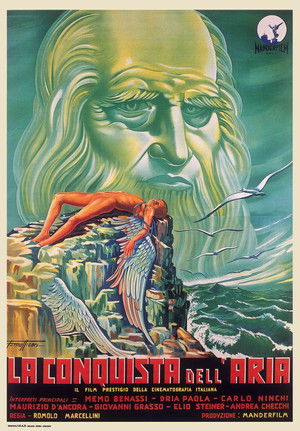
It is the epic of the heroes of the first century of aviation, since the flight of the first plane on December 17, 1903 until today. A striking collection of portraits of outstanding men and women like Louis Blériot, the first to cross the Channel, to Lindbergh who crossed the Atlantic and Amelia Earhart and many more...
Guy Martin joins the two-year restoration of a Spitfire that was buried in a French beach for decades, and tells the Boy's Own-style story of its pilot, Squadron Leader Geoffrey Stephenson
Nothing is easy about flying from an aircraft carrier. Based on a popular book by the same name, this documentary presents archive footage of the most dramatic mishaps in naval aviation, plus the story of the horrific USS Forrestal fire.
From 1945 to 1989, after the capitulation of Nazi Germany, two rival ideologies, communism and capitalism, faced each other in a merciless battle. On one side of the Iron Curtain and on the other, throughout the Cold War, the USSR and the United States sought to shape children’s imaginations through their magazines and films. Never in the history of mankind have so many comic books been published and so many cartoons produced for young people. In November 1989, communism collapsed with the Berlin Wall; capitalism was left to decide the future of the world. What if this victory had been prepared for a long time, and our thinking conditioned, from our early childhood, to ensure this absolute triumph?
An exploration —manipulated and staged— of life in Las Hurdes, in the province of Cáceres, in Extremadura, Spain, as it was in 1932. Insalubrity, misery and lack of opportunities provoke the emigration of young people and the solitude of those who remain in the desolation of one of the poorest and least developed Spanish regions at that time.