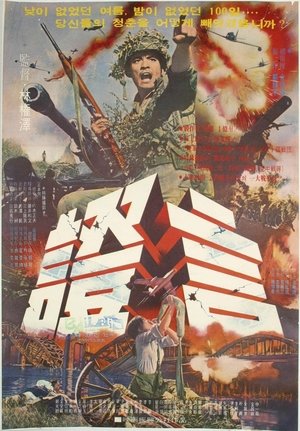
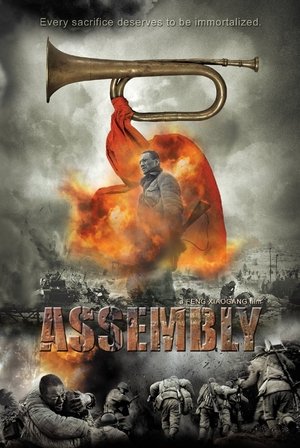
The film follows a group of Chinese People's Volunteer Army soldiers who are holding Triangle Hill for several days against US forces. Short of both food and water, they hold their ground until the relief troops arrive. The movie portray the battle as a Chinese victory over an American invasion, and the People's Volunteer Army soldiers were shown as Chinese war heroes."
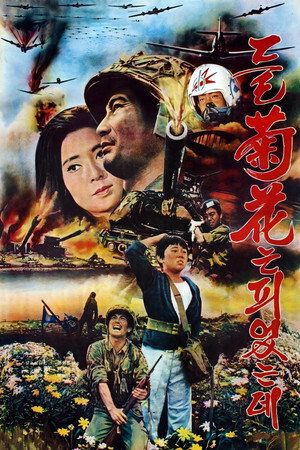
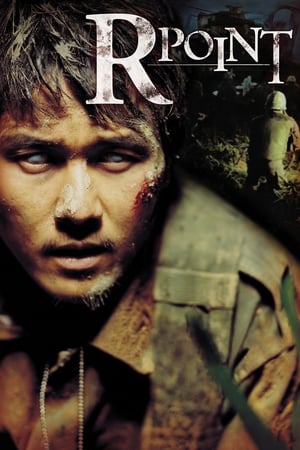
As the tragic war of fratricide is drawing to a close, a special agent nicknamed Dokbul, Kang Cheol-gu, is given an intelligence mission to identify and confirm the enemy's unusual movements. While on a mission, Cheol-gu infiltrates the enemy's camp alone and accidentally witnesses a bloody scene of massacre of civilians. He saves the only survivor, Hwang No-in, and is hinted that the enemy's plot is very dangerous. Cheol-gu approaches Mi-young, a People's Army nurse, to extract information, but is exposed to the enemy and escapes a crisis after a fierce battle. In the end, thanks to Cheol-gu's persistence, Mi-young realizes the illusion of the liberation struggle they are calling for, and transforms into Cheol-gu's collaborator to stop their horrific plot, germ warfare, and carries out the mission. However, the result of this tragic war is only futility. A war of illusions where more is lost than gained, and in the end, even the nickname Dokbul sheds hot tears.
One year after the Korean War, the conflict had reached a stalemate. The two opposing forces began to search for a way to end the grueling war of attrition, eventually settling on a modest village called ‘Pan Mun Jom’ near Gaeseong as the designated site for negotiations. Despite initial hopes for a quick resolution, the negotiating parties encountered obstacles that prevented an agreement. Disputes over the military demarcation line and the repatriation of prisoners of war thwarted their efforts. The film peels back the layers to reveal the untold story of Pan Mun Jom, shedding light on a history that has remained hidden until now.
The director's father, who did not know how to use a computer, left her an autobiography via email. It includes his whole life through many notable events such as the Korean War, the Vietnam War, 88's Seoul Olympic, New Town Development, etc.
A man wanders around the mountains with a bleeding leg, holding a rifle in his hand. Seemingly a fugitive, he runs from as-yet unknown pursuers, but he also seems to be following somebody who has already walked the same path. As he hides in a secluded cave, past memories sweep through his exhausted mind, memories of lifelong cowardice and evasion. And this recollection leads to a reconstruction of early 20th century Korean history. Winner of Best Picture (Nam-a Pictures Co., Ltd.), Best Actor (Ha Myung-joong), Best Art Direction (Kim Yoo-joon), Best Lighting (Son Young-cheol) at the 14th Grand Bell Awards. (source: Jiro Hong, koreanfilm.org)
June 25, 1950. When second lieutenant Jang has a date with his girl friend during weekend, numerous North Korean jet fighters make sudden air raids to the skies of Seoul. It is the beginning of Korean War. In spite of Korean Army's brave defense, North Korean army reddens South Korea with their state-of-the-art weapons. This movie describes the progress of war from the invasion in June 25, 1950 to the reclamation of territory on the basis of Sun-A's personal experience. Also this film reminds hard lessons from tragic history.
Dispatched to the front lines during the Korean War, an idealistic American soldier discovers the horrors of combat and comes at odds with a psychopathic member of his platoon.
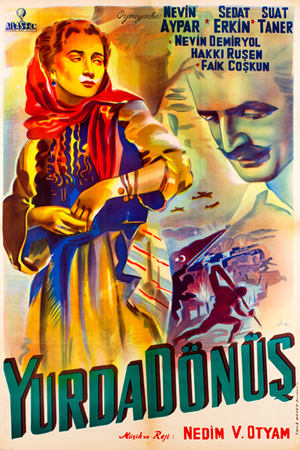
Follows a soldier trying to gain recognition for comrades who died in 1948, at a turning point in the civil war between the communists and the nationalist forces of the Kuomintang.
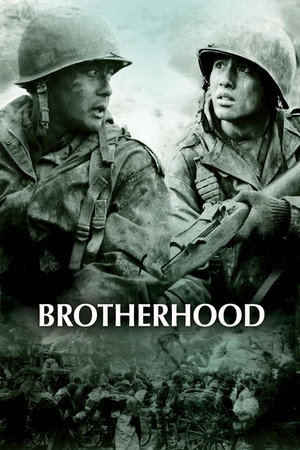
When two brothers are forced to fight in the Korean War, the elder decides to take the riskiest missions if it will help shield the younger from battle.
Based on the long running play by Jang Jin, the story is set in Korea during the Korean War in 1950. Soldiers from both the North and South, as well as an American pilot, find themselves in a secluded and naively idealistic village, its residents unaware of the outside world, including the war.
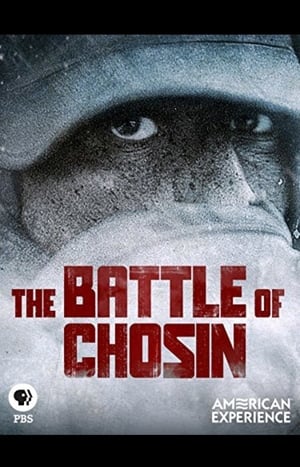
The Korean conflict is often called "The Forgotten War," but it has never been forgotten by the men and women who experienced it. These veterans share their thoughts, experiences and memories, highlighting the human and social costs of war.
Korean War, April 1953. Lieutenant Clemons, leader of the King company of the United States Infantry, is ordered to recapture Pork Chop Hill, occupied by a powerful Chinese Army force, while, just seventy miles away, at nearby the village of Panmunjom, a tense cease-fire conference is celebrated.
Chuncheon Battle 72 Hours
With hopes of reuniting with her husband, who left for the Vietnam War without telling her, a young wife joins a traveling band as the lead singer.
LETTERS, a dramatic historical fiction written by Mrs. Evelyn Merritt in 2010, tells the story of U.S. soldiers and their loved ones through their correspondence beginning with the Civil War and ending with the War in Iraq. Sahuarita High School students adapted the Readers’ Theatre play into a movie, reasoning the student actors would be kept safe from Covid-19 by filming them individually, and afterward the footage could be reassembled into a screenplay following the original dialogue.
United Front
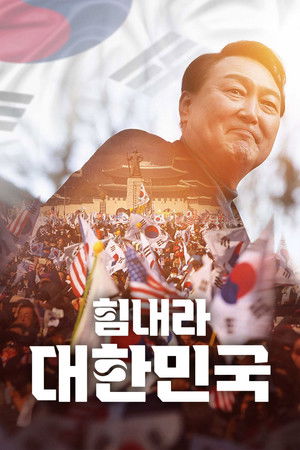
Emergency Martial Law
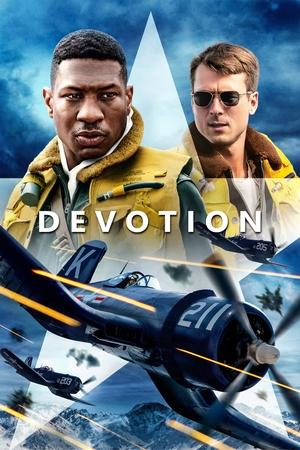
The harrowing true story of two elite US Navy fighter pilots during the Korean War. Their heroic sacrifices would ultimately make them the Navy's most celebrated wingmen.
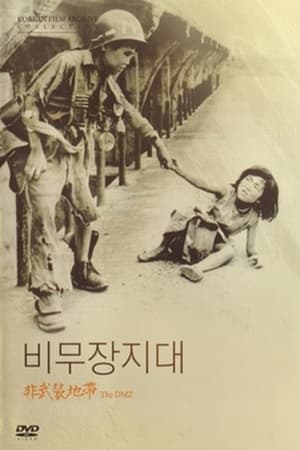
The film exposes the atrocities of war through the eyes of two children who are stranded in the DMZ after the end of the Korean War. The DMZ, strewn with abandoned tanks, dead bodies, land mines, and unexploded shells, is an exceedingly dangerous place for children. But what most endangers them in the end are not weapons but people.
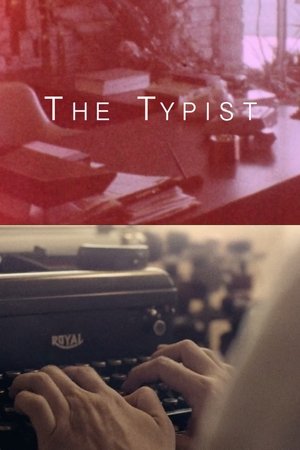
From the archives of the “queer Smithsonian,” San Francisco’s GLBT Historical Society, comes the forgotten history of a gay Korean War veteran tasked with writing the military discharges of outed gay seamen. The Typist details a conflicted clerk’s participation in discrimination and his divided allegiance to homosexuality and heroism.