Die Pelikan-Insel - Geheimnis in Russlands Steppe
Violent squalls, hail, waterspouts, lightning... storms put animals and plants to the test. At a time when climate change is multiplying extreme weather events, this documentary plunges into the heart of a storm, from the heavy, dry atmosphere that precedes it to the deluge that follows.
Capturing the essence of the Australian wilderness and its unique array of fascinating wildlife, Greg Grainger's documentary explores such diverse habitats as eucalpt forests, deserts, rainforests and coral reefs. Featuring action sequences of much loved Aussie icons the Kangaroo, Dingo, Platypus, Koala and Wombat, you'll also thrill to Coral spawning on the Great Barrier Reef, nest building Bower birds, mimicking Lyre birds, spiky Echidnas, snarling Tasmainian Devils and more. Natural Australia in a nutshell.
Come and experience Tippi's world!
In the heart of the Jura mountains, a call resounds through the forest. The silhouette of a Eurasian lynx creeps through the trees. A male is looking for its mate. Suddenly a call answers back. It is the beginning of the story of a lynx’s family we will follow over the seasons. While it is rare to come across this private feline, it is exceptional to discover its daily life in the wild.
Le peuple du requin et moi
Des baleines, des tortues et des hommes
Pélagos, voyage au large de la Méditerranée
While the earliest works of art of mankind depicted horses, the early history of the two species remains largely unknown. From the last nomadic peoples of the Altai Mountains to the Bedouins of the Arabian Peninsula and the Blackfoot Indians, Canadian anthropologist and filmmaker Niobe Thompson traveled the world for two years. He went to meet these communities who live in osmosis with their horses, and tried to understand the history and the nature of the very special bond between man and animal. At the same time, the work of German evolutionary biologist Martin Fischer allows, thanks to a 3D animation, to bring back to life the ancestor of the horse, whose appearance is surprisingly reminiscent of a small fox.
Composed of serious and funny musical scenes, an exploration of the virtues of translation and desire for communication between humans and birds. Told by a narrator from the future, after the sixth mass extinction, an observation of the attempts made to establish a possible exchange.
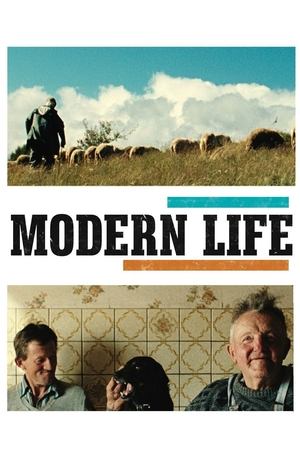
For ten years, Raymond Depardon has followed the lives of farmer living in the mountain ranges. He allows us to enter their farms with astounding naturalness. This moving film speaks, with great serenity, of our roots and of the future of the people who work on the land. This the last part of Depardon's triptych "Profils paysans" about what it is like to be a farmer today in an isolated highland area in France. "La vie moderne" examines what has become of the persons he has followed for ten years, while featuring younger people who try to farm or raise cattle or poultry, come hell or high water.
Feature-length documentary following award-winning wildlife cameraman Vianet Djenguet as he documents a gruelling but vital mission to ‘habituate’ a notoriously protective 450lb silverback, in a last-ditch effort to save the critically endangered eastern lowland gorillas from extinction.
Le Monde secret des libellules
A look at the state of the global environment including visionary and practical solutions for restoring the planet's ecosystems. Featuring ongoing dialogues of experts from all over the world, including former Soviet Prime Minister Mikhail Gorbachev, renowned scientist Stephen Hawking, former head of the CIA R. James Woolse
Documented in television documentaries for over 40 years by the BBC and other broadcasters around the world, the Marsh Pride is the most filmed pride of lions on Earth. In this film, the Marsh Pride battle for survival in Kenya's famous Maasai Mara Reserve, which has become a magnet for tourists, many of them keen to see the pride for themselves. A tale of shifting loyalties, bloody takeovers and sheer resilience, the lions’ story is told by those who filmed them, tried to protect them and lived alongside them, as well as some who ultimately wanted them dead.
She was the first to study gorillas in their natural environment: the high mountains of Rwanda, where she settled in 1967. For nearly twenty years, Dian Fossey lived with the gorillas, observed their behavior, and changed the way people viewed them. Her relentless fight against poaching prevented the species from becoming extinct. But in December 1985, the primatologist was murdered, and the mystery surrounding her death remains unsolved. Former colleagues, scientists, and biographers shed light on the impact of her work, but also on the darker sides of her personality and her uncompromising commitment.
Do we need animals to fill the void that should really be filled by people? To what extent do we project our own deprivation and longing on these sweet pets? All the protagonists in this documentary are indirectly afraid of being rejected and find safety and unconditional love in their animal(s). We observe these relationships and follow them in their steps to overcome their anxieties and insecurities and step into the world of humans more.
Co-directed by Chris Marker and Mario Ruspoli, Three Cheers for the Whale traces humanity’s complex relationship with whales—from reverence to exploitation—culminating in a stark depiction of industrial whaling. Combining archival imagery, commentary, and documentary footage, the film offers both a historical reflection and a call for ecological awareness.
The moral dimension of humanity's interaction with nonhuman animals and the industries that profit from their exploitation, as informed by world religions. A historical explanation of how the current global situation came to be.
The Living Sea celebrates the beauty and power of the ocean as it explores our relationship with this complex and fragile environment. Using beautiful images of unspoiled healthy waters, The Living Sea offers hope for recovery engendered by productive scientific efforts. Oceanographers studying humpback whales, jellyfish, and deep-sea life show us that the more we understand the ocean and its inhabitants, the more we will know how to protect them. The film also highlights the Central Pacific islands of Palau, one of the most spectacular underwater habitats in the world, to show the beauty and potential of a healthy ocean.