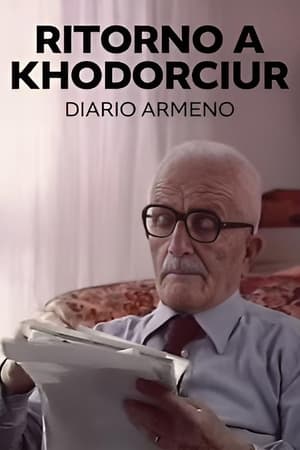
Hansel's grandfather's wife died. They have lived together for over fifty years. For three years he has been living alone, cannot find a place for himself and constantly misses her.
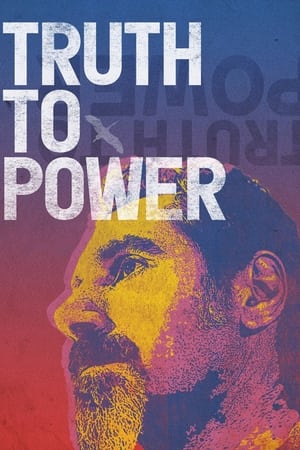
On Easter 2018, a man put on a backpack and began to walk across Armenia. His mission: to inspire a velvet revolution and topple the corrupt regime that enjoys absolute power in his former Soviet nation. With total access to all key players, this documentary tells the story of what happened in the next 40 days.
Armenian Lullaby is based on the verse of my great-great-grandfather, Rafael Patkanian (1830-1892) about a mother who is singing a lullaby to her child, calling on different birds who are associated with various professions. The baby falls asleep only to the song of Falcon, who is singing battle songs, in other words, chooses the profession of a soldier. Traditionally it's considered a patriotic song: in the country that survived genocide, Soviet regime and recent war with Azerbaijan, sons' primary vocation is to become soldiers. This interpretation is dedicated to Mothers of all soldiers.
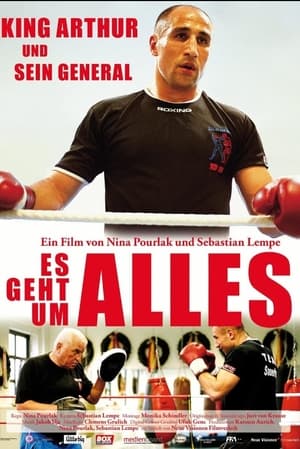
Es geht um Alles
Casimê Celîl was born into a Yezidi Kurdish family in 1908, in a village called Kızılkule, located in Digor, Kars. The village and family life, which he longed to remember throughout his life, ends with the massacre they endured in 1918. During his long road to Erivan, Armenia, he lost all his family members. Left all alone, Casim was placed into an orphanage and was forced to change his name. To remember who he was and where he came from, every morning he repeated the mantra “Navê min Casim e, Ez kurê Celîlim, Ez ji gundê Qizilquleyê Dîgorê me, Ez Kurdim, Kurdê Êzîdî me”, which translates to: “My name is Casim, I am the son of Celîl, I come from the village of Kızılkule in Digor, I am a Kurd, and I am Yezidi”. He clings to every piece of his culture he can find, reads, and saves whatever Kurdish literature or art he comes across. As the year’s pass, Casim finds himself with an impressive collection of Kurdish culture and history.
The last collaboration of Artavazd Peleshian and cinematographer Mikhail Vartanov is a film-essay about Armenia's shepherds, about the contradiction and the harmony between man and nature, scored to Vivaldi's Four Seasons.
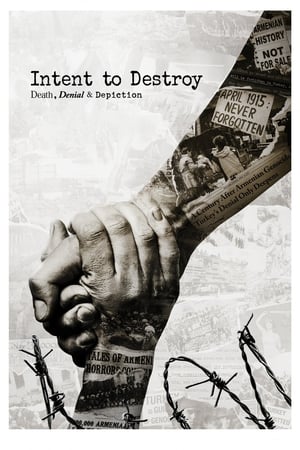
INTENT TO DESTROY embeds with a historic feature production as a springboard to explore the violent history of the Armenian Genocide and legacy of Turkish suppression and denial over the past century.
Filmmaker Binevsa Bêrîvan travels to Armenia to capture the daily life, customs, and history of the country's Yazidi Kurdish community.
Only women, children and old people live in this Armenian village, while the men work in Russia. A life with a rhythm of its own, an independent daily life marked nonetheless by exile.
Turkey's history has been shaped by two major political figures: Mustafa Kemal (1881-1934), known as Atatürk, the Father of the Turks, founder of the modern state, and the current president Recep Tayyıp Erdoğan, who apparently wants Turkey to regain the political and military pre-eminence it had as an empire under the Ottoman dynasty.
An elaborate ceremony marks the opening of the first Armenian church in England.
Ever since the war in Nagorno-Karabakh, the still disputed territory is contaminated by landmines. This documentary follows five female de-miners on their risky job.
The Falcons is an intimate, observational documentary that delves into the world of the Tshakhruk Ethnoband, a remarkable musical ensemble in the Armenian highlands. Comprised of special-needs children that reside at the state orphanage, these young musicians find solace, strength, and self-expression through the transformative power of music.
Garod means longing in Armenian. Longing for a land that lost its people. Longing for the homeland. Longing for a time that is eternally lost. “Garod” is a story of longing. It is about the lives and the musical stories of two Armenian musicians - a father and his son, Onnik Dinkjian and Ara Dinkjian. It tells the story of the remaking of a musical tradition and life in diaspora, passes through different geographies and countries following the traces of a musical tradition. In this documentary, Garod means not only longing for loss but also remaking of a musical tradition and the life itself.
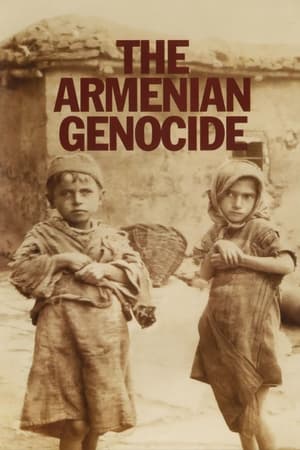
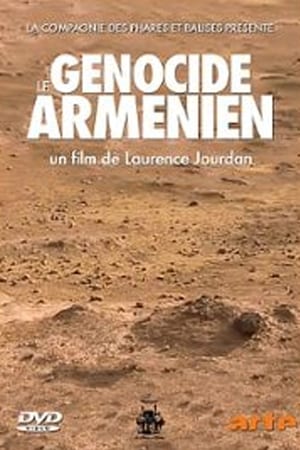
More than one million Armenians perished between 1915 and 1916 in massacres or brutal deportation programs. Turkey still denies it ever happened. Laurence Jourdan examines massacres of Armenians in the decades leading up to the mass murder, and the geopolitical situation both before and after the genocide. Contemporaneous reports and documents written by Western diplomats stationed in the Ottoman Empire describe the methods used and the deportation routes. These accounts are mixed with personal stories from the living survivors and archive footage from Ottoman authorities.
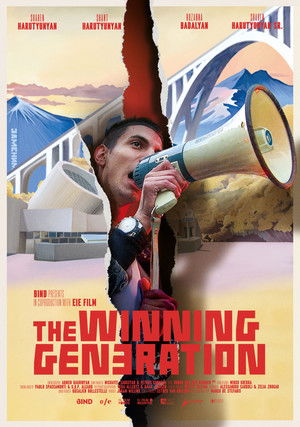
The Winning Generation is a documentary filmed over 12 years, following Shahen Harutyunyan from a 14-year-old activist to an emerging political leader. Carrying the legacy of his father and grandfather in Armenia's long struggle for independence, he transforms their tradition of resistance into a new democratic vision. As Armenia navigates political instability and strong Russian influence, Shahen seeks to forge his own path while redefining what a new generation's fight for freedom could look like.
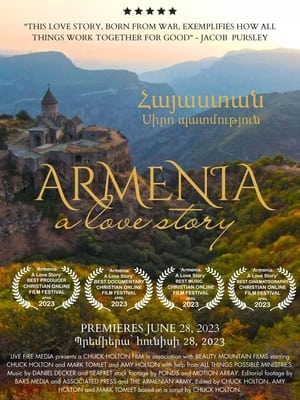
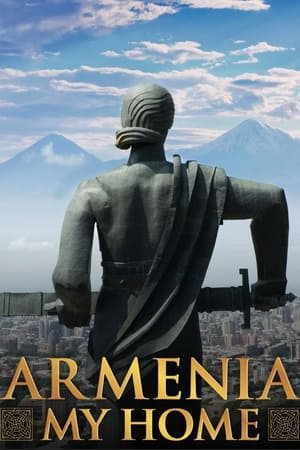
Experience spectacular aerial and ground views and cultural revelations of a country like no other in a virtual tour of Mount Ararat, Khor Virap, Yerevan, the Genocide memorial, and more. Narrated by Andrea Martin, the documentary features prominent voices from the Armenian diaspora including Eric Bogosian, Chris Bohjalian, Peter Balakian, Michael Aram, and others.
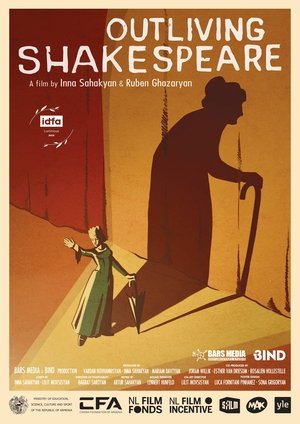
In a decaying Soviet-era retirement home, a vibrant group of elders cling to life by staging Shakespeare. Yet loneliness lingers beyond the theater’s doors, until drama begins to blur with reality.
A feature documentary presented and directed by former Royal Marines Commando Emile Ghessen. The documentary tells the story of the 2020 war between Armenia and Azerbaijan over the disputed region of Nagorno Karabakh. In the fall of 2020, Armenia and Azerbaijan fought a brutal bloody war. Azerbaijan won, decisively. The feature documentary 45 Days: The Fight for a Nation tells the story of this conflict, from the Armenian perspective, focusing on the human cost of war and its impact on the large Armenian diaspora.
Explores the Ottoman Empire killings of more than one million Armenians during World War I. The film describes not only what happened before, during and since World War I, but also takes a direct look at the genocide denial maintained by Turkey to the present day.