Andreas Kieling, a famous German documentary film maker, explores the coldest places in the world. He observes various animals in Patagonia, the Falkland Islands, Cape Horn, South Georgia and Antarctica.
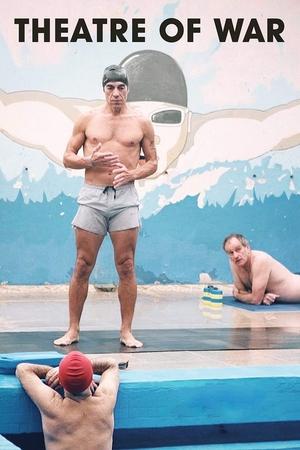
Theatre of War is an essay on how to represent war, performed by former enemies. British and Argentinian veterans of the Falklands war come together to discuss, rehearse and re-enact their memories 35 years after the conflict.
A powerful Argentine political film stands on the figure of an outsider intellectual, Sebreli, but manages to transcend it, he becomes a touchstone to go through Argentina and its dilemmas, through this country that is proud of almost everything it should be ashamed of. From national icons like Gardel, Evita, Che, and Maradona the film dialogs with recent Argentine history and it does so with extraordinary energy, supported by a rarely seen use of all kinds of archive material in an almost Dionysian state of sampleadelia. The film arrives to a surprising reflection on nationalism, demagogic governments and delusions of unanimity; problems that are common to emerging societies that cannot find their ways to a freer and more egalitarian society.
It follows two recruits, Jacob and Marcus, as they embark upon their 12 week training programme to become privates. The new recruits face live firing exercises, camping out in brisk conditions and all the tough training required to be a proficient member of the Islands defence force.
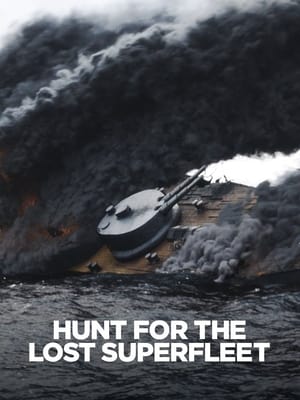
The Battle of the Falklands, between a Royal Navy task force and five German cruisers, was one of the most dramatic and bloodiest sea conflicts of World War I. When the smoke cleared, four of the German ships had sunk, including the flagship and pride of the German fleet, the SMS Scharnhorst. For decades, none of the downed vessels were ever found. Now, more than 100 years later, maritime archaeologist Mensun Bound and his team are searching for the ships and the secrets they hold. It's a race against time and the raging South Atlantic Ocean.
During an assignment for the newscast show Telenoche, Raymundo Gleyzer became the first Argentinean to film a documentary of the everyday life in the Falkland islands (Islas Malvinas). This black & white documentary was originally aired in 1966.
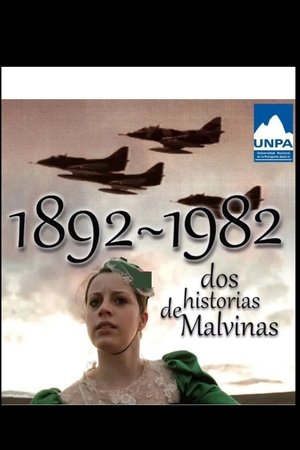
It is a fictionalized documentary, filmed in different locations (San Julián; Estancia La Colmena; Morón, Province of Buenos Aires; Capital Federal and Islas Malvinas). The original idea of the project is to reflect the historical and paradoxical connection that unites continental Patagonia with the Islas Malvinas. It is a story that recreates several moments, both the arrival of Islas Malvinas settlers and the departure of Argentine pilots on combat missions during the 1982 war. The documentary is filmed in a cinematic style, but also incorporates the most rigorous documentary logic: interviews, narration, and careful historical research into the events.
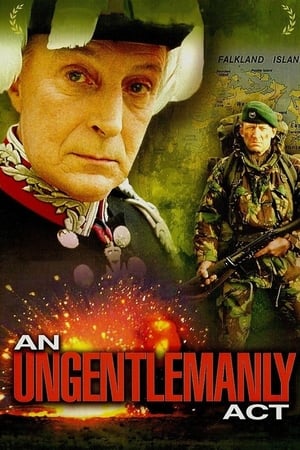
Based on actual accounts, this film portrays the days and hours before and during the invasion of the Falkland Islands by Argentina, which eventually lead to the Falklands War. As the Argentine forces land on the main island and make their way towards Government House, the handful of British defenders batten down the hatches and prepare to defend Governor Rex Hunt, his family, and their fellow islanders from the invaders.
A look at the life of Margaret Thatcher, the former Prime Minister of the United Kingdom, with a focus on the price she paid for power.
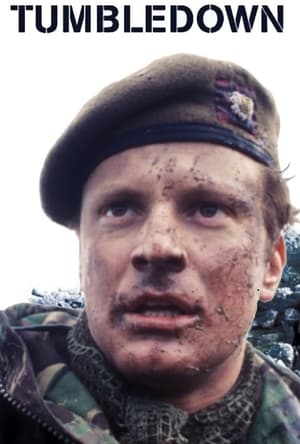
The film centers on the experiences of Robert Lawrence MC, an officer of the Scots Guards during the Falklands War of 1982. While fighting at the Battle of Mount Tumbledown, Lawrence is shot in the head by an Argentine sniper and left paralyzed on his left side. He then must learn to adjust to his new disability.
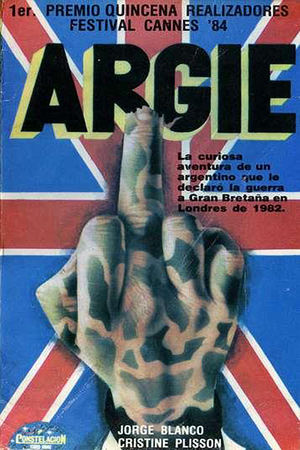
The time is the summer of 1982, and the Falklands war is at hand when the young "Argie" follows a British woman home and is stopped from raping her only because she starts to speak to him in Spanish, soon they enter into an ambivalent relationship, undecided as to whether they love or hate each other, or both. They end up on the streets when she is evicted and life becomes even less stable.
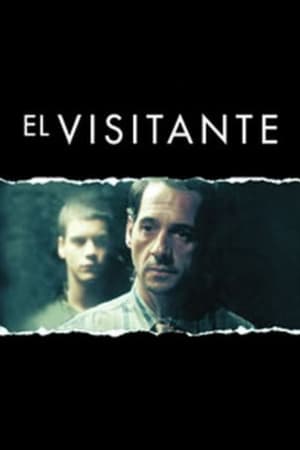
Pedro, a Falklands veteran, cannot forget the days when he was in the trenches, nor can he forget Raúl, his best friend, who stayed forever in that desolate place of nightmares.
This pioneering documentary film depicts the lives of the indigenous Inuit people of Canada's northern Quebec region. Although the production contains some fictional elements, it vividly shows how its resourceful subjects survive in such a harsh climate, revealing how they construct their igloo homes and find food by hunting and fishing. The film also captures the beautiful, if unforgiving, frozen landscape of the Great White North, far removed from conventional civilization.
Starting with a long and lyrical overture, evoking the origins of the Olympic Games in ancient Greece, Riefenstahl covers twenty-one athletic events in the first half of this two-part love letter to the human body and spirit, culminating with the marathon, where Jesse Owens became the first track and field athlete to win four gold medals in a single Olympics.
Part two of Leni Riefenstahl's monumental examination of the 1938 Olympic Games, the cameras leave the main stadium and venture into the many halls and fields deployed for such sports as fencing, polo, cycling, and the modern pentathlon, which was won by American Glenn Morris.
Working men and women leave through the main gate of the Lumière factory in Lyon, France. Filmed on 22 March 1895, it is often referred to as the first real motion picture ever made, although Louis Le Prince's 1888 Roundhay Garden Scene pre-dated it by seven years. Three separate versions of this film exist, which differ from one another in numerous ways. The first version features a carriage drawn by one horse, while in the second version the carriage is drawn by two horses, and there is no carriage at all in the third version. The clothing style is also different between the three versions, demonstrating the different seasons in which each was filmed. This film was made in the 35 mm format with an aspect ratio of 1.33:1, and at a speed of 16 frames per second. At that rate, the 17 meters of film length provided a duration of 46 seconds, holding a total of 800 frames.
Antônio Conselheiro: O Taumaturgo dos Sertões
Louis Ortiz, a down on his luck 40-something Puerto Rican resident of the Bronx, looks in the mirror one day and believes he’s found gold—he’s a dead ringer for Barack Obama. With visions of finally living the American Dream, the charismatic Ortiz launches a complete makeover. He dons Obama’s trademark suit, adopts his mannerisms, mimics his voice and steps out onto the street as a presidential impersonator. Taken on by a casting agent, Ortiz and a gang of other political impersonators, including a Bill Clinton and a Mitt Romney, hit the road during the run-up to the 2012 presidential election to perform satirical debates for mostly Republican conventions, throwing Ortiz into conflict with his personal political beliefs. As Ortiz struggles to make ends meet, the distance between the White House and the Bronx becomes increasingly acute. The life of a president isn’t always as easy as it looks.
Successful British band Japan filmed live in concert at the Hammersmith Odeon, London on 16th November 1982.
The film explores the journeys and philosophies of a select group of experimental musicians including Keith Rowe, Evan Parker, Eddie Prevost, Otomo Yoshihide, Toshimaru Nakamura and Christian Fennesz.