Epigenetics and psychogenealogy through a VERY personal experience.
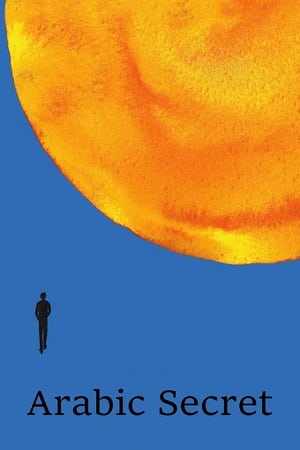
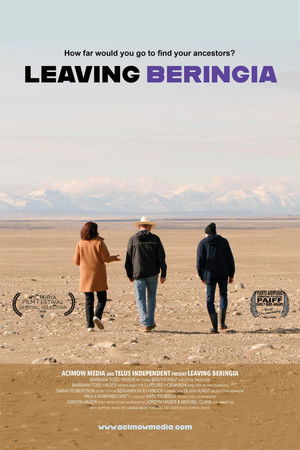
One who doesn't have roots won't be able to grow wings-a documentary project about a man tracking his origins to the Middle East and establishing a connection with his father, whom he have never met before.
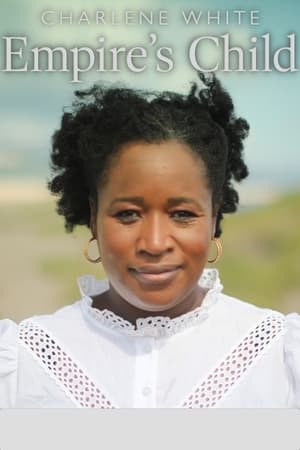
Charlene White embarks on a deeply personal journey to uncover the roots of her connection to the British Empire in a bid to find out if we can ever truly emerge from its shadow. Charlene travels across Britain and Jamaica on a genealogical journey to investigate her own heritage and the relationship between the Empire and her family. By piecing together broken familial records and going back in time to the very start of the British Empire, she makes some surprising discoveries about how the British Empire has shaped her family’s lives and asks what it is to be Black and British.
Filmmaker Peter Kunhardt examines how a one-of-a-kind collection of Abraham Lincoln photos and memorabilia have profoundly shaped the lives and sensibilities of five generations of his family.
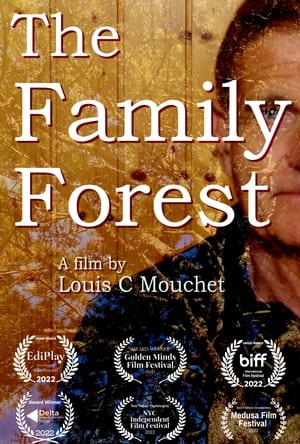
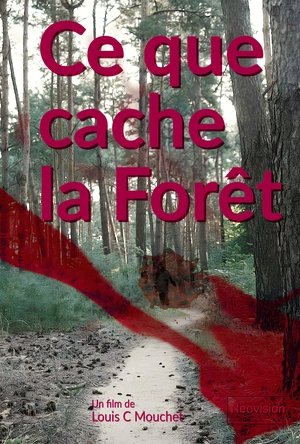
CE QUE CACHE LA FORÊT (What the Forest conceals) explores the invisible inheritance we carry within us: that of the family unconscious passed down from generation to generation. Personalities as varied as psychologist Anne Ancelin Schützenberger, systemic therapist Bert Hellinger and artist Alexandro Jodorowsky have, each in their own way, revealed the existence of these unresolved stories that profoundly influence our lives. Today, epigenetic research confirms that trauma can mark our genome, and be passed on beyond those who experienced it. But how do these memories get inscribed in us? How can they be recognized, overcome and healed? Filmmaker Louis Mouchet shares his own journey through this deeply personal film. This process was nourished by : The making of and follow-up to the film La Constellation Jodorowsky, An introspective dive triggered by the death of his mother and the simultaneous birth of his first child, A powerful session with Romanian therapist Cristina Schmidt.
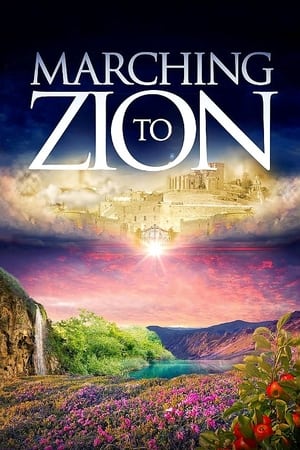
Documentary tracing the history of the Jewish people from the destruction of the temple in AD 70 to the modern-day nation of Israel. Through scriptural and historical evidence, DNA, mathematics, and testimony from rabbis and pastors, it attempts to answer the question, "Who are God's chosen people?".
L'Edit de Nantes ou la paix civile
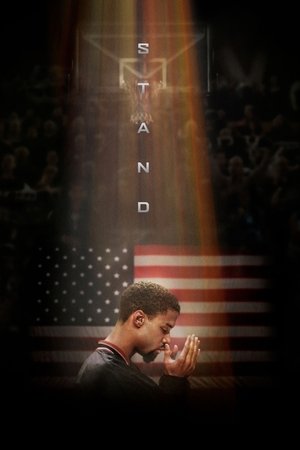
Raw and unflinching examination of the courageous life of basketball star and social justice activist Mahmoud Abdul-Rauf. Born Chris Jackson, he overcame tremendous adversity to reach the NBA and found his true calling when he converted to Islam. His decision not to stand for the national anthem, however, turned him from prodigy to pariah. Told candidly by Abdul-Rauf himself more than 20 years later it’s the remarkable story of one man who kept the faith and paved the way for a social justice movement.
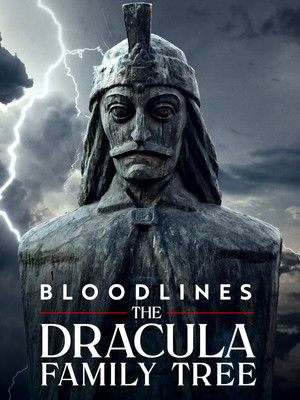
Almost 30 years ago, two scholars from Boston revealed the historical truth behind the legendary vampire known as Dracula. For the first time, their 15-year research demonstrated the link between Bram Stoker's infamous vampire and a 15th century prince named Vlad Tepes, or "Vlad the Impaler."
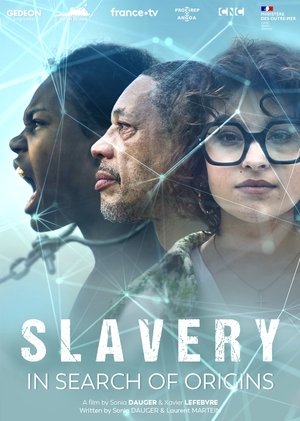
Aux origines, l'esclavage
The story of a poor young woman, separated by prejudice from her husband and baby, is interwoven with tales of intolerance from throughout history.
A wide-ranging, energetic period piece tracing the rise of the Protestant Henry of Navarre as he goes from battlefield warrior to France's beloved King Henri IV. Director Jo Baier's epic is a classically entertaining adventure, albeit one with more than a little bloodshed and frequent bawdy sexual interludes. In late 16th-century France, Catholics and Protestant Huguenots were at war. Seemingly seeking peace, the French dowager queen, Catherine de Medici summons Henry to her court to have him marry her daughter, uniting the two warring factions. However, the Catholics slaughter the Protestant wedding guests in what became known as the St. Bartholomew's Day massacre and Henry-now married-must use all his guile to both stay alive and maneuver for the throne. [Written by Palm Springs International Film Festival]
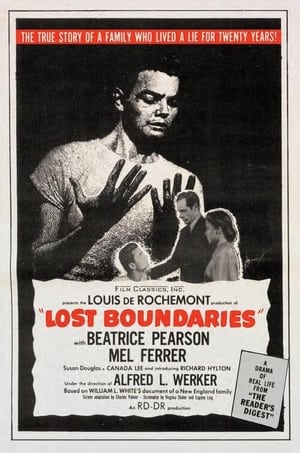
A light-skinned African-American family are "passing" in an all-white New England town. When the truth comes out, the more prejudiced neighbors demand their expulsion from the community.
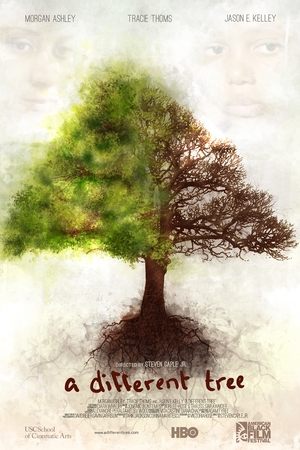
An eight-year-old girl tries to build a relationship with her absent father through a class-assigned family tree.
This pioneering documentary film depicts the lives of the indigenous Inuit people of Canada's northern Quebec region. Although the production contains some fictional elements, it vividly shows how its resourceful subjects survive in such a harsh climate, revealing how they construct their igloo homes and find food by hunting and fishing. The film also captures the beautiful, if unforgiving, frozen landscape of the Great White North, far removed from conventional civilization.
Starting with a long and lyrical overture, evoking the origins of the Olympic Games in ancient Greece, Riefenstahl covers twenty-one athletic events in the first half of this two-part love letter to the human body and spirit, culminating with the marathon, where Jesse Owens became the first track and field athlete to win four gold medals in a single Olympics.
Part two of Leni Riefenstahl's monumental examination of the 1938 Olympic Games, the cameras leave the main stadium and venture into the many halls and fields deployed for such sports as fencing, polo, cycling, and the modern pentathlon, which was won by American Glenn Morris.
Working men and women leave through the main gate of the Lumière factory in Lyon, France. Filmed on 22 March 1895, it is often referred to as the first real motion picture ever made, although Louis Le Prince's 1888 Roundhay Garden Scene pre-dated it by seven years. Three separate versions of this film exist, which differ from one another in numerous ways. The first version features a carriage drawn by one horse, while in the second version the carriage is drawn by two horses, and there is no carriage at all in the third version. The clothing style is also different between the three versions, demonstrating the different seasons in which each was filmed. This film was made in the 35 mm format with an aspect ratio of 1.33:1, and at a speed of 16 frames per second. At that rate, the 17 meters of film length provided a duration of 46 seconds, holding a total of 800 frames.
Antônio Conselheiro: O Taumaturgo dos Sertões
Louis Ortiz, a down on his luck 40-something Puerto Rican resident of the Bronx, looks in the mirror one day and believes he’s found gold—he’s a dead ringer for Barack Obama. With visions of finally living the American Dream, the charismatic Ortiz launches a complete makeover. He dons Obama’s trademark suit, adopts his mannerisms, mimics his voice and steps out onto the street as a presidential impersonator. Taken on by a casting agent, Ortiz and a gang of other political impersonators, including a Bill Clinton and a Mitt Romney, hit the road during the run-up to the 2012 presidential election to perform satirical debates for mostly Republican conventions, throwing Ortiz into conflict with his personal political beliefs. As Ortiz struggles to make ends meet, the distance between the White House and the Bronx becomes increasingly acute. The life of a president isn’t always as easy as it looks.