Terry Wilson is a 70-year-old lifelong resident of Meadowvale Village, Ontario's first heritage district. As development looms and begins to destroy Terry's favourite place in the world, he recreates pieces of history in his backyard, crafting an oasis where it feels like nothing has changed. A beautiful tribute to his childhood, his mother, and his town, Terry passionately fights to preserve history in a world that's too anxious for change.
With their gramophone perched on the back of their launch, the family set off for a day of rest and relaxation on the Broads and Suffolk coast.
This documentary tells the story of the revitalization of the Longwood Garden's (Kennett Square, Pennsylvania) Main Fountain Garden, a lavish jewel in the crown of one of the greatest collections of fountains in the United States.
Isamu Noguchi was a sculptor, designer, architect, and craftsman. Throughout his life he struggled to see, alter, and recreate his natural surroundings. His gardens and fountains were transformations meant to bring out the beauty their locations had always possessed.
Bournemouth offers a variety of sports, pastimes, steamer trips, and fine dining for holidaymakers, competing with cheaper foreign holidays and offering a variety of transportation options.
A film about astronomy which also happens to show views of the ancient city of Winchester, before focussing on a particular house in the suburbs with its own observatory.
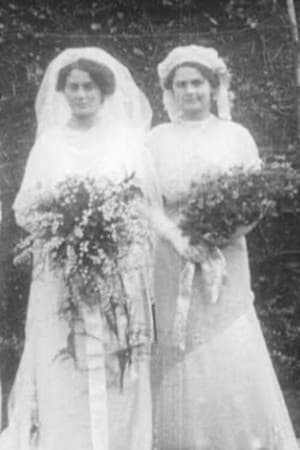
The mayor's daughter gets hitched in style in the Kent market town.
On a blustery January day bishops arrive for the opening of the new Knutsford Test School.
A group of children is playing in the garden.
Viewers are immersed in revolutionary landscape designer Piet Oudolf’s work and given an insight to his creative process, from his beautifully abstract sketches, to theories on beauty, to the ecological implications of his ideas.
In the past, the now 82-year-old Leo happily traveled with his wife Riet to faraway lands. But since the first signs of Alzheimer’s, the father-in-law of filmmaker Marco Niemeijer prefers his own backyard above anywhere else. There, surrounded by his beloved trees and plants, Leo tries to keep hold of his increasingly confusing existence. Over the course of a year, Niemeijer films Leo every month, from season to season. Whether rain or shine, Leo can always be found in his trouble-free refuge. At first his words and actions are coherent, but as time passes, these become increasingly illogical. Leo begins to wander more aimlessly, playing with a thought and then losing it. Various mantras help him deal with his situation, such as "What I’m not looking for, I will not miss." The intimate yard scenes alternate with old home videos made by Leo during his wanderlust years.
An intimate meditation on exile and home, Prysia’s Garden portrays the quiet life of aging Ukrainian refugee Prysia through the detailed photographic lens of first-generation Ukrainian-American Lida Suchy. By confronting Prysia’s story, Lida reflects upon her own roots, looking to understand what makes a new place a home.
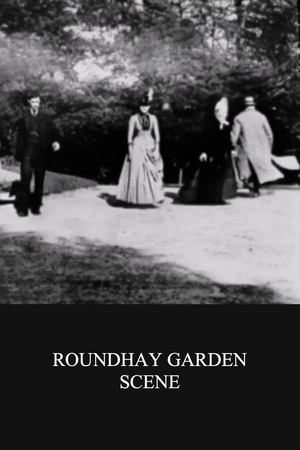
The earliest surviving motion-picture film, and believed to be one of the very first moving images ever created, was shot by Louis Aimé Augustin Le Prince using the LPCCP Type-1 MkII single-lens camera. It was taken on paper-based photographic film in the garden of Oakwood Grange, the Whitley family house in Roundhay, Leeds, West Riding of Yorkshire (UK), on 14 October 1888. The film shows Adolphe Le Prince (Le Prince’s son), Mrs. Sarah Whitley (Le Prince’s mother-in-law), Joseph Whitley, and Miss Harriet Hartley walking around in circles, laughing to themselves, and staying within the area framed by the camera. Roundhay Garden Scene is often associated with a recording speed of around 12 frames per second and runs for about 2 to 3 seconds.
4 hectares of ground are the gardens that surround the Calouste Gulbenkian Foundation in Lisbon. Throughout one year João Vladimiro’s camera follows the work of landscape architect Gonçalo Ribeiro Telles, commissioned by the Calouste Gulbenkian Foundation. “I know that the trees don’t have eyes, that the water doesn’t have a mouth, and that stones don’t have ears. Still, we communicate. In this particular garden, long mute talks take place, like the two elders that, through their sheer presence, talk to each other about calmness, comfort and sadness.”, says director Vladimiro, whose patient camera eye pays attention to the smallest events.
"The acid soil of New England, its wide stretches of hardwoods, its numerous sugar maples, its rolling or mountainous character, the sunshine of its autumn weather, all these contribute to the glory of this annual display. The birches of Maine the aspens of the White Mountains, the sugar Maples of Vermont, the long rainbow of the Connecticut River Valley cutting from top to bottom through New England, the Berkshires - mention these to anyone who has traveled widely through a New England fall and you will evoke instant memories of superlative beauty." -Edwin Way Teale, Autumn across America, 1956
Large numbers of children and adults can be seen enjoying themselves, splashing about in the water or diving from the high-boards.
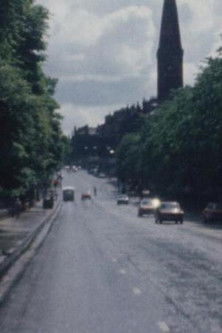
Take a virtual stroll down the streets of Glasgow’s iconic Great Western Road.
Somewhere between the mountains and valleys a small autumn flower bloomed.
As the day comes to an end deer graze on a hillside, wild turkeys pass through a grassy field, and the full moon rises.
90-year-old architect Shuichi Tsubata and his 87-year-old wife Hideko live in Aichi Prefecture. Their garden is bursting with 70 types of vegetables and 50 types of fruits, and they live in harmony with nature.