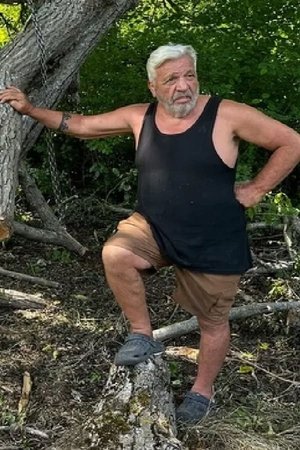
Looby is the story of what happens when an artist chooses to speak out. For Australian painter Keith Looby, it cost him almost everything. Winner of prestigious art prizes and collected by major galleries at home and abroad, Keith's addiction to speaking his mind has left a string of failed business relationships, marriages and friendships. Bludgeoned into coherence by the film-makers, assessed by dealers, curators, critics and fellow artists, Looby is a chance to look at a brilliant artist who had his moment in the sun, and to ask whether he should have another.
The Enigma of Hedonism are profile documentaries that tell the life of Heri Dono. His attitude and view as an artist that transcends canvas and time has had an important impact on artists and artists in other fields in their work. Not only that, his exploration of the various and types of working mediums and the experience of participating in various prestigious exhibitions in the world has made him dubbed as the greatest artist of Indonesia today.
O Cristo de Vitória da Conquista
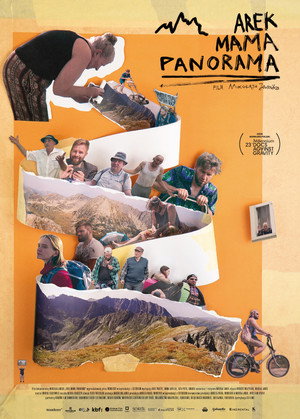
An overprotective mum, a taciturn dad and a creative crisis? Arek Pasożyt really has his work cut out for him! In search of inspiration, he heads off to the Tatra Mountains. There, he stumbles upon a clue leading to the Panorama of the Tatras — the largest painting in Polish history, which went missing 130 years ago. Arek decides to find it.
With exclusive behind-the-scenes access, seldom-seen footage from the archives and a rare interview with Kirsty Wark, this is the story of a true visionary of British art.
In Rembrandt, Haanstra shows that it is possible to make a fascinating film only with images from paintings. He had to travel though all over Europe to numerous museums and private owners in order to film the works of art. In the work of the great painter, Haanstra recognizes his particular interest in man as an individual human being, cutting straight through all the religious motives. And Haanstra also wants to see Rembrandt as an individual.
Loana : Destin tragique d'une icône brisée
This feature doc profiles acclaimed writer Alistair MacLeod. Hailed internationally as a master of the short story, MacLeod also wrote a novel, No Great Mischief, which was celebrated around the world. Depicting men and women living out their lives against the haunting landscape that surrounds them, most of MacLeod's work is firmly based in Cape Breton even if his characters stray elsewhere. Focusing on the complexities and abiding mysteries at the heart of human relationships, MacLeod maps the close bonds and impassable chasms that lie between people and invokes memory and myth to celebrate the continuity of the generations. This film portrait explores the life and work of this giant of literature.
Documentary on the design and choreography of Oskar Schlemmer (1888-1943), an artist and teacher associated with the Bauhaus. After a discussion of his artistic philosophy and goals, illustrated by his drawings, reconstructions of his choreographic works are seen in action, each with a brief introduction.
In the 1980's, something changed the world forever. Computer technology, mostly due to the appearance of affordable Commodore 64's, entered households worldwide, providing the opportunity for everyone to create digital art. Moleman 2 is about the demoscene subculture, told by mostly Hungarian sceneres, but it features also some other nationalities.
The story of artist Edith Lake Wilkinson, a painter who was committed to an asylum in 1924 and never heard from again. All her worldly possessions were packed into trunks and shipped to a relative in West Virginia where they sat in an attic for 40 years. Edith's great-niece, Emmy Award winning writer and director Jane Anderson, grew up surrounded by Edith's paintings, thanks to her mother who had gone poking through that dusty attic and rescued Edith's work. The film follows Jane in her decades-long journey to find the answers to the mystery of Edith's buried life, return the work to Provincetown and have Edith's contributions recognized by the larger art world.
The Wall Street stock trader were astonished when they passed at a five-metre bronze statue of a bull on there way to work on December 16, 1989. Also New York's Mayor and city administration wondering who had placed the three-ton work of art there. One of the most unusual and imaginative artists of our time was behind the action: the Sicilian-born Arturo Di Modica. This is the story of the statue, which became a symbol of Wall Street.
A documentary film about Oscar-nominated animator Bill Plympton. This is a portrait piece that includes interviews with family, friends, colleagues, critics, and fans.
Milah van Zuilen, visual artist and forest ecologist in training, uses the square to deal with the habit of people to construct nature. Square Fieldwork is filmed in the Bohemian forest in the Czech Republic and the concrete structure of Barendrecht, The Netherlands.
The story of the 2007 Metropolitan Museum Costume Institute Ball.
Deeply thoughtful and illuminating, DRAWING A LIFE reveals the details of artist Geoff McFetridge’s life and work while delving further into the universal questions of what makes a fulfilling life and how to live with intention in the limited time we all have.
Using rare images of the artist filmed at work in his studio, exclusive interviews with his family and close friends, photographs by Henri Cartier-Bresson, and unpublished artwork, this award-winning feature documentary highlights the painter’s complex creative process. Acclaimed as the definitive film portrait of the master, Balthus through the Looking-Glass was shot on Super 16 over 14 months in Switzerland, Italy, France and the Moors of England by the director of Fellini, I’m a Born Liar. (Arte)
In this film, outspokenly homosexual filmmaker Rosa von Praunheim has documented his encounters with friends in the New York "underground" arts movement, the better-known of whom are William Burroughs (who says nothing for the camera), Andy Warhol (seen in the distance) and Fernando Arrabal (who is interviewed in Spanish). The emigrants named in the title are notable Germans who left the country before World War II, such as Greta Keller and Grete Mosheim. Reviewers at the time of the film's release considered it to have been a sort of paid vacation for the filmmaker rather than a serious effort. (Clarke Fountain, Rovi)
In this short 20 minute black and white Belgian documentary, the director, Paul Haesaerts, visualised Pablo Picasso’s flow of imagination when the Spanish painter drew on large glass plates in front of the camera – like a live show of a greatest artist in performing a few masterstrokes that outlines a dove, bull, flower, man or woman and whatnot. (This technique of filming his painting from the other side of the glass plates precedes The Mystery of Picasso (1956), another famous documentary film on Picasso). (via http://www.kubrickians.com/2012/07/08/visite-picasso-1949-paul-haesaert/)
Nostra Torino Oscura