Writes Ando, "Oh! My Mother was the first work I made using a newly bought 16mm camera I had purchased with the writer Shuji Terayama in Paris. This piece was selected for the Oberhausen International Film Festival. In 1969, there were, of course, no video cameras like ones we see now, and color TVs were only found at broadcast television studios. I had just been employed at the TBS (Tokyo Broadcasting System), and I often snuck into the studios after hours to experiment with the equipment. Oh! My Mother was made using the feedback effect, which is produced by infinitely expanding the image by looping the video."
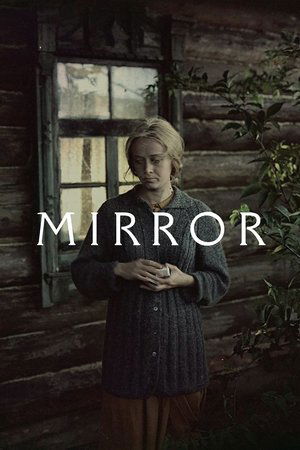
A dying man in his forties recalls his childhood, his mother, the war and personal moments that tell of and juxtapose pivotal moments in Soviet history with daily life.
Landscapes revealed themselves through text, paper through movement, while the sun gave them relief. This is a journey across found words, enunciating a discovery, their textures constructing the sea and the waves, in a travelogue from the first exploration, the first step over the sand towards the shore. “Amor” writes this joy to underline it in its time, captured on paper. This film has been composed through a scanner, and it’s the first chapter of the “Reír al Sol” series.
After his mother's death, a young man edits the family's home videos to bring back her image. As he delves into the occult he begins to reveal the paradoxical magic of memories and cinema.
Obinagụ is not human. They are a spirit who walks among us, taking the form of a worker each day, only to return each evening to the forest they call home, a place where they feel whole and free, where they don’t have to perform or hide.
The Garden is an experimental work that describes the inner worlds of two sisters manifested through their connection with the garden outside their home. While mourning the passing of their close relative, the sisters encounter a man in the garden, evoking a sense of mortality in one and awakening the sensuality in another. The film was directed by Ong Ann Meng (better known as Meng Ong), who went on to win numerous awards for his short films at the Singapore International Film Festival between 1991 and 1993. His first feature, Miss Wonton (2001), won the FIPRESCI Prize at the Locarno International Film Festival.
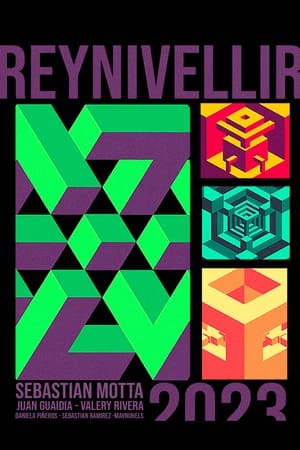
Reynivellir is a representation of the transit that is generated when approaching the art work, described with visual games that can well be evoked by the same brain when witnessing the impossible figures of Jose María Yturralde. Reynivellir is also a beach in a country that is a musical sonnet, and this is so because the mental image does not always connect the articulated parts of a sensation, it is systematic, but aleatory, and it is from these notions of the field of observation, that it approaches and moves away from understanding, linking and unlinking forms, movements, sounds, sensations and knowledge.
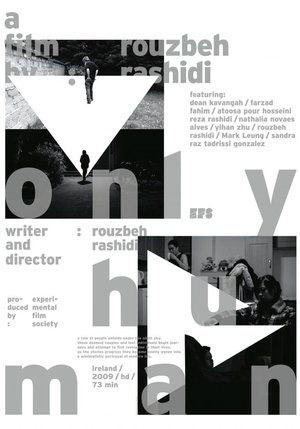
A tale of people unfolds under the night sky. These doomed couples and lost individuals begin journeys and attempt to find resolution in their lives. Love is observed from a distance, sadness is in the air. With little sympathy for the loss and destruction caused to the characters, the stories progress and become neatly woven into a minimalistic portrayal of modern life.
The Hypergaussian Wars is an AI-generated feature-length audiovisual work exploring algorithmic warfare, obsolete media and the transformation of images through repetition, saturation and collapse. Built from thousands of generated images, synthetic landscapes and references to 14th–16th century painting, the film stages a continuous conflict between historical visual culture and contemporary computational systems. Fragments of obsolete video games, ruined architectures, military simulations and post-human figures circulate through increasingly unstable environments. Rather than telling a linear story, the film operates as an image system in which visual excess progressively erodes meaning. The Hypergaussian Wars reflects on memory, obsolescence, artificial intelligence and the persistence of images after their original function has disappeared.
After the end of a relationship, a young Belgian woman remains alone in an isolated house and turns silence, repetition, and solitude into forms of existence and resistance to forgetting.
An unnamed character is trapped in a cubical white room where others can enter and leave, but which he himself apparently cannot leave. A stool is brought in covered in strawberry jam, the furniture changes throughout the play. The main character is subjected to an increasingly puzzling and frustrating series of encounters, as a variety of people come through various hidden doors. But, as many remind him, he can only leave through his own door, so he must find it.
An outrageous erotic poem focusing on the daydreams of a beautiful boy prostitute who, from the seclusion of his ultra-kitsch apartment, conceives a series of interlinked narcissistic fantasies populated by matadors, dancing boys, slaves, and leather-clad bikers.
Human, Tears, Art
Capturing life through the lens of a dream, Albert explores the evocation of the subconscious mind through the vivid visualism and dynamism of images.
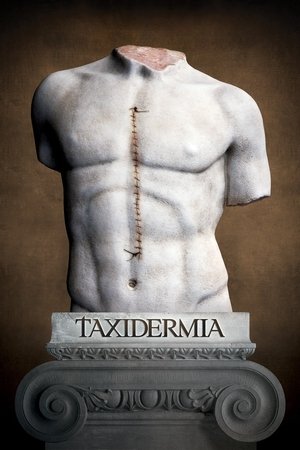
Three stories. Three ages. Three men. Grandfather, father, son. One is an orderly, one is a leading sportsman, and one is a master taxidermist. One desires love, the other success, and the third immortality.
Before the freeze, there was beautiful garden. "Before the Freeze" is a short psychological thriller with experimental elements, about an overstressed, newly-single mother, her daughter, their dog, and what happens one afternoon when a friend comes over. "Before the Freeze" is Tenley E. Raj's debut film. Written, directed, shot, and edited and by Tenley E. Raj.
A short, experimental film that traces how two lovers (who are actually CCTV cameras) argue about love, ownership and sex in a virulently capitalist state of thought, while negotiating new terms for their increasingly anarchic relationship.
Phantom Islands is an experimental film that exists at the boundary of documentary and fiction. It follows a couple adrift and disoriented in the stunning landscape of Ireland’s islands. Yet this deliberately melodramatic romance is constantly questioned by a provocative cinematic approach that ultimately results in a hypnotic and visceral inquiry into the very possibility of documentary objectivity.
A young woman dreams of a jellyfish in a sea of blue. Far below the surface the jellyfish dreams of her and glimpses a secret she keeps
A young man performs 'pranayama' sitting against a bleak wall. We observe him through a frame that seems to be connected to him in some way. As we go on to witness the nature of the frame, will the images presented to us be able to convey his intentions, thoughts, and ultimately, his fate? This experimental feature film is comprised of 7 parts of black and white imagery with no sound at all.