OASIS, a documentary that tells us about water's historical role in Western Sahara via the true stories of people who turned this wild desert into a place full of life.
The rocks, sculpted by sea and wind, stand resilient, displaying the scars of the fragments torn away. From that beach, a young Sahrawi embarks on a mental journey to his last visit to the camps. The places, the rituals, the history, and the time make his voice merge with the memories of his mother's stories, showing a deep contrast between the situation in the recent past and the present.
This film presents, through the eyes four students - Gemma, Colo, Cristian and Mireia - their experience of the trip, the feelings that moved them, the work carried out in the camps and, above all, their contribution to raising awareness of the unresolved difficulties the Sahrawi people face.
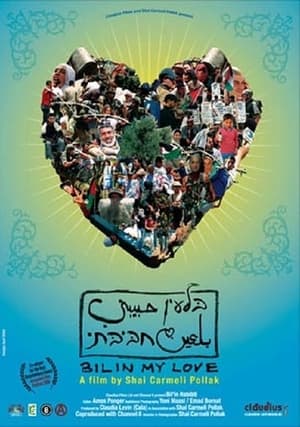
The Israeli filmmaker Shai Corneli Polak records the building of the 'security wall' through Palestinian territory at the village of Bil'in. The villagers protest mostly peacefully, while the Israeli army doesn't react peacefully. By now the Israeli High Court has ruled that the building of the wall was illegal.
Ahead of the U.S. Presidential Elections, Angela Scanlon travels across America to meet some of Donald Trump's most unlikely supporters - including a second-generation Mexican American who wants Trump to build that wall.
Anna Osborn and Sonia Rockhouse were forever changed when the Pike River Mine Disaster stole their loved ones, but instead of sitting down, they stood up! But They Did tells Anna and Sonia's story, following them through the period of time before and during the re-entry of the mine.
The magic of life in the desert and that which takes place on a stage, the tricks that one has to learn in order to survive and those that bring a smile to your face. Two worlds that you find behind a clown’s nose and 1500 excited children.
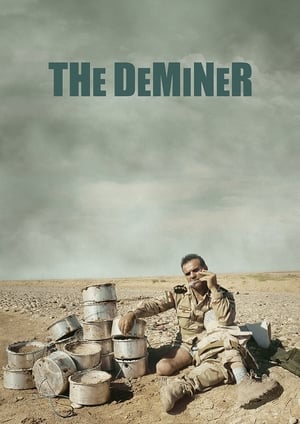
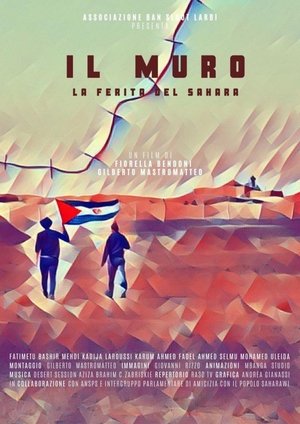
Western Sahara is a conflict region located in North West Africa. After a bloody war in the region, the land is littered with landmines and war ruminants and explosives. There are about 7 to 10 million landmines still buried there, especially in the area close to the wall built by Morocco and which separates Western Sahara into two. Landmines in the area have a huge impact on life in general; human casualties, cattle and irreversible environmental catastrophes.
Every year, approximately 800 Sahrawi boys and girls leave the refugee camps to study in Cuba, Algeria and Libya… 15 years later, they return biologists, doctors, engineers… but when they get back to the refugee camps all they have is the desert…
Silence always surrounds the mine, first when it explodes and then when it eternally haunts its victims. The history of the silence of this fire hidden by Morocco in the sand of Western Sahara has left more than 4,000 victims in what is considered the largest minefield in the world. Daha and Fatimetu suffered the effect of the silence of the mines, their lives changed forever, like that of the Saharawi people who, after 14 years cleaning the desert of artifacts, the rupture of the ceasefire have left the future of the contamination of their territory.
Taleb, who came to a refugee camp at the age of five in 1975 and returned there after his studies abroad, tells of his life as a displaced person, his gratitude for the reception and support in Algeria, and his hope that the Sahrawis may one day return to their homeland. For Taleb, this hope drives him to actively prepare for better times: as a graduate in agricultural sciences, he conceived a successful small-scale closed-loop economy in a desert under the most difficult conditions, producing enough food for self-sufficiency.
"We used to travel trough Sahara in quest for clouds. We did not depend on no airplanes, nor cars, just on our camels” Sahrawi grandpas recall today. Since 1975 Sahrawi people live in refugee camps, surviving the desert, fighting for its independence. This documentary is witness of the birth of two Sahrawi girls, of the love that their families celebrate at their birth and at the same time is witness of their heritage of fight to recover their freedom.
Documentary that explains the current climate of political turmoil in the north of Africa caused by the embedded problem of the decolonization of Western Sahara. A region on the brink of war. The responsibility of Western governments and social media, especially France and Spain, whose foreign policy based on economic interests puts on the background moral principles. In the case of Spain also its responsibilities as administrator of the territory which has triggered a situation of chaos and violence. The film describes the current situation of Western Sahara in its three conflict zones, presents its protagonists and denounces the informative silence condemning the Saharawi people to the oblivion.
With help from the city of Gavá, the Sahrawi painter and artist Mohamed Moulud Yeslem, presents here in the city his project “a flower for every landmine.” Through this initiative, he has mobilized schools, civil society associations, other entities and even private citizens to make flowers and bring them to be planted next to the landmines that hide the world’s longest wall, a wall constructed by Morocco in Western Sahara and which has reaped division among the Sahrawi people for over 33 years. In all, they have planted 3500 flowers, but they have also learned that they are not just planting flowers for Western Sahara, but to fight against all walls or other buriers to humankind, wherever they may be.
Smara is the city of dust, kingdom of sirocco, a surviving ruin of a suffocating region… Thousands of Sahrawis who fled Western Sahara after the war against Morocco (36 years ago) live in this refugee camp, located in the Sahara’s inhospitable north, in the middle of the Algerian hamada. They live here, under poor human conditions, thanks to international help. A small film cooperative fights, with barely any means, to elevate the voices of young Saharawis. It is one of the many Nollywoods (Hollywood of emptiness) found in Africa.
Mektub portrays a day in the life in the Sahrawi refugee camps, along with the declarations of some of its protagonists. But behind this seemingly calm life hides a common fight, which is to continue fighting and protesting to accomplish the single common goal that all Sahrawis have as a nation: to take back the occupied land, rebuild their country, and reunite with their families.
This is the reality of women of the same nation who live divided by the wall that has separated them for 35 years now. Exiled Sahrawi women who live in the refugee camps in Tindouf (Algeria) have a 88% representation rate in teaching and in healthcare, and 9% in government, evidence that they are the fundamental pillar of society. The ones who remained in the occupied territories of Western Sahara are part of every aspect of the struggle and activism against Moroccan occupation. They protest at the intifadas, they research the plunder of their natural resources, they paint flags, write pamphlets and they belong to the organisations that defend Sahrawi human rights in Western Sahara. These women: former prisoners, formerly missing, activists, today are tortured, harassed, followed, surveilled and violated simply for defending their legitimate right to freely express themselves in favour of Western Sahara’s independence.
A documentary that shows the current state of territorial limbo in which the Sahrawi people live through the gaze of those who arrive and leave, those who resist, of the occupiers and the occupieds; a multifaceted view of what is behind the facts.
A nine-year old girl, Naha, who in day-to-day life studies primary education en Wilaya de Smara is the point of departure for this documentary. Through the her family life, teachers, those responsible for Sahrawi education and NGOS, we understand the education system in the camps causing us to be in awe of the patience of the Sahrawi people, refugees for 35 years, holding out hope for a definitive solution to the conflict. This documentary intends to introduce the viewer to the situation of the Sahrawi people in the camps through one of the most basic needs for the development of a community: chidren's education. Education in the Sahrawi refugee camps is supported by women being those that develop and strengthen the task of educating in schools.
Bubisher, as well as being 'the bird of luck', is a word loaded with literary meaning in Spanish in the Sahrawi refugee camps of Tindouf. Seeing the way in which two cultures interact through small stories and tales can is striking and so is the contrast between the resilience of the young female generations and the realities of life in the desert. This documentary paints a picture of a generation of young female Sahrawis.