Alongside England, Spain is the other great historical monarchy on the European continent. Sex, money, revenge, and betrayal—the recent history of the Spanish monarchy reads like a suspenseful soap opera. We take a closer look at the best-kept secrets of the Spanish crown: its true heritage, its daily lifestyle, and finally, how the women of the family took power.
Composed of images filmed in April 1975, a few months before the Green March, during an expedition of more than 3000 kilometres across the then Spanish Sahara, a unique testimony of the life of this region in an era in which it was preparing for its independence.
Presentation of Western Sahara’s history and the Polisario Front’s struggle for the independence of this territory, which has been occupied by Morocco since 1976. It shows the social organization of the Polisario Front, gender equality, which is highlighted (particularly in combat), vaccination campaigns, military training from the age of 14, and education into Sahrawi culture, traditions, and music.
28-year-old Azman, a student in the film school Abidin Kaid Saleh, explains how he discovered film in the Sahrawi refugee camps, the difficulties he had explaining his choice of study to his family, and how his society views this career.
The documentary reflects the voices and photographic looks Saharawi women because they are the protagonists of this project allows us to see between the lines injustices and gaps in a decadent international system and little bit attached to reality, however, they are also women who with their example remind us that even in the injustices, despair and deprivation there is hope and dreams do not end.
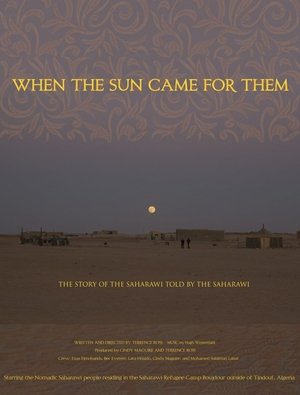
When the Sun Came for Them is a series of interviews with the nomadic Saharawi people in the Western Sahara. They discuss their remarkable history, their poetic life style and their strong morals. They recount the horrific Moroccan invasion, which forced them into the Algerian refugee camps. This is a powerful and unique movie, which not only preserves the Saharawi people’s personal and cultural history as nomads, but also documents what it means to be a “state-less” person. It is a human rights plea to a world, which has been sadly silent on the long time abuse of the Saharawi people. When the Sun Came for Them documents what it means to be a “state-less” person and how after decades of abuse even pacifist Muslims are turned into fighters committed to war. It is a timely and important film. All was shot by a crew of three recent college graduates on two iPads. It is true backpack journalism.
Embarka, Sahrawi girl, born in a world that wasn't her world.
Through exclusive testimonies and clandestine videos, this documentary gives voice to courageous women in Iran who risked their lives to share their stories and to prominent women in culture, art and academia who were forced to leave their beloved country. They are a guiding force, able to explain through their individual, perilous and often tragic experiences, the drastic shift of a nation, caught between patriarchy, deep economic crisis, corruption, rigid religious and ideological beliefs.
A documentary about monks evacuating from Valamo, Ladoga to Finland during the Winter War.
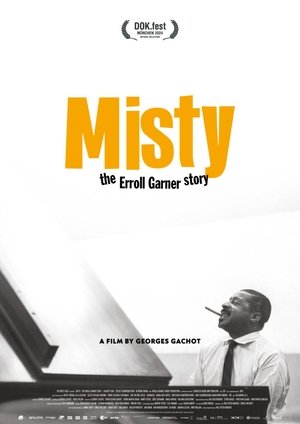
The brilliant self-taught pianist Erroll Garner left his mark on jazz forever. His song Misty, which he allegedly composed between two concerts on an aeroplane, immediately became one of the great jazz standards and is still one of the most covered ballads in the world today. Who was the man behind the ever-friendly smile from the ghettos of Pittsburgh, whose talent brought him to the biggest international stages?
Haitian history is presented through an explosion of colour, dance and music, as the country prepares for its legendary carnival.
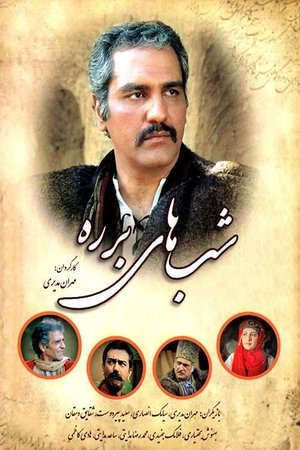
Set in late 40s in Iran, a politically exiled man meets strange rural people with weird actions and accents in a village called Barareh.
Clynnog Morris is a local historian of great renown locally. In April of 2023 he was fortunate enough to be commissioned by the Arfon Historical Society to make a short film about his local park. 'Parc Chwiad' (Duck Park) is the resulting film.
The story of Nisar Ahmed Khan, told through his children and the people he served, a spiritual guide whose followers still visit his tomb on his birth and death anniversaries. And alongside how his family spends a few days at the village keeping his traditions alive.
Brair Kani explores an ancestral house located in Srinagar, Kashmir. Using the attic as a site of reflection, the film navigates the relationship between space, belonging and personal history. Inhabiting the confines of the attic, the house spirits exist simultaneously as carriers of collective memory and as manifestations of the emotional landscape.
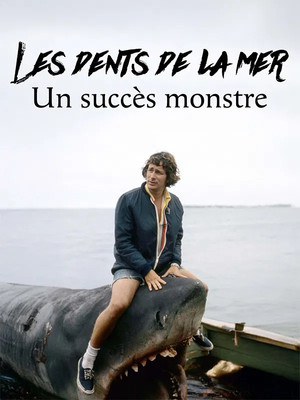
In the summer of 1975, the young director Steven Spielberg set new standards for cinema worldwide with an oversized shark bite, a plastic shark fin and an unmistakable two-note main theme composed by John Williams. With the horror from the deep, a man-eating, gigantic great white shark, the film of the same name became a similarly traumatic reference as Alfred Hitchcock's "Psycho": it triggered lasting primal fears across generations. On the beaches of the world, there was clearly a "before" and an "after". Steven Spielberg, who was only 28 at the time, not only set new standards for the thriller genre, but also hid his biting criticism of US capitalism in the 1970s behind it.
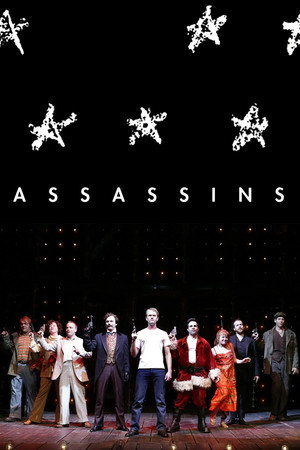
This darkly satirical musical reframes American history through the eyes of those who attempted – successfully or not – to kill US presidents. Structured as a surreal carnival sideshow, the piece weaponises American musical traditions – vaudeville, folk ballads, barbershop quartets, patriotic Sousa-style marches and Bacharach pop – to undercut the myth of the “American Dream,” exposing how frustration, alienation and entitlement can curdle into violence.
The War on Disco explores the culture war that erupted over the spectacular rise of disco music. Originating in underground Black and gay clubs, disco had unseated rock as America’s most popular music by the late 1970s. But many diehard rock fans viewed disco, with its repetitive beat and culture that emphasized pleasure, as shallow and superficial. A story that’s about much more than music, The War on Disco explores how the powerful anti-disco backlash revealed a cultural divide that to some seemed to be driven by racism and homophobia. The hostility came to a head on July 12, 1979, when a riot broke out at “Disco Demolition Night” during a baseball game in Chicago.
Eager to escape a life of confinement in the refugee camps of Western Sahara in Algeria, Mariam flees into the desert to join the army, naively believing herself to be the Joan of Arc who will save her country from occupation.
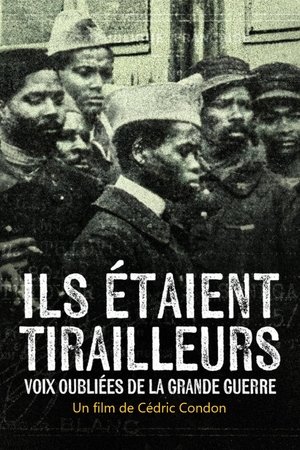
Ils étaient tirailleurs, voix oubliées de la Grande Guerre