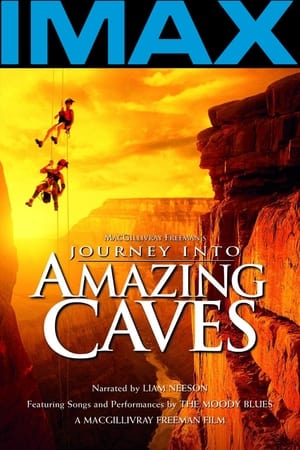
Journey into Amazing Caves is an extraordinary IMAX adventure into the depths of the earth to uncover the secrets to life underground.
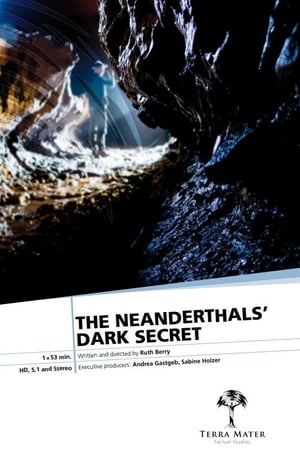
The Mandrin Cave in southern France has been attracting the attention of archaeologists for 30 years. The cave was regularly occupied in prehistoric times, and a remarkable record of human habitation going back thousands of years has been preserved by its soils. In 2015, the remains of a Neanderthal were uncovered, and the archaeological evidence points to this individual, named Thorin, living in close proximity to newly arrived Homo sapiens. This documentary follows an international team of scientists as they discover and investigate precious relics of the Paleolithic period, resulting in groundbreaking revelations about the human populations of around 50,000 years ago as researchers uncover some of the secrets of the Mandrin Cave.
The Mandrin Cave in the Rhône Valley is a fascinating excavation site. Archaeologist Ludovic Slimak discovered fossils and flints here, proving that Neanderthals inhabited the cave for over 80,000 years. The first Neanderthal in France for half a century was also unearthed in the cave: He was given the name Thorin.
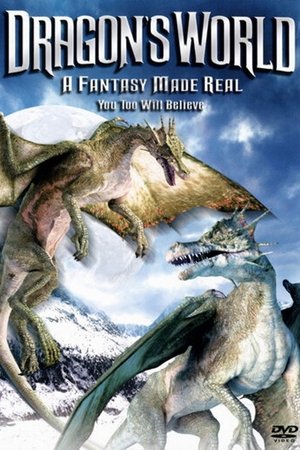
"The Last Dragon" is a nature mockumentary about a British scientific team that attempts to understand the unique incredible beasts that have fascinated people for ages. CGI is used to create the dragons.
Over 60,000 years ago, the first modern humans left their African homeland and entered Europe, then a bleak and inhospitable continent in the grip of the Ice Age. But when they arrived, they were not alone: the stocky, powerfully built Neanderthals had already been living there for hundreds of thousands of years. So what happened when the first modern humans encountered the Neanderthals? Did they make love or war?
Tautavel : vivre en Europe avant Néandertal
A special document of a 9-day Thai cave rescue mission in 2018
Sapiens, et la musique fut
Werner Herzog gains exclusive access to film inside the Chauvet caves of Southern France, capturing the oldest known pictorial creations of humankind in their astonishing natural setting.
In 1907 Herman Hesse spent a few days mediating and fasting in a cave near Monte Verità. During these days he collected the visions and insights that went on to be very influential in his thinking and shaped some of the most important works of his literary career. The images and sounds of this film were shot there and are a homage to this cave and its possible invocations. Grotta is part of Fieldworks, an ongoing experiment with ambient video and radio frequencies.
What do we have to learn from dead things and the people who love them? For some, vulture culture offers a deeper connection to nature. For others, it is a way of confronting death and processing grief. For others, the ultimate form of artistry.
La vie au temps de Cro-Magnon
Voyages au centre de la Terre : Dans les pas de Jules Verne
We immerse ourselves in a quest for the origins of Art, among the very first modern humans. The prehistoric works, of incredible richness and diversity, tell a story of beauty and the species. Researchers, including archaeologists, but also art historians, philosophers and contemporary artists, enrich our view of prehistoric art with their different, but also complementary, points of view on the subject.
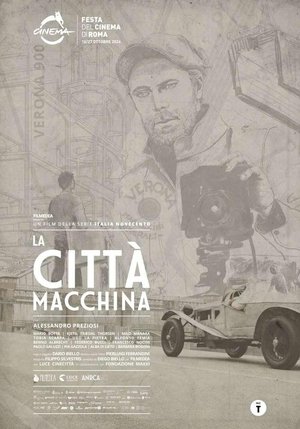
La città macchina
Sir David Attenborough joins an archaeological dig uncovering Britain's biggest mammoth discovery in almost 20 years. In 2017, in a gravel quarry near Swindon, two amateur fossil hunters found an extraordinary cache of Ice Age mammoth remains and a stone hand-axe made by a Neanderthal.
This documentary delves into the mysteries surrounding the Neanderthals and what their fossil record tells us about their lives and disappearance.
A caving expedition recently discovered a community of dwarf crocodiles living in the Abanda Caves, Gabon. The crocs are living in pitch darkness, hunt bats and some have bright-orange skin. Part of the original team returns to find out more about this bizarre phenomenon. It's mission impossible to access the crocs world and there's no way of knowing what they might find.
The great follow-up to 'Walking with Dinosaurs' and 'Walking with Beasts', presented by Professor Robert Winston, explains the story of human evolution.
It has been almost thirty years since Filippo Dobrilla started to sculpt a giant male nude inside a cave 650 metres deep in the Apuan Alps. This almost inaccessible place has jealously protected his secret: his youthful passion for a fellow climber, a passion Filippo was only able to indulge in here in the intimacy of this cave. Even after it was over and ever since then, Filippo has been returning regularly to the cave to work on the most important sculpture of his life, a masterpiece no one will see.