King Charles VI declares that Knight Jean de Carrouges settle his dispute with his squire, Jacques Le Gris, by challenging him to a duel.
In war-torn colonial America, in the midst of a bloody battle between British, the French and Native American allies, the aristocratic daughter of a British Colonel and her party are captured by a group of Huron warriors. Fortunately, a group of three Mohican trappers comes to their rescue.
Spurred by a white woman's lie, vigilantes destroy a black Florida town and slay inhabitants in 1923.
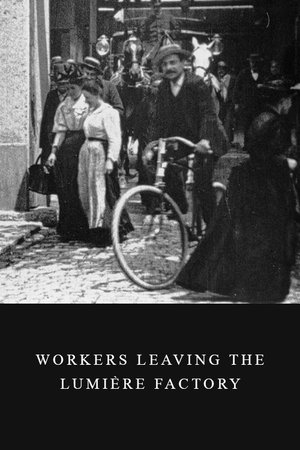
Working men and women leave through the main gate of the Lumière factory in Lyon, France. Filmed on 22 March 1895, it is often referred to as the first real motion picture ever made, although Louis Le Prince's 1888 Roundhay Garden Scene pre-dated it by seven years. Three separate versions of this film exist, which differ from one another in numerous ways. The first version features a carriage drawn by one horse, while in the second version the carriage is drawn by two horses, and there is no carriage at all in the third version. The clothing style is also different between the three versions, demonstrating the different seasons in which each was filmed. This film was made in the 35 mm format with an aspect ratio of 1.33:1, and at a speed of 16 frames per second. At that rate, the 17 meters of film length provided a duration of 46 seconds, holding a total of 800 frames.
A 1956 Belgian film, Low Light and Blue Smoke, showcases the music of American blues guitarist Big Bill Broonzy, capturing his performance at the Chapel of Les Brigittines in Brussels during his 1956 European tour.
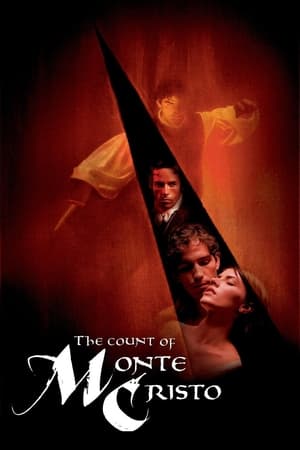
Young sailor Edmond Dantès is wrongfully imprisoned, escapes, finds treasure, and reinvents himself as the wealthy Count of Monte Cristo to exact revenge on those who betrayed him.
The true historical account of the Illuminati, exposing the actual rituals of the secret society, and answering the age-old question of whether or not the order still exists.
197 AC. War between warlords Cao Cao and Zhang Xiu. Xiangyang prefect Xun Song was besieged by enemy army. His 13-year daughter Xun Guaning broke through the siege and moved troops without fear of danger and helped his father break the siege of Xiangyan.
Cree matriarch Aline Spears survives a childhood in Canada’s residential school system to continue her family’s generational fight in the face of systemic starvation, racism, and sexual abuse. She uses her uncanny ability to understand and translate codes into working for a special division of the Canadian Air Force as a Cree code talker in World War II. The story unfolds over 100 years with a cumulative force that propels us into the future.
Pyhä
Kyoto, a thousand years ago. Tokimasa, who unexpectedly visits the house of a woman he abandoned long ago, witnesses the woman's corpse, which remains uncorrupted, and an eerie light lingering in the air. Fearing the curse of the woman who died harboring resentment towards him, Tokimasa seeks out the Onmyoji (exorcist) Kamo no Tadayuki... This is a ghost story anime depicting a beautiful tragic love story of the Heian period, based on a story from the Konjaku Monogatari (Tales of Times Now Past).
A documentary by Donna Zaccaro about the political trailblazer, Geralidine Ferraro. Featuring interviews with Bill and Hillary Clinton, George and Barbara Bush, Walter Mondale, and Geraldine Ferraro herself, among others, this is a heartwarming and engrossing portrait of the first woman who was nominated for vice president, whose legacy still reverberates today.
The earliest surviving motion-picture film, and believed to be one of the very first moving images ever created, was shot by Louis Aimé Augustin Le Prince using the LPCCP Type-1 MkII single-lens camera. It was taken on paper-based photographic film in the garden of Oakwood Grange, the Whitley family house in Roundhay, Leeds, West Riding of Yorkshire (UK), on 14 October 1888. The film shows Adolphe Le Prince (Le Prince’s son), Mrs. Sarah Whitley (Le Prince’s mother-in-law), Joseph Whitley, and Miss Harriet Hartley walking around in circles, laughing to themselves, and staying within the area framed by the camera. Roundhay Garden Scene is often associated with a recording speed of around 12 frames per second and runs for about 2 to 3 seconds.
A documentary about the United States Military Academy at West Point that conveys the vibrancy, sense of fraternity and fierce loyalty that mark the West Point experience.
It adroitly tells the story of a "counter culture" young man who when his grandfather dies, packs the body in dry ice, and stores him in a Tuff Shed, waiting for the time when advances in modern medicine can bring him back to life. I am not making this up. Then our young men gets deported back to Norway on unrelated charges. Then, quite a while later, people look up and take notice ... "Hey ... there appears to be a frozen dead guy in that shed over there."
In the 1920s, former coal miner Harry Hoxsey claimed to have an herbal cure for cancer. Although scoffed at and ultimately banned by the medical establishment, by the 1950s, Hoxsey's formula had been used to treat thousands of patients, who testified to its efficacy. Was Hoxsey's recipe the work of a snake-oil charlatan or a legitimate treatment? Ken Ausubel directs this keen look into the forces that shape the policies of organized medicine.
The era when Samurai and Ninja existed in Japan. Rikka Isurugi was born and raised in a Ninja clan secluded from society. She soon meets Miya, a girl with a mysterious power, who is found lost in the mountains. As Rikka is concerned that someone is pursuing Miya, she also asks the head the of Isurugi Ninja Clan for permission to avenger her father's death. Soon Rikka faces danger with the attack of the Negoro group but…
In 1415, in the midst of the Hundred Years' War, the young King Henry V of England embarks on the conquest of France.
In Pompeii in the year 79, Lycias and Helen fall in love. Helen's guardian, the high priest of Isis, wants to separate them. To do so, he tries to make Lycias drink a love potion, but a young slave threatens to reveal everything. The high priest, unable to silence her, kills her and arranges to have Lycias accused...
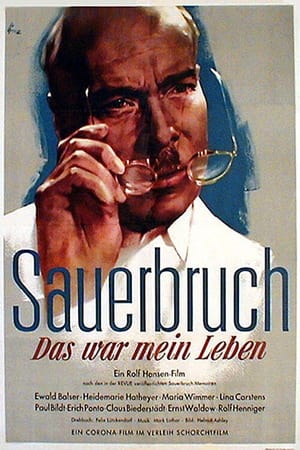
Young Olga Ahrendt almost succeeded in attempting suicide. She had thrown herself in front of a tram out of desperation about her miserable life, a desperation she shared with many in the post-war period. Fortunately, Privy Councillor Sauerbruch is at the scene of the incident, ordering her to be admitted to his clinic after a brief examination. Sauerbruch works both as a university lecturer and as a surgeon, a famous doctor who not only helps his patients physically but also gives them spiritual comfort. After he has taken Olga Ahrendt to his hospital, he discovers during an examination that her suicide attempt is due to a serious physical illness. He intensively takes care of her without forgetting about his other patients, to whom he can give a new will to live, even if only through a small story. And he will also treat Olga Ahrendt successfully...