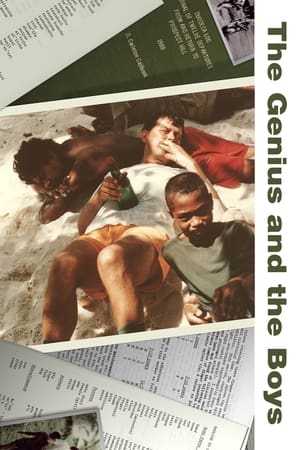
D Carleton Gajdusek won the Nobel Prize for the discovery of Prions - the particles that would emerge as the cause of Mad Cow disease - while working with a cannibal tribe on New Guinea. He was a star of the scientific world. Over his years working amongst the tribes of the South Seas, he adopted 57 kids, bringing them to a new life in Washington DC. His adoptions were hailed as wonderful fatherly beneficence. But, at the height of his career, rumours began to spread he was a paedophile. Gajdusek would argue that if sex with children was okay in their own cultures, he wasn't wrong to join in. How could a great mind like Gajdusek's lose insight so totally, and why would the scientific community to which he was a hero be so quick to leap to his defence and dismiss the allegations? (Storyville)
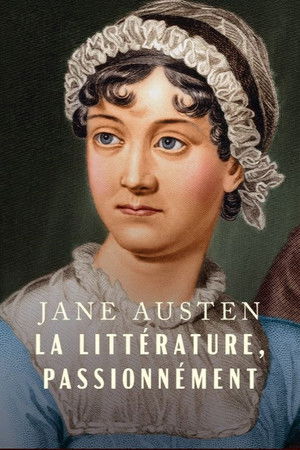
Jane Austen - Literature and Passion
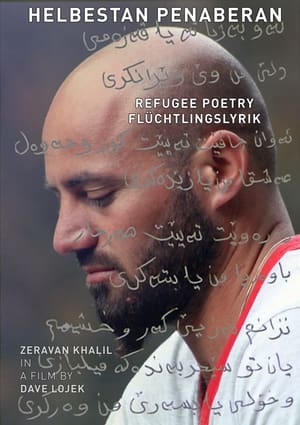
The Kurdish Iraqi poet and actor Zeravan Khalil travels with his dog through an Alpine gorge after fleeing from IS war and genocide. As he remembers the abomination, he writes a poem with the title “You drive me mad” in Kurmanji Kurdish. In his home country, Yazidic Kurds are forbidden to work in his profession. Then he eats his apple and wanders through Europe’s middle with more hope.
Depicting the biography of a corrupt banker poses a cinematic dilemma. How can the intentions of an individual systematic contexts and historical eventualities be brought into harmony? Thomas Furhapters nearly one hour film Michael Berger Eine Hysterie turns this problem outward by not covering up the moment of speculation. The subject of the film, Austrian investment banker Michael Berger, who became a dollar millionaire through a risky hedge fund, remains a chimera an absent individual who also cannot be captured through his crime.
Sepp Holzer explains some of the innovative, labour-saving agricultural techniques he applies at his farm in the Eastern Alps of Salzburg, Austria.
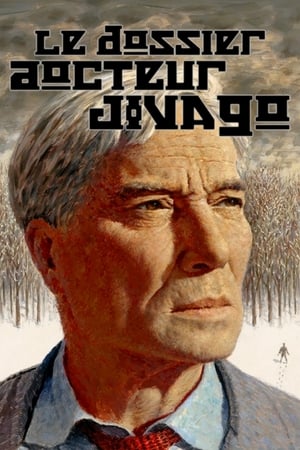
As Russian writer Boris Pasternak (1890-1960) thinks it is impossible that his novel Doctor Zhivago is published in the Soviet Union, because it supposedly shows a critical view of the October Revolution, he decides to smuggle several copies of the manuscript out of the country. It is first published in 1957 in Italia and the author receives the Nobel Prize in Literature in 1958, which has consequences.
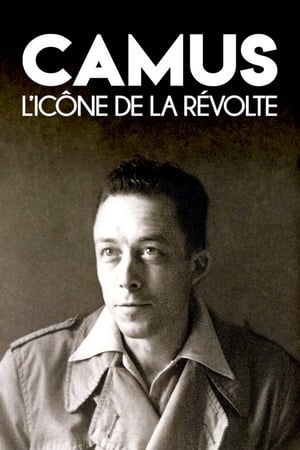
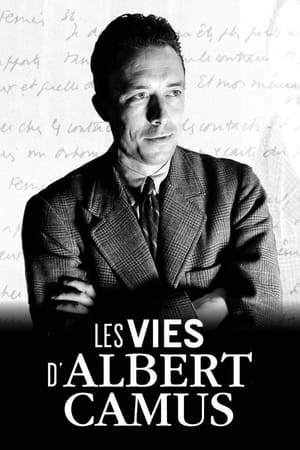
Albert Camus, who died 60 years ago, continues to inspire defenders of freedom and human rights activists around the world today. The Nobel Prize winner for literature is one of the most widely read French-language writers in the world. He continues to embody the rebellious man who opposes all forms of oppression and tyranny while refusing to compromise his human values.
Oskar Kokoschka : Portraits européens
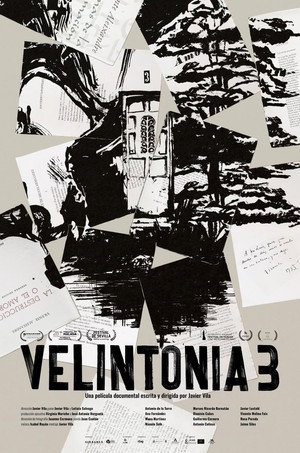
The memory of the poet Vicente Aleixandre remains silent at No. 3 Velintonia Street. Home of a Nobel Prize in Literature 1977, it also recalls the joy of Lorca and other members of Generation´27, the pain of civil war and post-war, and became a meeting point for most writers in 20th century Spanish Literature, now is abandoned and for sale. This documentary recreates its story and spirit.
Jaroslav Seifert
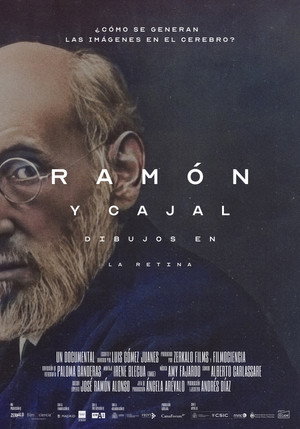
“Ramón y Cajal: drawings on the retina” is a documentary about the Nobel Prize winner that explores, from a contemporary perspective, his fascination with images as a bridge between the reality of the physical world and that created in the brain, with a new integrative approach to his artistic and scientific facets and his legacy, told through the experiences and points of view of researchers, artists, historians, family members, and other experts who consider Cajal a visionary who transcended his own science. In one of the laboratories, a machine answers Cajal's last question: how are images formed in the brain?
About the Portuguese author José Saramago, based on a long interview with the writer at his home on the island of Lanzarote, in which he analyzes his work and shares his reflection on some aspects of his personal life.
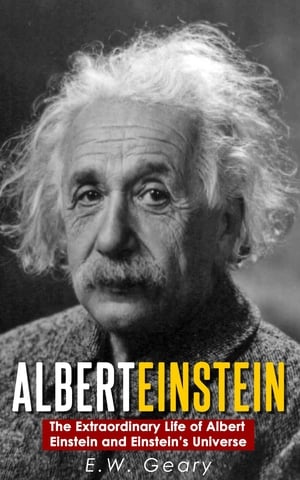
Albert Einstein - Comment je vois le Monde
The core of the video is a pedagogical workshop on the Theory of Special Relativity as part of the educational process conducted by our youth leadership. Not for the sake of understanding the theory itself, but using Einstein's particular discovery as a case study to demonstrate and walk people through real human thinking, as being something above sense perceptions or opinions. We end with reflecting on the principle of relativity in terms of social relations and individual identities or thought processes, asking the question - how was Einstein able to make his breakthrough?
This John Nesbitt's Passing Parade short tells the story of Alfred Nobel, who invented dynamite, and later established the Nobel Prize.
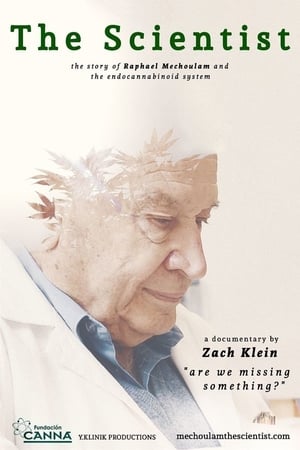
The story of Nobel prize nominee Dr Mechoulam from his early days as a child of the Holocaust in Bulgaria, through his immigration to Israel, and his career as the chief investigator into the chemistry and biology of the world's most misunderstood plant. Dr. Mechoulam ascertained that THC interacts with the largest receptor system in the human body, the endocannabinoid system.
One Peace at a Time is a film by Turk and Christy Pipkin. It was produced by The Nobelity Project and was premiered to a sold out audience at the Paramount Theatre in Austin, Texas, USA, on April 14, 2009. It is the sequel to the film Nobelity. It has been shown all across the United States and in multiple countries across the world
Focuses on 1992 Nobel Peace Prize winner, Rigoberta Menchu, as she discusses the lack of human rights for the indigenous people of Guatemala and her commitment to the struggle for a more egalitarian society.
Albert Camus died at 46 years old on January 4, 1960, two years after his Nobel Prize in literature. Author of “L'Etranger”, one of the most widely read novels in the world, philosopher of the absurd and of revolt, resistant, journalist, playwright, Albert Camus had an extraordinary destiny. Child of the poor districts of Algiers, tuberculosis patient, orphan of father, son of an illiterate and deaf mother, he tore himself away from his condition thanks to his teacher. French from Algeria, he never ceased to fight for equality with the Arabs and the Kabyle, while fearing the Independence of the FLN. Founded on restored and colorized archives, and first-hand accounts, this documentary attempts to paint the portrait of Camus as he was.
To historians, physicist Lise Meitner deserves to be placed on a par with Einstein, Heisenberg and Otto Hahn. In the 1930s on the verge of World War II, she led a small group of scientists who discovered that splitting the atomic nucleus of uranium releases enormous energy. This extraordinary film tells the story of a woman who was far ahead of her time as a scientist and a pioneer of feminism.