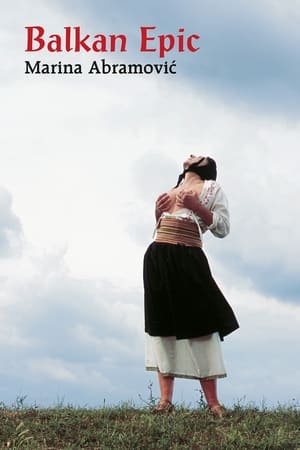
The film explores the sexual aspects of Serbian folklore. Ancient myths that have trickled into everyday household remedies or explanations are juxtaposed with the joys of the female and male sexual forms from which all human life originates. Functioning as both sexual liberation and reinvented modern myth, Balkan Erotic Epic is a display of the need for a cultural change in viewpoint around sex.
Exploring love's complexities, an experimental film captures a woman's brief yet significant journey, prompting her to break free and embrace newfound liberation
Recortes - 20240315
Vídeo de Um Minuto
"Meat Joy is an erotic rite — excessive, indulgent, a celebration of flesh as material: raw fish, chicken, sausages, wet paint, transparent plastic, ropes, brushes, paper scrap. Its propulsion is towards the ecstatic — shifting and turning among tenderness, wildness, precision, abandon; qualities that could at any moment be sensual, comic, joyous, repellent. Physical equivalences are enacted as a psychic imagistic stream, in which the layered elements mesh and gain intensity by the energy complement of the audience. The original performances became notorious and introduced a vision of the 'sacred erotic.' This video was converted from original film footage of three 1964 performances of Meat Joy at its first staged performance at the Festival de la Libre Expression, Paris, Dennison Hall, London, and Judson Church, New York City."
À TOA
M Soup, (2023) by Stephanie Mavi Garcia Panclas (SMGP), is their first experimental short film. M Soup, follows the character ‘M’ played by SMGP themselves, in which they play around with appearing hyper-masculine and hyper-feminine. This experimental short film can have as many layers as there needs to be or none at all. The goal is for it to be visually confusing and jarring yet have bits and pieces of meaning.
A study of water and fire.
Sinus Beta is almost a sort of teaching film about bodily behavior in different situations. The film also produces, through the heterogenic photographic materiality of the primary elements, a cross-section of the methods, used in capturing the body in a still photograph. (Mubi)
In his contribution to the On Art and Artists interview series, Nathaniel Dorsky (b.1943) begins by discussing his childhood love of the John Ford film Stagecoach and its influence upon his decision to make films while attending Antioch College. Describing the affinity he developed for work operating at the intersection of film materiality and personal language, Dorsky explains how he developed his philosophy of the “devotional film” and the “microcosmic viewer.” Dorsky likens his practice to Buddhist sculpture, referring to himself as a “Japanese poet continuing aspects of the ethos of the Marxist revolution.” In the interview, the artist describes his use of the screen as an “altarpiece for the image” and emphasizes his use of editing to create works which “harmoniously coalesce.” Interview conducted by Jeffrey Skoller in May 2000, edited in 2014.
Three stories. Three ages. Three men. Grandfather, father, son. One is an orderly, one is a leading sportsman, and one is a master taxidermist. One desires love, the other success, and the third immortality.
In 1975, as America faced social and political upheaval, filmmakers turned chaos into art.
Capturing life through the lens of a dream, Albert explores the evocation of the subconscious mind through the vivid visualism and dynamism of images.
A mockumentary following an ambitious TV network executive trying to produce a controversial reality show where contestants play Russian Roulette.
A short, experimental film that traces how two lovers (who are actually CCTV cameras) argue about love, ownership and sex in a virulently capitalist state of thought, while negotiating new terms for their increasingly anarchic relationship.
A camera rotates around the same four towers. Seasons, weather conditions and the positions of the camera change over the course of the film. The sound goes round in circles and drifts in variations.
A Photographer enamored with a lone tree tries to take a picture. He falls down to a rabbit hole of perspectives as he take the Sisyphean task of taking a photograph of the tree
A tale of people unfolds under the night sky. These doomed couples and lost individuals begin journeys and attempt to find resolution in their lives. Love is observed from a distance, sadness is in the air. With little sympathy for the loss and destruction caused to the characters, the stories progress and become neatly woven into a minimalistic portrayal of modern life.
In 2012 two members of anarchistic female band Pussy Riot were sentenced to two years in a Mordovian labor camp for "hooliganism motivated by religious hatred". Russian film collective Gogol’s Wives follow each step of the feminist punk band’s battle against Putin including their first disruptive performances on a trolley bus, shooting a video about transparent elections, a controversial performance in a Red Square cathedral, and footage shot in a jail cell. Support comes from many corners including Madonna who painted the words "Pussy Riot" on her back and wore a balaclava during her Moscow show. The documentary portrays the grim state of present-day Russia, a country starkly divided between conservatism and anarchy. Pussy Riot believes that art has to be free and they're willing to take it to extremes. "Pussycat made a mess in the house," they say, and the house is Russia. The filmmakers do not seek to moralize, they simply edit events and leave viewers to draw their own conclusions.
Begotten is the creation myth brought to life, the story of no less than the violent death of God and the (re)birth of nature on a barren earth.