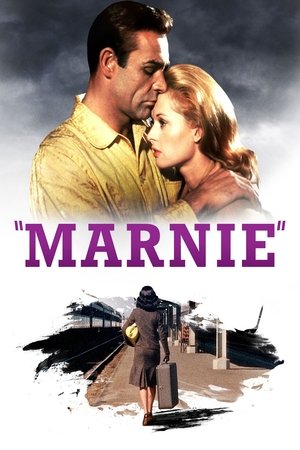
Marnie is a beautiful but emotionally withdrawn thief, stealing from employers before disappearing under new identities. When her new boss, Mark Rutland, discovers her secret, his fascination turns to obsession, and he blackmails her into marriage, convinced he can cure her. But as he probes deeper into Marnie’s fractured mind, long-buried fears and compulsions begin to surface.
Childhood memories of an August holiday.
In 1772, Englishwoman Mary Delany wrote to her niece: “I have found a new way of imitating flowers.” The imitation in question was the art form called decoupage, based on cut-outs and reshuffling of pictures. The charm and botanical precision of these works attracts attention of even today’s artists, among others by an anonymous programmer who is trying to invent a way of capturing the flowers’ vivacity in pictures. With this aim in mind, she has created an algorithm, which would combine science and beauty, similarly to Delaney’s efforts, whose illustrations it is meant to animate.
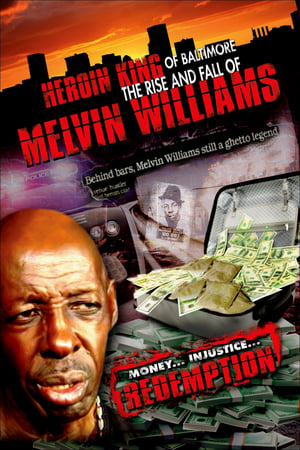
Baltimore City officials asked drug kingpin Melvin Williams to stop the riots happened following Martin Luther King's assassination. After helping the authorities out, Williams was then labeled a threat, framed and incarcerated by a hypocritical society.
Shot in two places marrying with each other by a single and fractured bridge between Condrieu and les Roches-de-Condrieu, this film is the continuation of exploring ephemeral movement through the use of editing, camera movements and color sampling.
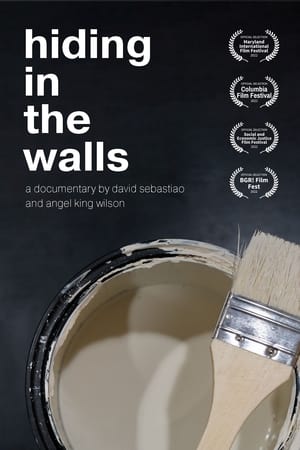
Hiding in the Walls unwinds the fraught history of lead poisoning in Baltimore and follows the adult survivors who are on a mission to reclaim the narrative.
Hand processed expired Kodak 7291, Camera: Beaulieu R16, Lens: Angenieux 12-120mm with +3 Diopter, Polarising filter for the clouds. Hand processed in C-41 chem using a Lomo UPB-1A tank. Still haven't mastered removal of the rem-jet anti-halation layer (thats all the white 'static' on the film). The film expired about 40 years ago.
Maryland folklorist Elaine Eff is a champion of Baltimore culture and traditions. In her documentary film The Screen Painters, she sets her sights on a much-loved Baltimore icon: the painted window screen and the artists who created them. This delightful documentary film chronicles the beginnings, the heyday, and the decline of an urban folk art unique to Baltimore -- the practice of painting landscape scenes on window and door screens. It profiles seven artists who have spent much of their lives embellishing the bricks and stones of the inner city with a touch of enchantment. The film reveals how this unpretentious art form embodies the ethnic spirit of urban America and is a testament to the need for art in daily life. -Direct Cinema Limited
Examines the lily to identify the parts of a flower and show how it functions in the production of seeds. Pictures a variety of other flowers and compares the flowering plants to some non-flowering plants.
During three years of unparalleled violence in Baltimore, Charm City delivers an unexpectedly candid, observational portrait of those left on the frontlines. With grit, fury, and compassion, a group of police, citizens, and government officials grapple with the consequences of violence and try to reclaim their future.
Lost in a whirlpool of loss and regret, Harry Bradshaw attempts to find innocence.
A close look at flowers and pollinators on a sunny summer morning.
Mountain wildflowers in a dense fog.
A slug climbs small mountains at the peak of Mount Greylock (3,489 ft).
Fog surrounds the peak of a mountain as summer wildflowers bloom.
Somewhere between the mountains and valleys a small autumn flower bloomed.
Fantastic Flowers is a compilation of short silent films produced between 1906 and 1920, displaying amazing colours that were applied to each frame using the Pathécolor process, or other similar stencilling techniques. Bonsoir – La Fée aux fleurs (1906) / [Bloemenvelden Haarlem] (1909) / Les Chrysanthèmes (1907) / Le Chrysanthème, roi de l’automne (1914) / [Les Tulipes] (1907) / Les Fleurs dans les jardins (1914) / L’Après-midi d’une japonaise (1920) / The Beauty Thief ([1920]) / La Fée printemps (1906) / [Het schoonste uit de natuur] (1912?) / La Culture du dahlia (1911) / [Hollandse Tulpen en Klompen] (1920?) / Fabrication des fleurs artificielles (1911) / [Bonsoir tableau] (1906)
A short silent film from 1914 about the Chrysanthemum flower.
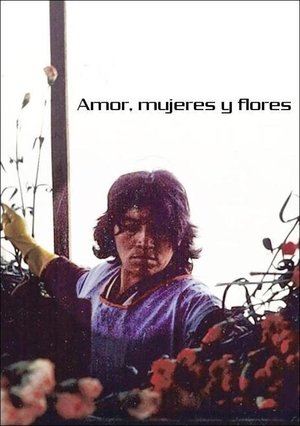
Women workers stand up to the toxic flower industry in Colombia.
The story of an outsider from East Baltimore, an area challenged by gang violence and poverty. Often misunderstood, Coffin Nachtmahr found acceptance among a subculture of “throwers” and it turns out, he’s a virtuoso. He now helps others find a creative and social outlet by sharing the very toy that inspired him.