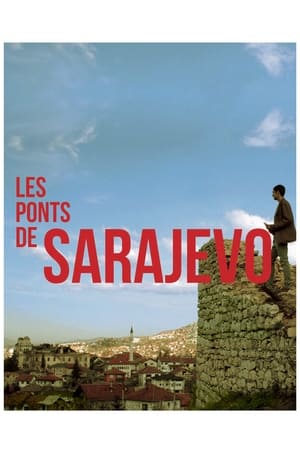
Thirteen European directors explore the theme of Sarajevo; what this city has represented in European history over the past hundred years, and what Sarajevo stands for today in Europe. These eminent filmmakers of different generations and origins offer exceptional singular styles and visions.
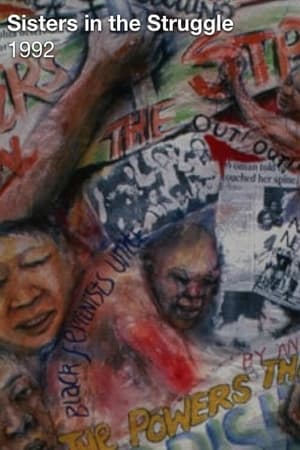
This documentary features Black women active in politics as well as community, labour and feminist organizing. They share their insights and personal testimonies on the double legacy of racism and sexism, linking their personal struggles with the ongoing battle to end systemic discrimination and violence against women and people of colour.
This short film is an ode to the women who settled the Prairies, from the days of early immigration to 1916 - when Manitobans became the first women in Canada to receive the provincial vote - and beyond. Recollections of women are complemented by a series of quotations drawn from letters, diaries, and newspapers of the day, which are spoken over re-enacted scenes and archival photographs.
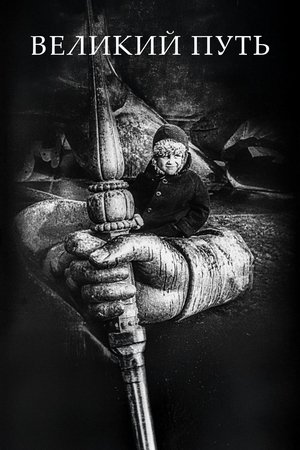
The Great Road (1927) is a Soviet silent documentary directed by Esfir Shub. Serving as the second part of her trilogy on Russian history—between The Fall of the Romanov Dynasty (1927) and Lev Tolstoy and the Russia of Nicolai II (1928)—the film chronicles the revolutionary path of the Soviet Union, assembling archival footage to depict the struggle, transformation, and aspirations of the early Soviet state.
In 1991 three teen girls called Midi, Maxiand Efti became celebrities over night and the suburb Akalla was suddenly known all over Sweden. Fifteen years later two old friends try to make a film about the phenomenon. But Midi, Maxi and Efti no longer have contact, and they are not at all interested in talking about the past. A melancholically journey to the past by two friends who have a hard time letting go. "I like it like it is and I like it like it was but I'm not so sure any more any any more..." From the song "Bad Bad Boys" by Midi, Maxi & Efti.
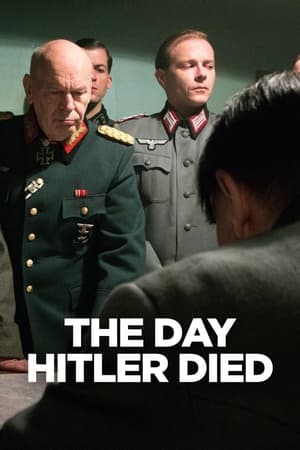
The story of Hitler’s final hours told by people who were there. This special features exclusive forgotten interviews, believed lost for 65 years, with members of Hitler’s inner circle who were trapped with him in his bunker as the Russians fought to take Berlin. These unique interviews from figures such as the leader of the Hitler Youth Artur Axmann and Hitler’s secretary Traudl Junge, have never before been seen outside Germany. Using rarely seen archive footage and dramatic reconstruction, this special tells the story of Adolf Hitler’s final days in his Berlin bunker.
How can I ‚hunt down‘ the man of my dreams? Or any man at all? How should I glance, how should I move, how should I bend down and obey – to attract male attention? For all these matters, there are special women’s courses and exercises available in post-communist Moscow. In a country where there are 5 millions more women as men, the „battle“ to find a man can sometimes assume existential proportions. They all have one basic insight in common, however: For a woman to find a good man, she has to start by working on herself…
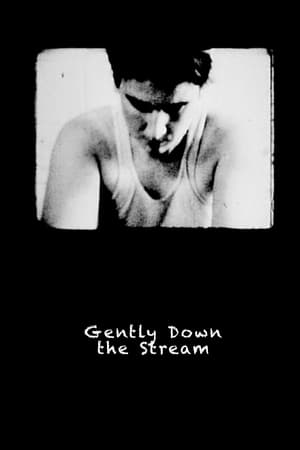
GENTLY DOWN THE STREAM is constructed from fourteen dreams taken from eight years' worth of my journals. The text is scratched directly on to the film so that you hear your own voice as you read. The accompanying images of women, water, animals and saints were chosen for their indirect but potent correspondence to the text.
This experimental short consists of eight unedited rolls of super-8 film, each of which profiles an individual woman in real time. The women engage in everyday behaviour, such as playing pinball or reading a letter aloud.
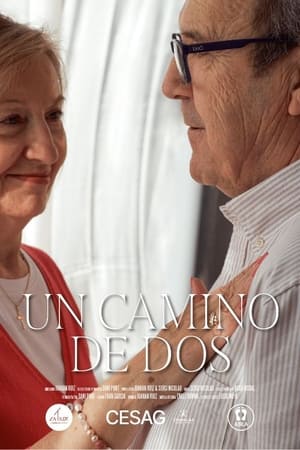
Segismundo Morey has spent his last few years facing the challenges imposed by Andrade’s rare disease. This medical condition, which affects his nervous and muscular system, has left a deep mark on his daily life and that of those around him. Over the years, Segismundo has had to overcome physical and emotional obstacles, dealing with difficulties in walking and moving normally. However, despite the constant challenges, he has found comfort and strength in the unconditional love and support of his family. Together, they have faced the adversities of Andrade’s disease, forming an indestructible bond that has been key in their shared journey.
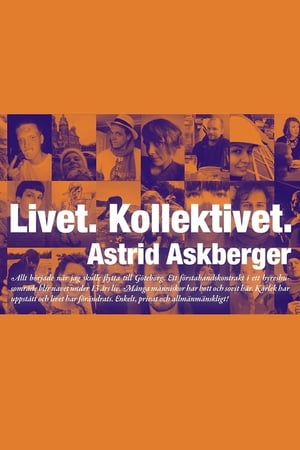
It all started when Astrid was going to move to Gothenburg. A first-hand lease in an apartment district turns into a hub for 13 years of life. Many people have lived and slept here. Love has bloomed and life has been changed.
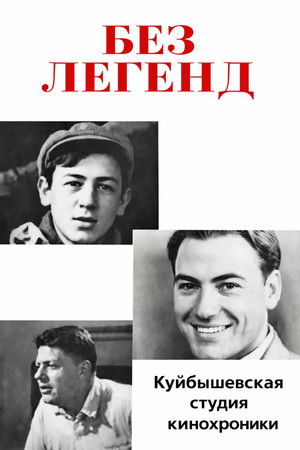
In 1968 Herz Frank made Without Legends (Bez leģendām) at the Kuibishev studios, together with Aloizs Brenčs and Aleksandr Sazhin. The film is based on the memoirs of Hero of Socialist Labor Professor Ivan Vasilyevich Komzin, former head of construction of the V. I. Lenin Volga Hydroelectric Power Station; Hero of Socialist Labor excavator operator V. Klementyev; Honored excavator operator Viktor Vasilyevich Starikov; and writer Konstantin Kirillovich Lapin. Documentary filmmakers from Kuibyshev were making a film about the excavator operator and Hero of Socialist Labor, Boris Yegorovich Kovalenko. However, the material turned out to be too ambiguous to create a film about a model Soviet working man. They turned for advice to the Riga-based documentary filmmaker Herz Frank. He shot additional footage and edited the collected material in such a way that it became a story without legends—about an ordinary person.
One of the highest achievements of the new wave of Kirghiz cinema, which emerged in the mid-1960s. This story of a boy building sandcastles on the shores of the Issyk-Kul Lake becomes a documentary parable on the tensions between an artist and society.
This poetic core in youngsters is also touched in Stanukina's less known Your very personal poetry (Свои, совсем особые стихи, 1982), a wonderful film about a poetry class. It is here that one recalls Kogan's admiration of Lyalya's emotional documentary skills. And it is here that one recalls Kosakovsky's depiction of Lyalya as a person of extraordinarily prosperous feelings, sensitive and energetic, childish and female, shrill and quiet. The young poets are marvellously sneaky, respectfully adoring and creatively playing with - maybe even deconstructing - "Aleksandr Sergeevich", Mr. Pushkin, Russia's exclusive trade mark of high culture and literature.
Movie-lesson observations in the classroom teacher of the Leningrad Conservatory honored artist of the RSFSR N..The Serval. Forty physical steps from the Leningrad Conservatory to the Kirov (Mariinsky) theatre - the way of the artist, overcome, physically and emotionally exhausting rehearsals. Great camera work.
A film about a simple village woman Zinaida Zvereva who married a disabled frontline soldier and lay all the hardships of living together onto herself
A portrait of America's oldest practicing attorney as he embarks on his final case.
A portrait of the former Vice Chancellor of the Federal Republic of Germany.
Portrait of Austrian theater and film actor and director Klaus Maria Brandauer.
Using poetry, interviews with psychologists and survivors, and corporeal imagery, Broca is an experimental documentary hybrid that explores how the mind-body connection is altered after trauma. The Broca’s Area in the brain is involved primarily in speech production. During a traumatic event or when trying to recall a traumatic event, this area shuts down. This makes it harder for a survivor to talk about what’s happened. Our project is an experimental documentary hybrid that offers a platform for survivors to tell their stories both verbally and non-verbally.