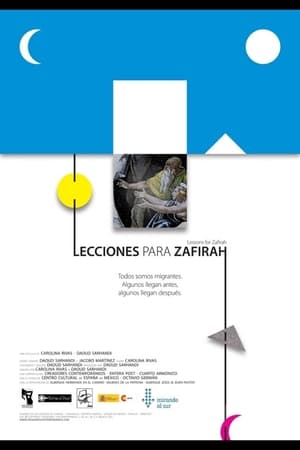
In the course of Alaide Foppa's life, she became a precursor of feminism in Mexico. She was an immigrant who, in her own way, tried to break the molds established by her upper-class upbringing. Her sensitivity and intellectual development made her question matters of social injustice, educational and gender inequalities, the importance of socially-committed art forms and the vindication of democracy throughout Latin America. Her tragic end reveals much about the history of Guatemala.
For almost 50 years, the world's population has grown at an alarming rate, raising fears about strains on the Earth's resources. But how true are these claims? Taking cues from statistics guru Hans Rosling, Misconception offers a provocative glimpse at how the world—and women in particular— are tackling a subject at once personal and global. Following three individuals, director Jessica Yu focuses on the human implications of this highly charged political issue, inspiring a fresh look at the consequences of population growth. In English, Hindi, Mandarin, and Russian with subtitles.
Friends since high school, 20-somethings Kaleil Isaza Tuzman and Tom Herman have an idea: a Web site for people to conduct business with municipal governments. This documentary tracks the rise and fall of govWorks.com from May of 1999 to December of 2000, and the trials the business brings to the relationship of these best friends. Kaleil raises the money, Tom's the technical chief. A third partner wants a buy out; girlfriends come and go; Tom's daughter needs attention. And always the need for cash and for improving the site. Venture capital comes in by the millions. Kaleil is on C-SPAN, CNN, and magazine covers. Will the business or the friendship crash first?
Eleven-year-old New York City public school kids journey into the world of ballroom dancing and reveal pieces of themselves and their world along the way. Told from their candid, sometimes humorous perspectives, these kids are transformed, from reluctant participants to determined competitors, from typical urban kids to "ladies and gentlemen," on their way to try to compete in the final citywide competition.
Amateur travelogues by women in the 1920s-50s are woven into this meditation on the traveler’s gaze. A mountaineer, a divorcee on a tour of biblical gardens, an antique merchant and others are revealed through their own optical autobiographies.
A documentary that resurrects the buried history of the outrageous, often brilliant women who founded the modern women's movement from 1966 to 1971.
A poetic documentation of the Long Beach Island, NJ community as they battle local politics, cope with personal tragedy, and band together after Hurricane Sandy.
During the 1977 World Series, Sports Illustrated reporter Melissa Ludtke was denied access to the players' locker room. After a very public fight, the door was opened, but the debate about female journalists in the male sanctum of the clubhouse remained. Through interviews with pioneering female sports writers, Let Them Wear Towels captures the raw behavior, humorous retaliation, angry lawsuits and remarkable resolve that went into the struggle for equal access for women reporters.
When terrorists shattered their lives, two women set off on an extraordinary journey to rebuild themselves and the lives of women half a world away.
The Hobbit Enigma examines one of the greatest controversies in science today: what did scientists find when they uncovered the tiny, human-like skeleton of a strange creature, known to many as the Hobbit, on the Indonesian island of Flores in 2003?
In 2007 Mobile, Alabama, Mardi Gras is celebrated... and complicated. Following a cast of characters, parades, and parties across an enduring color line, we see that beneath the surface of pageantry lies something else altogether.
A documentary about the life and activism of Jaha Dukureh, a Gambian anti-female genital mutilation campaigner who returns to her country of birth to confront the harmful tradition that she and 200 million women and girls have undergone globally.
Through rare and precious footages and gigs with great artists such as Gilberto Gil, Gal Costa, Hermeto Pascoal, Djavan, Nara Leao, Luiz Gonzaga, among many others, "Dominguinhos" reveals this genius of Brazilian music, creator of a deeply authentic, universal and contemporary work. The film values the sensory cinematic experience, a journey driven by Dominguinhos his own.
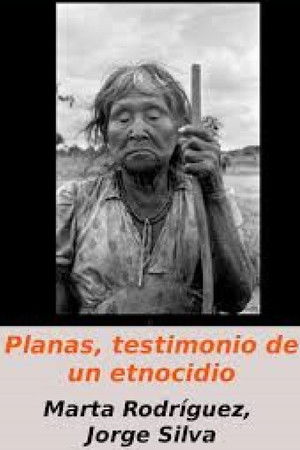
A documentary on the massacre of Planas in the Colombian east plains in 1970. An Indigenous community formed a cooperative to defend their rights from settlers and colonists, but the government organized a military operation to protect the latter and foreign companies.
A research-based essay film, but also a very personal perspective on the history of socialist Yugoslavia, its dramatic end, and its recent transformation into a few democratic nation states.
This feature documentary takes us to the heart of the Jane-Finch "Corridor" in the early 1980s. Covering six square blocks in Toronto's North York, the area readily evokes images of vandalism, high-density subsidized housing, racial tension, despair and crime. By focusing on the lives of several of the residents, many of them black or members of other visible minorities, the film provides a powerful view of a community that, contrary to its popular image, is working towards a more positive future.
Jesus 'Chuy' Aceves and a dozen living members of his extended family suffer from the very rare condition of congenital hypertrichosis, meaning they were born with excessive hair on their faces and bodies. Due to their appearance, they suffer from discrimination in all areas of their lives: the children are made fun of at school and abandoned by their 'non-hairy' parents, and the adults cannot find work unless they choose to exhibit themselves as freaks in circuses. This moving and visually arresting documentary is a portrait of Chuy and his family members. It examines their day-to-day lives and their struggle to find love, acceptance and employment.
Pensioners, lawyers, married couples and teenagers are all customers at the Angel Love Hotel in Osaka Japan. With unprecedented access into one of the most private and anonymous spaces in Japanese society, this film follows the love hotel's struggling manager and staff as the try to keep their hotel running, as well as revealing the intimate and private lives of the customers who visit.
Since the late 18th century American legal decision that the business corporation organizational model is legally a person, it has become a dominant economic, political and social force around the globe. This film takes an in-depth psychological examination of the organization model through various case studies. What the study illustrates is that in the its behaviour, this type of "person" typically acts like a dangerously destructive psychopath without conscience. Furthermore, we see the profound threat this psychopath has for our world and our future, but also how the people with courage, intelligence and determination can do to stop it.
Finding love is never easy. For Ravi Patel, a first generation Indian-American, the odds are slim. His ideal bride is beautiful, smart, funny, family-oriented, kind and—in keeping with tradition—Indian (though hopefully raised in the US). Oh, and her last name should be Patel because in India, Patels usually marry other Patels. And so at 30, Ravi decides to break up with his American girlfriend (the one who by all accounts is perfect for him except for her red hair and American name) and embark on a worldwide search for another Patel longing to be loved. He enlists the help of his matchmaker mother, attends a convention of Patels living in the US and travels to wedding season in India. Witty, honest and heartfelt, this comedy explores the questions with which we all struggle: What is love? What is happiness? And how in the world do we go about finding them?