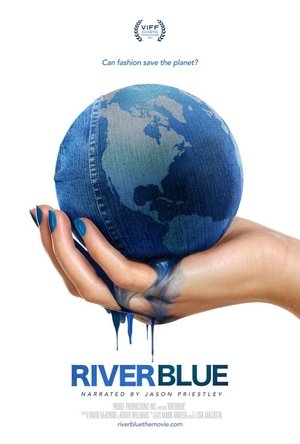
RiverBlue chronicles an unprecedented around-the-world river adventure, led by renowned paddler and conservationist, Mark Angelo, who ends up uncovering and documenting the dark side of the global fashion industry.
Documentary chronicling the government relocation of 10,000 Navajo Indians in Arizona.
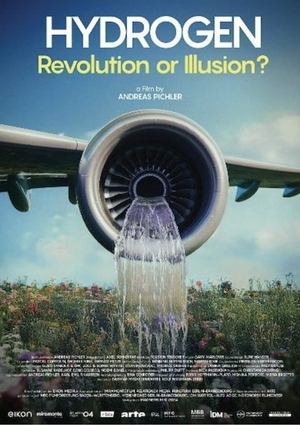
Steel giant Thyssen Krupp in Germany and cargo ship operator Maersk in Denmark are investing huge sums of money with public support to convert their huge and dirty energy consumption to ‘green’. Hydrogen plays a central role in this. At the same time, countries in Africa such as Morocco and Namibia are gearing up to become giga-suppliers of the new energy source. But does it all make sense? Why not just produce green steel in Africa? And what's the story behind the blue hydrogen that is supposed to come from Norway via pipeline? The film follows pioneers on breathtaking projects and shows that the energy transition is more complicated than expected and holds many surprises in store.
Documents the cultural and ecological impacts of coal stripmining, uranium mining, and oil shale development in Utah, Colorado, New Mexico, and Arizona – homeland of the Hopi and Navajo.
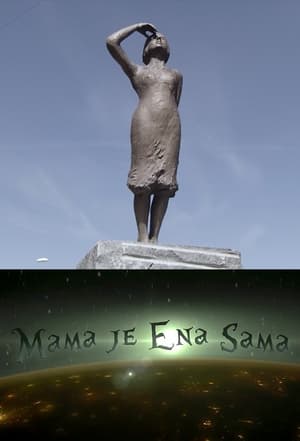
Tatjana in Motherland is a partly animated documentary essay about Slovenia and its men. It is a “documentary-tale” of how Slovenian society has been disintegrating in an invisible way. The story will unveil a Slovenian Oedipus archetype of the possessive martyr mother type and her relationship with her son, in which she through emotional manipulation, by constantly creating feelings of guilt, burdens her son to such a degree, that he remains dependent on her for the rest of his life. In order to put this relationship to its best use, all Slovenian governing structures have elevated mother figure on the level of a saint and have assigned to it the cultish role. The result of the Slovenian maternal cult is a typical Slovene male, who is pathologically obsessed with his mother.
Something is bad wrong as everyday Americans fight to protect their air, water and blood from pollution.
A documentary movie about Tomos, Slovenian motorcycle factory.
Under the warm rays of the sun, the protagonists become living still lifes, resting on benches, chairs, and deckchairs. In the quiet embrace of nature, they wait, reflect, and remember. This cinematic group portrait delves into the legacy and creative spirit of Vilko Filač, the Slovenian master of film photography, celebrating the enduring mark he left on the world of cinema.
To understand firsthand what the United States of America can learn from other nations, Michael Moore playfully “invades” some to see what they have to offer.
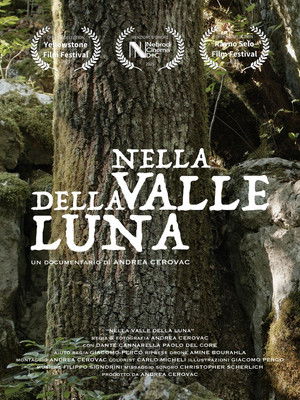
The documentary visually presents the very diverse fauna and flora of Slovenia, focusing on mammals and birds, and shows some particularly interesting species of amphibians, fish, insects and plants. It takes place over a period of one year and takes the viewer through typical Slovenian landscapes. The plot crosses between the provinces and occasionally returns to the same area in order to show what is happening in the animal world in the second part of the year. A very rich ecosystem diversity, rarely seen recordings, and scientifically verified information weaved into the intelligible text are key attributes of this film.
In the seventies, during the Richard Nixon administration, Documerica, a large-scale photographic project, led by the US Environmental Protection Agency, sought to document the country's environmental situation. The tens of thousands of photos, taken by hundreds of photographers, constitute a unique archive, showing a landscape ravaged by pollution and environmental degradation.
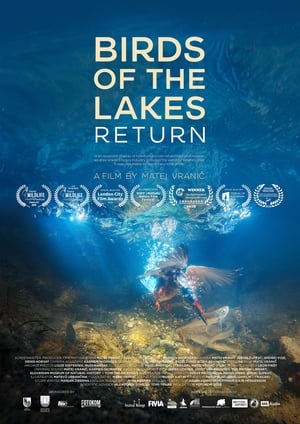
The Balkans cradles Europe's last wild rivers and supports abundant wildlife and healthy, intact ecosystems. These rivers are "The Undamaged" – clean, pristine, and undammed. With over 2,700 small and large hydro power plants planned or under construction in the Balkans, corruption and greed are destroying the last free-flowing rivers of Europe. Follow the Balkan Rivers Tour, a rowdy crew of whitewater kayakers, filmers, photographers and friends who decided to stand up for the rivers, travelling from Slovenia to Albania for 36 days, kayaking 23 rivers in 6 countries to protest the dams and show the world the secret wild rivers of the Balkans. The film honours everyday people and local activists who are fighting to defend rivers and aims to spread the word of the plight of these rivers, showing a new style of nature conservation that is fun, energetic and effective.
When nature is destroyed, climate targets are disregarded and human rights are violated, there is always a lot of money behind it. This is where urgewald comes in. Since 1992, the environmental and human rights organization has been revealing the sources of money behind destructive projects. Over 30 years ago, a handful of activists gathered around a table in a shared flat to form the basis of the organization. Since then, the small club in the Münsterland province has become a recognized, powerful organization.
An intimate sports documentary drama showcasing the historic rise of the Slovenian men's national volleyball team from 64th in the world rankings to a global powerhouse. Through archival footage and previously unseen behind-the-scenes and locker-room moments, the film reveals the genuine relationships, defeats, and unwavering bond of the boys who became brothers on and off the court.
An account of the last two centuries of the Anthropocene, the Age of Man. How human beings have progressed so much in such a short time through war and the selfish interests of a few, belligerent politicians and captains of industry, damaging the welfare of the majority of mankind, impoverishing the weakest, greedily devouring the limited resources of the Earth.
Acid rain, economic development, and a century of mining pollute Rocky Mountain waters.
After decades of growth and ostentation, when every excess was allowed, the fashion industry is currently at a turning point, caught up in the political issues that are reshaping our times: climate change and sustainable development, cultural representation and appropriation, equality, gender issues... Brands and creators are now subject to increasingly sharp public scrutiny. How is the fashion industry facing these challenges and responding to this new paradigm? Based as it is on the concept of planned obsolescence, can fashion survive?
Immersion in a world of contemporary design in search of more virtuous practices. In Helsinki, German designer Julia Lohmann uses seaweed to create dyed garments; in Amsterdam, Marjan van Aubel creates objects powered by organic photovoltaic cells; in London, the Superflux duo develops futuristic installations to alleviate potential food shortages.
In the first half of the 19th century, the French ornithologist Jean-Jacques Audubon travelled to America to depict birdlife along the Mississippi River. Audubon was also a gifted painter. His life’s work in the form of the classic book ‘Birds of America’ is an invaluable documentation of both extinct species and an entire world of imagination. During the same period, early industrialisation and the expulsion of indigenous peoples was in full swing. The gorgeous film traces Audubon’s path around the South today. The displaced people’s descendants welcome us and retell history, while the deserted vistas of heavy industry stretch across the horizon. The magnificent, broad images in Jacques Loeuille’s atmospheric, modern adventure reminds us at the same time how little - and yet how much - is left of the nature that Audubon travelled around in. His paintings of the colourful birdlife of the South still belong to the most beautiful things you can imagine.
Forget all you have heard about how “Renewable Energy” is our salvation. It is all a myth that is very lucrative for some. Feel-good stuff like electric cars, etc. Such vehicles are actually powered by coal, natural gas… or dead salmon in the Northwest.