Gary's Story is part of a collective filmmaking project that looks at relationships between teenagers and their grandparents in families that have recently immigrated to the US from the former Soviet Union. Gary's family is from Moscow.
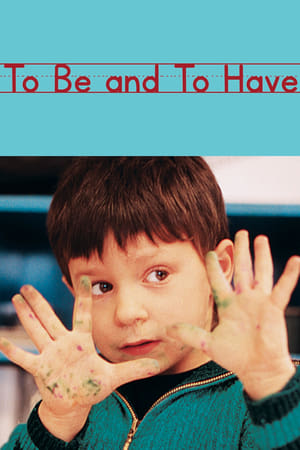
The documentary's title translates as "to be and to have", the two auxiliary verbs in the French language. It is about a primary school in the commune of Saint-Étienne-sur-Usson, Puy-de-Dôme, France, the population of which is just over 200. The school has one small class of mixed ages (from four to twelve years), with a dedicated teacher, Georges Lopez, who shows patience and respect for the children as we follow their story through a single school year.
Ambitions As A Writer follows three teens as they explore the manchester graffiti scene. The documentary is a one off from Hall Productions and was done as a passion project to show their hobbies.
What's it like starting a family when you're both transgender? This intimate film follows Hannah and Jake Graf on a journey through prejudice and surrogacy to birth during lockdown.
The filmmaker’s grandmother moved into this house in 1971. When Rolande Ségalini died, everything remained as it was during her lifetime. But what to do with all the accumulated things? As her granddaughter Céline begins to film this material legacy, she realises that her grandmother has remained an enigma to her to this day. Room by room, she inventories, classes, counts, sorts the possessions retrieved from wardrobes, drawers, cabinets and boxes and arranges the objects into new still lives. It is an attempt to understand the deceased woman better and find out more about her. Step by step, the heiress discovers various connections to France’s colonial history.
Until now, they have stood on the sidelines. They have not appeared before the cameras. They have not taken part in public discussion. It is mainly to them that the documentary film by the well-known journalist Ewa Ewart was devoted. It shows the face of the Smolensk catastrophe through the eyes of the victims' families. April 10, 2010 went down in the memory of Poles as a day of national drama. But for the characters in the film, it was the day of their greatest personal drama. Along with the presidential couple, their loved ones passed away in shocking circumstances. For most, the time passing since the Smolensk catastrophe does not bring relief. Ewa Ewart and her film crew accompany the families at various stages of their struggle with difficult emotions. The film is in the process of being made and will include sequences and stills that have not been used anywhere before.
Few amateur films with sound were produced in the 1930s and fewer remain extant. A charming artifact that demonstrates the expressive possibilities and technical limitations of amateur talkies, "The Spider and the Fly" includes a backyard Labor Day gathering, a trip to the Riverview Amusement Park, and a homemade Halloween parade of witches and ghouls.
Pauline, a plucky Super Ager from Erie, Pennsylvania lives her 102nd and 103rd years on camera, revealing the power that family, faith, purpose, a sense of humor and some good genetics play in a long, well-lived life. An intimate portrayal of grit and resilience emerges with a needed acknowledgment of the often overlooked role of women in America's "Greatest Generation."
During the rice sowing season, Jun, a young Catalan of Chinese origin, works as a seasonal worker in the Ebro Delta. This ancient labour will make him confront his own roots and the distance that separates him from his family.
This documentary follows the lives and careers of a collective group of do-it-yourself artists and designers who inadvertently affected the art world.
The Russians Machine
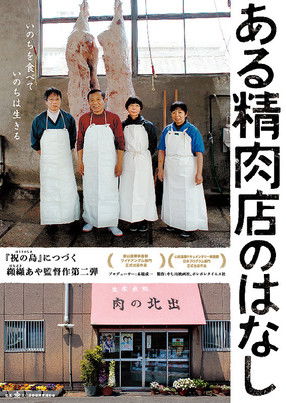
The Kitades run a butcher shop in Kaizuka City outside Osaka, raising and slaughtering cattle to sell the meat in their store. The seventh generation of their family's business, they are descendants of the buraku people, a social minority held over from the caste system abolished in the 19th century that is still subject to discrimination. As the Kitades are forced to make the difficult decision to shut down their slaughterhouse, the question posed by the film is whether doing this will also result in the deconstruction of the prejudices imposed on them. Though primarily documenting the process of their work with meticulous detail, Aya Hanabusa also touches on the Kitades' participation in the buraku liberation movement. Hanabusa's heartfelt portrait expands from the story of an old-fashioned family business competing with corporate supermarkets, toward a subtle and sophisticated critique of social exclusion and the persistence of ancient prejudices.
When a Mongolian nomadic family's newest camel colt is rejected by its mother, a musician is needed for a ritual to change her mind.
Le Polyhandicap : Une immersion au plus près de l'humanité
What would your family reminiscences about dad sound like if he had been an early supporter of Hitler’s, a leader of the notorious SA and the Third Reich’s minister in charge of Slovakia, including its Final Solution? Executed as a war criminal in 1947, Hanns Ludin left behind a grieving widow and six young children, the youngest of whom became a filmmaker. It's a fascinating, maddening, sometimes even humorous look at what the director calls "a typical German story." (Film Forum)
Ulrike and Olli meet in 1985 while on tour with Circus Roncalli. He is living his childhood dream as part of the successful clown duo 'Illi & Olli'. She has recently left her life as a nurse in Berlin behind. When the season is over, she moves with him to Switzerland. What began as a circus fairy tale eventually becomes reality, amid creative crises, raising children, and ultimately growing older.
The life and tragic death of Whitney Houston.
"I especially hope to inspire young women, because I often feel like so much emphasis is put on how beautiful you are, and how thin you are, and not a lot of emphasis is put on what you can do and how smart you are. I'd like to change the emphasis of what's important when looking at a woman." Filmed in San Francisco in 2000, Margaret Kilgallen (1967-2001) discusses the female figures she incorporated into many of her paintings and graffiti tags. Loosely based on women she discovered while listening to folk records, watching buck dance videos, or reading about the history of swimming, Kilgallen painted her heroines to inspire others and to change how society looks at women. Three of Kilgallen's heroines—Matokie Slaughter, Algia Mae Hinton, and Fanny Durack—are shown and heard through archival recordings. Kilgallen is shown tagging train cars with her husband, artist Barry McGee, in a Bay Area rail yard and painting in her studio at UC Berkeley (source: Art21).
This mini documentary features a rare interview with infamous graffiti artist Banksy, delving into how he started out as a graffiti writer up to his shift to gallery art, installations, CDs, and more. Til this day only a hand full of people know his real identity, such as friends appearing here: 3D of Massive Attack, Damien Hirst, and others.