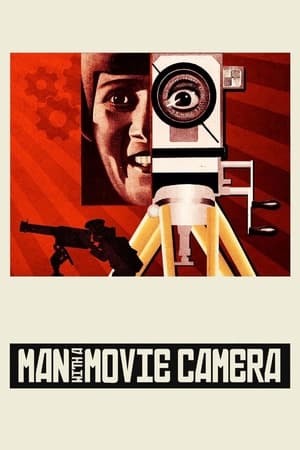
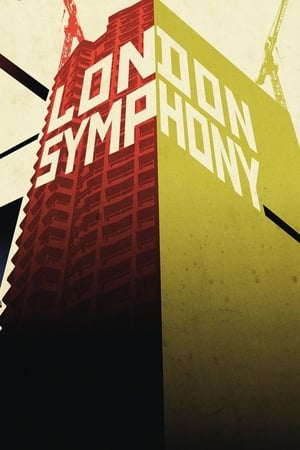
A day in the city of Berlin, which experienced an industrial boom in the 1920s, and still provides an insight into the living and working conditions at that time. Germany had just recovered a little from the worst consequences of the First World War, the great economic crisis was still a few years away and Hitler was not yet an issue at the time.
Eligibility is a film made by Ryan Cunningham. In this film, they discuss the question, "Why do I have to prove myself?" Through 80 minutes of documentary, archival, and narrative formats, Ryan explores this topic. Made within a week of 2025 and with a couple of all-nighters, this is proof of Eligibility. Anything can be a movie, so why not make one?
What are they? What do they seek? When all the lights go out, they will wander. And you will never see them.
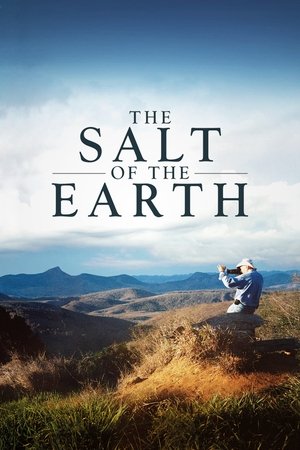
During the last forty years, the photographer Sebastião Salgado has been travelling through the continents, in the footsteps of an ever-changing humanity. He has witnessed the major events of our recent history: international conflicts, starvations and exodus… He is now embarking on the discovery of pristine territories, of the wild fauna and flora, of grandiose landscapes: a huge photographic project which is a tribute to the planet's beauty. Salgado's life and work are revealed to us by his son, Juliano, who went with him during his last journeys, and by Wim Wenders, a photographer himself.
In the fall of 1986, Richard Fung made his first visit to his father's birthplace, a village in southern Guangdong, China. This experimental documentary examines the way children of immigrants relate to the land of their parents, and focuses on the ongoing subjective construction of history and memory. The Way to My Father's Village juxtaposes the son's search for his own historical roots, and his father's avoidance of his cultural heritage.
Actors work with a director to find the rhythm of a scene.
The last days of summer captured on 16mm.
A portal, a sorceress, a fictional device to portray existence as a moment encapsulated inside an instantaneous photograph to present fragmented biographical elements —family disintegration, rootlessness, scars, two loyal companions, the promises of a new land—subverting the notion of a home-movie and transform it into a pilgrimage tool of self-discovery, mirroring the fragile nature of memories.
Phyllis Bigler has been going to the Spanish Peaks of Colorado since she was a child. Now in her 90s, she tells her stories.
A grandmother faintly narrates her quilts, as seen through the warped glass lens of a broken camera, a laptop webcam, and a clunky Xerox scanner.
A snooze alarm clock cannot wake a sleepy person. The bell of the alarm clock hence becomes a hypnotic trigger. Such an ordinary sound is redefined in our drowsy moments, and we are also liberated from the sounds that condition our lives—queue management systems, electric scooters, air raid drills, and public demonstrations. These sounds are released from the soft soil of our consciousness and grow into a new scene. And we sail with those who cannot be awakened on a boat drifting off course into a new realm projected by frequency. This is a film you can watch with your eyes closed.
A reflection on the fate of humanity in the Anthropocene epoch, White Noise is a roller-coaster of a film, a whirlwind of sounds and images. The fourth feature-length work by Simon Beaulieu, this film essay plunges viewers into a subjective sensory adventure—a direct physical encounter with the information overload of daily life. White Noise transforms the imminent collapse of our civilization into a visceral aesthetic experience.
An unhinged, diaristic examination of devastating friendship breakups.
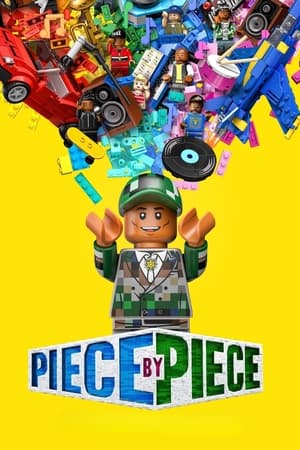
A unique cinematic experience that invites audiences on a vibrant journey through the life of cultural icon Pharrell Williams. Told through the lens of LEGO® animation, turn up the volume on your imagination and witness the evolution of one of music's most innovative minds.
Having lost her memory, A. could barely recall glimpses of her childhood in Argentina. After her death, her son visits the empty house for the last time. A sensory journey through a house without objects but filled with memory.
Actress and filmmaker Robyn Adams discusses her experiences with autism, gender identity, and learning to embrace her flaws. Also, she's Frankenstein's Monster now.
An experimental look at the origin of the death myth of the Chinookan people in the Pacific Northwest, following two people as they navigate their own relationships to the spirit world and a place in between life and death.
A dystopian future that’s ever nearer, Acid City floats in toxic waters and is left to its own devices. But under the boiling sun, the city weaves together its own social fabric. With audio recordings taken off the streets of NYC, this animation offers us something rare in the face of climate catastrophe: hope.
Filmmakers Sam and Amy journey into rural Australia to explore how the legacy of an American legend has transmitted and warped itself over time, and across the globe, resulting in the 30th annual Parkes Elvis Festival.
The Eye explores silent landscapes where nature and absence coexist. Between the memory of places and resilience in the face of time, the film oscillates between beauty and existential vertigo, capturing what persists and what fades.