A look at the state of the global environment including visionary and practical solutions for restoring the planet's ecosystems. Featuring ongoing dialogues of experts from all over the world, including former Soviet Prime Minister Mikhail Gorbachev, renowned scientist Stephen Hawking, former head of the CIA R. James Woolse
Climate change has reached the indigenous Nenets people in the north of Siberia. The nomads' herds of reindeer move on thin ice. The warming in the Russian Arctic is becoming dramatically visible. Huge craters open in the thawing permafrost and expose dangerous viruses and bacteria. Forest floors dry out and the taiga catches on fire. The pack ice off the coast is melting and depriving polar bears of their habitat so that they approach human settlements in their desperation. The changes in the nature of the Arctic Circle combine with the measurements of researchers and observations of the indigenous people to form a disturbing overall picture: In the Russian Arctic, Pandora's box has been opened! The film team had the chance to shoot in regions that were been restricted areas for decades. The documentary shows in impressive and depressing images already existing effects, phenomena and ominous interlinkages of global warming.
This film tries to blow the whistle on what it calls the biggest swindle in modern history: 'Man Made Global Warming'. Watch this film and make up your own mind.
Takes viewers inside the homes of people seriously affected by increasingly ferocious floods hitting the UK. With one in six British homes now at risk of flooding, residents across the country count the cost, both financial and mental, to their communities affected by flooding over the last decade.
Violent squalls, hail, waterspouts, lightning... storms put animals and plants to the test. At a time when climate change is multiplying extreme weather events, this documentary plunges into the heart of a storm, from the heavy, dry atmosphere that precedes it to the deluge that follows.
Der Wind - Motor des Klimawandels
The coastline of East England is vanishing before our eyes. As cliffs crumble and roads disappear, the land carries stories of the past and the uncertainty of the future. The sea is always present
Vast, wild, yet extremely fragile. The coldest place on our planet is also one of the most affected by global warming and needs to be protected. The expedition focuses on exploring, documenting, and surfing in the South Shetland Islands and the Antarctic Peninsula, in the area known as Domain 1, which is being pushed for Marine Protected Area (MPA) status. Protected areas are very important for mitigating climate change and, in this case, also for regulating human activities such as concentrated fishing. This film helps us understand the importance of this area and the threats affecting it.
Narrated by Academy Award winners Sissy Spacek and Herbie Hancock, River of Gold is the disturbing account of a clandestine journey into Peru's Amazon rainforest to uncover the savage unraveling of pristine jungle. What will be the fate of this critical region of priceless biodiversity as these extraordinarily beautiful forests are turned into a hellish wasteland?
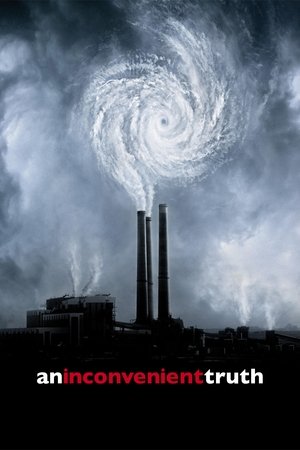
A documentary on Al Gore's campaign to make the issue of global warming a recognized problem worldwide.
Director James Nguyen will release his short documentary film, CLIMATE FIX which suggests how carbon removal technology can be used to fix climate change-global warming.
Yannick Bellon's documentary paints a portrait of a city torn between the problem of unsanitary housing, pollution corroding walls and statues, and the recurring and increasing floods—all consequences of human activity. Faced with job shortages and rampant speculation, the overarching question arises of how industries can coexist with the city of Venice. Allowing them to develop risks destroying it; driving them out risks turning it into a museum, causing its inhabitants, and thus its soul, to leave.
French actress Marion Cotillard travelled to the Philippines to meet with children and young people on climate change and what they want big-polluting governments to do about it. One of the girls she met is Marinel, a survivor of the Super Typhoon disaster in the Philippines in 2013, who is taking action on climate change in her own community. She participates in Plan International’s climate change adaptation projects and now teaches at youth camps to pass on everything she has learnt to the younger children. Marinel travelled to Paris with Plan International for the United Nations Framework Convention on Climate Change (UNFCCC) 21st Conference of the Parties (COP21) in December 2015.
Follow the shocking, yet humorous, journey of an aspiring environmentalist, as he daringly seeks to find the real solution to the most pressing environmental issues and true path to sustainability.
Jellyfish blooms are making headlines around the world. This is due to the damage they cause to tourism, fishing and our health. How can these creatures, which are over 98% water and have no shell, skeleton or brain, expand so rapidly? Although this is a normal stage in the life cycle of these gelatinous animals, we have to admit that blooms have become much more frequent and massive in recent decades. We're even witnessing jellyfish populations appearing in more and more regions where fish have been replaced by them, such as off the coast of Namibia, in the Black Sea, in the Sea of Japan and in certain areas of the Baltic Sea. What causes this? Why has the role of jellyfish in the ocean been underestimated, even though they outlived the dinosaurs? Are jellyfish on their way to dominating the oceans as they once did? What if they were to be the only ones left?
"Kon-Tiki" was the name of a wooden raft used by six Scandinavian scientists, led by Thor Heyerdahl, to make a 101-day journey from South America to the Polynesian Islands. The purpose of the expedition was to prove Heyerdal's theory that the Polynesian Islands were populated from the east- specifically Peru- rather than from the west (Asia) as had been the theory for hundreds of years. Heyerdahl made a study of the winds and tides in the Pacific, and by simulating conditions as closely as possible to those he theorized the Peruvians encountered, set out on the voyage.
Voyages au centre de la Terre : Dans les pas de Jules Verne
Antarctica is the most extreme continent on our planet—higher, colder, and even drier than any other on Earth, and although it is thousands of miles away, what happens here affects every single one of us.
In the cobalt mining areas of Katanga in the Democratic Republic of the Congo (DRC), babies are being born with horrific birth defects. Scientists and doctors are finding increasing evidence of environmental pollution from industrial mining which, they believe, may be the cause of a range of malformations from cleft palate to some so serious the baby is stillborn. More than 60% of the world’s reserves of cobalt are in the DRC and this mineral is essential for the production of electric car batteries, which may be the key to reducing carbon emissions and to slowing climate change. In The Cost of Cobalt we meet the doctors treating the children affected and the scientists who are measuring the pollution. Cobalt may be part of the global solution to climate change, but is it right that Congo’s next generation pay the price with their health? Many are hoping that the more the world understands their plight, the more pressure will be put on the industry here to clean up its act.
In the aftermath of the Cold War, Russian and American intelligence agencies, once enemies, joined forces and pooled their data to serve the planet, threatened by global warming. The story of a remarkable odyssey.