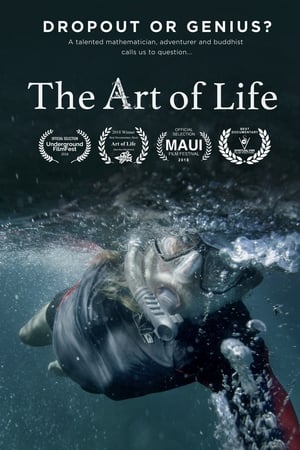
Shannon Harvey was working in her dream job as a radio news journalist when, at the age of 24 she was diagnosed with a devastating auto-immune disease. Determined to find a solution, she began researching cutting-edge mind-body medicine. Is it really possible, she wonders, that a simple practice that can be done anywhere, any time, by anyone, can ease suffering and promote physical and mental healing? Synthesizing the work of leading scientists with the ways of mystics, she undertakes a year-long experiment, with herself as the subject. Will meditation revolutionize her health and well-being, or is it just another over-hyped self-help fad? This compelling account of her journey provides fascinating insights about how to be well and happy in the modern world.
An engaging reflection on the meaning of existence and on the theme of death in the different spiritual traditions of the East and West.
A Zen priest in San Francisco and cookbook author use Zen Buddhism and cooking to relate to everyday life.
Following in the footsteps of his father, Folco Felzani embarks on an epic journey on foot in search of Mustang, the last lost kingdom, in northern Nepal. The story of a king without a kingdom. The adventure of a son without a father.
Buddhist monks open up about the joys and challenges of living out the precepts of the Buddha as a full-time vocation. Controversies swirling within modern monastic Buddhism are examined, from celibacy and the role of women to racism and concerns about the environment.
Street art, creativity and revolution collide in this beautifully shot film about art’s ability to create change. The story opens on the politically charged Thailand/Burma border at the first school teaching street art as a form of non-violent struggle. The film follows two young girls (Romi & Yi-Yi) who have escaped 50 years of civil war in Burma to pursue an arts education in Thailand. Under the threat of imprisonment and torture, the girls use spray paint and stencils to create images in public spaces to let people know the truth behind Burma's transition toward "artificial democracy." Eighty-two hundred miles away, artist Shepard Fairey is painting a 30’ mural of a Burmese monk for the same reasons and in support of the students' struggle in Burma. As these stories are inter-cut, the film connects these seemingly unrelated characters around the concept of using art as a weapon for change.
This documentary is the third part of The Yatra Trilogy created by John Bush. Vajra is the Sanskrit word signifying the thunderbolt of illumination, and yatra is the word for pilgrimage or spiritual journey. This film offers a cinematic pilgrimage to central Tibet, bearing witness to the indomitable faith of its endangered Buddhist community and the imminent threat to its very survival.
A short doc about how faces are perceived: by scientists, by artists, by animals. How do we remember faces so well if we can barely describe them with words? Why do we see them everywhere? What even are they? What is my face?
The influential life and powerful messages of Vietnamese Buddhist monk Thich Nhat Hanh are explored in this biographical documentary. For more than 50 years, this amazing social activist has preached self-awareness and compassion for all living beings. Follow him as he travels through France and the United States—including a stop at the Vietnam War Memorial in Washington, D.C.—spreading peace by teaching mindfulness and forgiveness.
Documentary on the Great Stupa at Sanchi, built by the Emperor Ashoka, and adorned with some of the finest examples of Buddhist art in the world.
An in-depth investigation featuring world renowned philosophers and scientists into the most profound philosophical debate of all time: Do we have free will?
A documentary about the Friends of the Western Buddhist Order in London.
A cinematic journey through the world. Non-verbal.
After World War II a group of young writers, outsiders and friends who were disillusioned by the pursuit of the American dream met in New York City. Associated through mutual friendships, these cultural dissidents looked for new ways and means to express themselves. Soon their writings found an audience and the American media took notice, dubbing them the Beat Generation. Members of this group included writers Jack Kerouac, William Burroughs, Allen Ginsberg. a trinity that would ultimately influence the works of others during that era, including the "hippie" movement of the '60s. In this 55-minute video narrated by Allen Ginsberg, members of the Beat Generation (including the aforementioned Burroughs, Anne Waldman, Peter Orlovsky, Amiri Baraka, Diane Di Prima, and Timothy Leary) are reunited at Naropa University in Boulder, CO during the late 1970's to share their works and influence a new generation of young American bohemians.
Brilliant Moon chronicles the life of the writer, poet, and meditation master Khyentse Rinpoche, one of Tibet's most revered 20th-century Buddhist teachers. Spiritual guide to His Holiness the Dalai Lama and the Royal Family of Bhutan, his life and teachings were an inspiration to all who encountered him. Richard Gere and Lou Reed provide the narration for his dangerous journey out of China, the subsequent spread of his influence and the search for his reincarnation after his death.
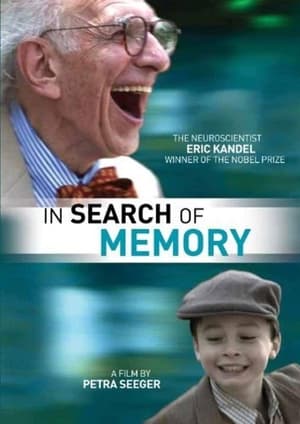
The lastest neuroscience discoveries show surprising results: false memories, distortion, modification, déjà vus. Our memory is affected in many ways, and deceives us every day. The very fact of recalling souvenirs modifies them. The everyday consequences are manyfold. To what extent can we rely on our souvenirs? How much credit can we give them during trials? Even more shocking, scientists have proved to be able to manipulate our memory: creating artificial souvenirs, deleting, emphasizing or restoring them on demand.
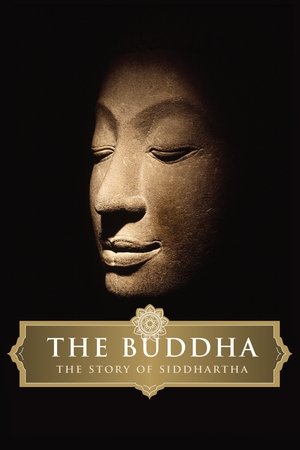
Over 2,500 years ago, one man showed the world a way to enlightenment. This beautifully produced Buddhist film by the BBC meticulously reveals the fascinating story of Prince Siddhartha and the spiritual transformation that turned him into the Buddha.
In a temple in Thailand, an order of Buddhist monks are performing a ceremony for people who headed there to get re-incarnated. There, we meet Tarn, a young Thai woman who lived in the Basque Country some years ago and who is still fascinated with that region, food and culture.
After decades of living a secret life, a filmmaker travels to a strict Japanese monastery in search of guidance but the only monk willing to help him prefers ice cream and heavy metal over meditation. CROWS ARE WHITE is an exploration of truth, faith and love, from the top of a mountain to the bottom of a sundae.
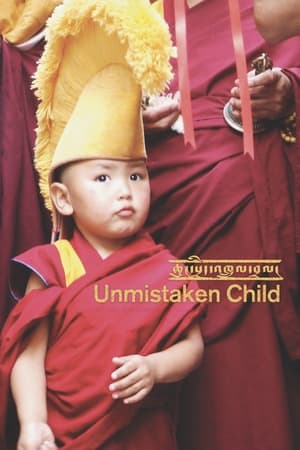
The main characters of the film are two small boys who share the throne of Karmapa, the highest office of one of Tibetan Buddhism's main sects and the third in line after the Dalai Lama and Panchen Lama. As with the Dalai Lama, Karmapa is the same soul which reincarnates in each successor to the office, who is identified by omens, portents and other signs. The Karmapa line actually pre-dates the Dalai Lama's, and their respective importance has alternated in the course of history with either the Karmapa or Dalai Lama holding precedence. Only one of the current Karmapas lives in Tibet, who is recognized by the Dalai Lama but controlled by the Chinese government for political ends. The second Karmapa lives in New Delhi, India and was selected by a Tibetan group in exile. The film was shot in India, Nepal and Tibet and features the Dalai Lama as narrator, providing an incisive spiritual and political view of occupied Tibet.