"Jolly Roger" could mean Roger Schawinski. But by definition, a "Jolly Roger" is the classic black pirate flag with skull and crossbones. This documentary tells the unvarnished story of the Swiss radio pirates who emerged in the 1970s. The focus is on Radio 24 in its wild years, when Schawinski's team broadcast from Italy, with the strongest FM station in the world at the time, straight down from Pizzo Groppera, 130 kilometers all the way to the Zurich area. Supported by numerous original documents from private filmmakers and from the SRG archives, the viewer relives the absurd radio war between David and Goliath that lasted almost four years, 24 years after this war between the radio pirates and the state power began on November 13, 1979. The many known and unknown fighters, who rallied behind their Radio Winkelried Schawinski in 1979 to help usher Switzerland into a new media age, remember the good and bad times, the demonstrations and the numerous threatened and actual closures.
In 1946, Isaac Woodard, a Black army sergeant on his way home to South Carolina after serving in WWII, was pulled from a bus for arguing with the driver. The local chief of police savagely beat him, leaving him unconscious and permanently blind. The shocking incident made national headlines and, when the police chief was acquitted by an all-white jury, the blatant injustice would change the course of American history. Based on Richard Gergel’s book Unexampled Courage, the film details how the crime led to the racial awakening of President Harry Truman, who desegregated federal offices and the military two years later. The event also ultimately set the stage for the Supreme Court’s landmark 1954 Brown v. Board of Education decision, which finally outlawed segregation in public schools and jumpstarted the modern civil rights movement.
Innocence tells the story of children who resisted to be enlisted but capitulated. Their stories were never told as they died during their service. Through a narration based on their haunting diaries, the film depicts their inner turmoil. It interweaves first-hand military images, key moments from childhood until enlistment and home videos of the deceased soldiers whose stories are silenced and seen as a national threat.
This feature documentary takes us to the heart of the Jane-Finch "Corridor" in the early 1980s. Covering six square blocks in Toronto's North York, the area readily evokes images of vandalism, high-density subsidized housing, racial tension, despair and crime. By focusing on the lives of several of the residents, many of them black or members of other visible minorities, the film provides a powerful view of a community that, contrary to its popular image, is working towards a more positive future.
The Big One is an investigative documentary from director Michael Moore who goes around the country asking why big American corporations produce their product abroad where labor is cheaper while so many Americans are unemployed, losing their jobs, and would happily be hired by such companies as Nike.
This film from Bill Moyers is the first documentary to focus exclusively on people formerly detained in New York City’s notorious Rikers Island Jail. They tell their compelling stories direct to the camera, revealing the violent arc of the Rikers experience – from the trauma of entry to extortion and control by inmates, to oppressive corrections officers, violence and solitary confinement.
An in-depth and provocative look at the 1992 Los Angeles riots exploring the roots of civil unrest in California and the relationship between African Americans and LAPD.
In 2020 the Hungarian government announced the change of ownership at nine state universities in order to make them maintained by foundations. The so-called “restructuring” comprised the imposition of a board of trustees over the universities, the members of which being loyal supporters of the government holding stable positions in its economic halo. Only one of the nine institutions protested against the forced political takeover of the University of Theatre and Film Arts (SZFE). Our film presents one of the stories of the university blockade.
During May 2001, Chilean filmmaker Miguel Littin traveled through historic Palestine, documenting everyday life amid the war—more precisely, the existential distance between a child throwing stones with a slingshot and tanks filled with artillery.
A groundbreaking documentary created by the community of Watts, California — including rival gang members, police officers, victims of violence, and kids just trying to survive.
The only people charged over the brutal police murder of Elijah McClain are community activists who organized mass peaceful demonstrations calling for justice. They are facing up to 48 years in prison - among the highest charges for peaceful political protest in recent history.
Documentary about Joel da Conceição Castro, a ten years old boy killed by a police bullet in 2010.
Preschool to Prison is a compelling examination of how the United States public school system is built and operated like prisons. Zero-tolerance policies are used to justify suspension and arrests that set up a pathway to send children of color and children with special needs from school to prison. Children are being suspended, restrained, dragged, physically manhandled, and subsequently arrested for minor offenses such as throwing candy on a school bus. These personal accounts from people affected by the school-to-prison pipeline give riveting tales about the generational impact on society.
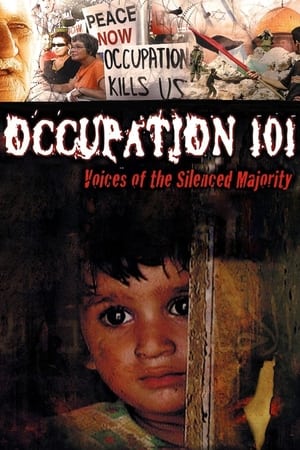
A thought-provoking documentary on the current and historical causes of the Israeli-Palestinian conflict and U.S. political involvement.
The documentary follows Oleg, Andrey, and other long-distance truck drivers from all over Russia, who turned their outrage against the 2015 bill that required truckers to pay taxes when driving on federal roads into a 9 month long protest.
1995. On the outskirts of Abidjan, the largest city in Ivory Coast, a policeman is murdered. Shot outside his vehicle, while his fiancée sits in the car, terrified. Superintendent Kouassi is the detective in charge of the investigation. Tall and lanky, he moves with the tired energy of a man who has seen it all. Drawing on a network of underworld characters with dubious information, Kouassi’s team begins bringing in potential suspects and subjecting them to horrific brutality: beating them with sticks, hanging them upside-down, threatening their lives. Some of the men are left so broken they have to literally drag themselves into Kouassi’s office later, to be interrogated while lying on the floor, their bodies a mess of bruises, broken bones, and lacerations.
The inside story of the Palestinian-Swedish band Kofia, told through film and music. Singer-songwriter George Totari fled Palestine during Israel's 1967 war and founded a band dedicated to liberation. Bringing the sounds and struggles of the Palestinians.
How US politicians and diplomats, over the past 25 years, have come close to achieving something almost impossible: securing peace between the State of Israel and its Arab and like-minded neighbors, mired in a struggle both dialectical and violent since the early 20th century, due to historical and religious reasons, entrenched offenses and prejudices, and the invisible and tyrannical hand of third countries' geopolitical interests in the area.
As the first part of our investigation, the CORONA.FILM prologue will delve into the science behind the pandemic. Starting at the very beginning, we shine a light on the responses. The aim is not to point the finger; our aim is to tell the whole story in all its complexity, as we believe that justice cannot prevail if only one side of the story is told.
Eines Künstlers Weglein