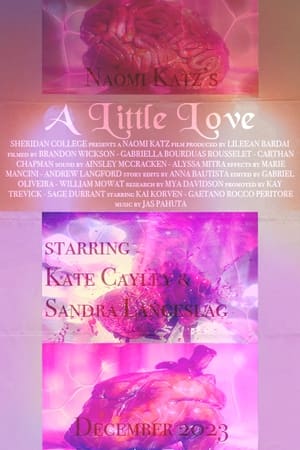
Inspired by an experiment from 1972, a team of paranormal researchers led by an unscrupulous documentary filmmaker try to summon the ghost of a fictional character.
Special Olympics athlete Jesse Lanterman prepares for her upcoming competition in her usual ways: working her salon job, bowling with friends, and searching for the juiciest strawberry in her garden. Filmed by the subject's cousin, this week-in-the-life short documentary offers an intimate profile that champions the tenderness of cousinly love.
SIN ROSTRO
Night falls and the noisy and chaotic population of the city of Rio de Janeiro goes to their homes, preparing for a new day. But while most people sleep, how does the city function? Early morning seems, to unaccustomed eyes, something lonely and even scary. What is life like, then, for those who work and live while the city sleeps?
Filming for this picture took place in Russia over the course of a quarter of a century: in 2000, 2010 and 2022. The film is preceded by an epigraph: “The fate of every person depends on the country where they live, just as the fate of a country depends on its citizens”.
A fragmented collection of independent closed cinemas, in London during lockdown, captured on Super 8mm film.
Jean-Luc Godard is synonymous with cinema. With the release of Breathless in 1960, he established himself overnight as a cinematic rebel and symbol for the era's progressive and anti-war youth. Sixty-two years and 140 films later, Godard is among the most renowned artists of all time, taught in every film school yet still shrouded in mystery. One of the founders of the French New Wave, political agitator, revolutionary misanthrope, film theorist and critic, the list of his descriptors goes on and on. Godard Cinema offers an opportunity for film lovers to look back at his career and the subjects and themes that obsessed him, while paying tribute to the ineffable essence of the most revered French director of all time.
A trip to the Valley of Salazar, in the Navarrese Pyrenees. People united for the love of the earth. A story full of hope. People transformed by an encounter.
The Broken Brothers Brass Band visits the Andrés Muñoz Garde public special education school in Pamplona. And through their interaction with the workers, the volunteers and even the beneficiaries, the work that is done there is revealed, the universe that is hidden there.
Fifteen images of a camera running in a park and in obscurity searching the space of light through distorsion and the sensory of rapid motion.
A short film depicting the universality of life, growth, and how beautiful life is to simply exist. The film shows how beautiful it can be when we show tenderness & love for one another, through the narration & home movies of four sisters & their mother from when they were born up to the present. The film was made over 18 years on The Australian Coast.
Alternating Philippines and Saudi Arabia as her home, the filmmaker uses personal home videos and present footage to tell the story of her family.
No abras los ojos y tendrás mi piel
A woman narrates the thoughts of a world traveler, meditations on time and memory expressed in words and images from places as far-flung as Japan, Guinea-Bissau, Iceland, and San Francisco.
A ritual of grids, reflections and chasms; a complete state of entropy; a space that devours itself; a vertigo that destroys the gravity of the Earth; a trap that captures us inside the voids of the screen of light: «That blank arena wherein converge at once the hundred spaces» (Hollis Frampton).
Documentary explores the life stages of different people.
On April 20 of 1988, six young people stormed the central Banamex branch in Los Mochis and held hostage the people inside the location. 30 years after this incident, the survivors recount what happened.
Starting with a long and lyrical overture, evoking the origins of the Olympic Games in ancient Greece, Riefenstahl covers twenty-one athletic events in the first half of this two-part love letter to the human body and spirit, culminating with the marathon, where Jesse Owens became the first track and field athlete to win four gold medals in a single Olympics.
Part two of Leni Riefenstahl's monumental examination of the 1938 Olympic Games, the cameras leave the main stadium and venture into the many halls and fields deployed for such sports as fencing, polo, cycling, and the modern pentathlon, which was won by American Glenn Morris.
A day in the city of Berlin, which experienced an industrial boom in the 1920s, and still provides an insight into the living and working conditions at that time. Germany had just recovered a little from the worst consequences of the First World War, the great economic crisis was still a few years away and Hitler was not yet an issue at the time.