A day in the city of Berlin, which experienced an industrial boom in the 1920s, and still provides an insight into the living and working conditions at that time. Germany had just recovered a little from the worst consequences of the First World War, the great economic crisis was still a few years away and Hitler was not yet an issue at the time.
A musical audiovisual journey in four parts. A young man finds himself unexpectedly taking an audiovisual odyssey into a world of surreality, slowly recounting his memories, revealing the puzzle pieces that led him to where he is, and maybe how he can get out.
A former circus artist escapes from a mental hospital to rejoin his armless, cult leader mother, and is forced to enact brutal murders in her name.
An experimental film comprised of Stanley Kubrick's THE SHINING played forwards and backwards at the same time on the same screen, creating bizarre juxtapositions and startling synchronicities.
During its 85-minute running time, this jarring experimental film takes a no-holds-barred look at the way women have been treated and depicted in Western art.
Audiovisual material gathered by filmmaker Fox Maxy over a decade, including documentary footage, television clips, and animation—sometimes layered on top of one another—are presented as one collage. Amid this sensory barrage, themes of sexual violence, community, confidence and joy are explored.
The creative processes of avant-garde composer Philip Glass and progressive director/designer Robert Wilson are examined in this film. It documents their collaboration on this tradition breaking opera.
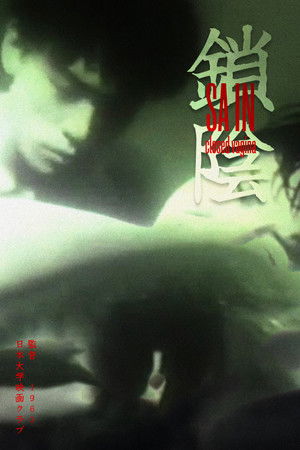
Adachi's follow-up to Bowl using the figure of a woman suffering from an unusual sexual aliment has often been taken as a controversial allegory for the political stalemate of the Leftist student movement after their impressive wave of massive fiery protests failed to defeat the neo-imperialist Japan-US Security Treaty. The ritualistic solemnity of the charged sexual scenes contribute to the oneiric qualities of Closed Vagina which Adachi would later insist was an open work, not meant to deliver any kind of deliberate political message. - Harvard Film Archive
A depiction of a girl’s uneasy state of mind as it wavers between life and death.
In 1919 an art school opened in Germany that would change the world forever. It was called the Bauhaus. A century later, its radical thinking still shapes our lives today. Bauhaus 100 is the story of Walter Gropius, architect and founder of the Bauhaus, and the teachers and students he gathered to form this influential school. Traumatised by his experiences during the Great War, and determined that technology should never again be used for destruction, Gropius decided to reinvent the way art and design were taught. At the Bauhaus, all the disciplines would come together to create the buildings of the future, and define a new way of living in the modern world.
A dying man in his forties recalls his childhood, his mother, the war and personal moments that tell of and juxtapose pivotal moments in Soviet history with daily life.
In an anachronistic dystopian landscape, a beleaguered young man attempts to navigate his way through the indie film scene in LA.
Gehr uses a mini-digital recorder to look back on the Machine Age in the form of San Francisco's soon-to-be-shuttered Musee Mecanique. For slightly more than an hour, Cotton Candy documents this venerable collection of coin-operated mechanical toys—including an entire circus—mainly in close-up, isolating particular details as he alternates between ambient and post-dubbed (or no) sound. By treating the Musee's cast of synchronized figures as puppets, the artist is making a show—but is it his or theirs? Gehr's selective take on the arcade renders it all the more spooky. There's a sense in which Cotton Candy is a gloss on the moment in The Rules of the Game when the music-box-collecting viscount unveils his latest and most elaborate acquisition. (It also brings to mind the climax of A.I.: The DV of the future tenderly regards the more human machine of the past.) (J. Hoberman, The Village Voice)
Five lonesome cowboys get all hot and bothered at home on the range after confronting Ramona Alvarez and her nurse.
“For my film portrait of Sasha Grey, I wanted to focus on her expressive and psychological transformation into a cinematic actor, separate from the cues that have associated Sasha with her previous career as a performance artist working within the adult film world.” – Richard Phillips
The Alchemist assembles together a group of people from all walks of life to represent the planets in the solar system. The occult adept's intention is to put his recruits through strange mystical rites and divest them of their worldly baggage before embarking on a trip to Lotus Island. There they ascend the Holy Mountain to displace the immortal gods who secretly rule the universe.
A quasi-sequel to Michel Houellebecq's novel The Possibility of an Island, Masbedo's short presents a post-apocalyptic landscape overseen by a distant mother nature or perhaps mother of nature portrayed by French icon Juliette Binoche.
Mockumentary experimental film, which shows one day in the life of a young man. The action takes place on the Day of Soviet Cosmonautics, April 12, one of the last years of the USSR. Outside the window, it is gradually getting warmer, the onset of spring is felt, promising hope for the possibility of changes in the country. The hero of the film is fond of space. The young man, who idolizes Gagarin, is engaged in reconstruction, making the uniform in which the cosmonaut walked in the prime of his glory. Our hero is also a film enthusiast. He makes films with stories of space flights and shows them to his friends. The film is stylized as amateur films of the 1980s and was shot on a 16-mm color film made by the company" Svema", made in the Soviet Union. The quality of this film allows the viewer to fully immerse themselves in the atmosphere of the time of the film, which is dedicated to Soviet cosmonautics and Edward D. Wood Jr.
This programme tells the story behind the conception, recording and release of this groundbreaking album. By use of interviews, musical demonstration, performance, archive footage and returning to the multi tracks with Ahmet Zappa and Joe Travers we discover how Frank Zappa and The Mothers of Invention created the album with the help of legendary African- American producer Tom Wilson.
A surreal musical comedy set in a world where the avant-garde and the mainstream are reversed.