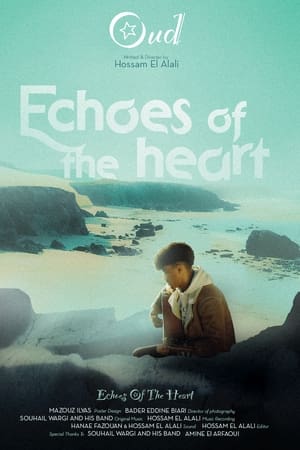
ECHOES OF THE HEART IS THE FIRST SHORT FILM OF ECHOES TRILOGY THAT FOLLOWS SOUHAIL'S MUSIC PASSION IN PLAYING OUD IN A SMALL CITY.
Alain Lefevre is a boxer paid by a Marseille mobster to take a dive. When he wins the fight he attempts to flee to America with the mobster's girlfriend Katrina. This plan fails and he seeks escape by joining the foreign legion. As part of the legion he tangles with abusive lieutenant Steinkampf and bonds with legionnaires Luther, Mackintosh and Rosetti.
Khaïma
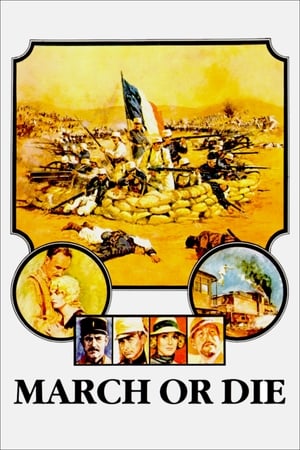
Just after World War I, Major Foster is incorporating new recruits into his French Foreign Legion platoon when he is sent to his former remote outpost located in the French Morocco to protect an archaeological excavation from El Krim, a Rifian leader who intends to unite all local tribes to fight the colonial government…
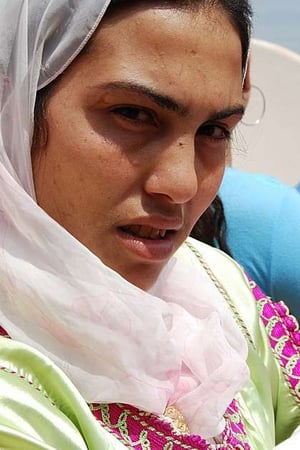
An undercover documentary film produced and directed by British filmmaker Dominic Brown, about the struggle of the indigenous Sahrawi people of Western Sahara. The documentary covers the current human rights and political situation of the Sahrawi. There are several interviews recorded with human rights victims including an elderly lady who had been attacked in her home the previous day by Moroccan security forces. There is also a focus given to the alleged vested interests of countries in the region, particularly France. The film states that the French Government's close relationship with Morocco, their trade deals and their use of veto over the terms of the UN mission in Western Sahara are major factors.
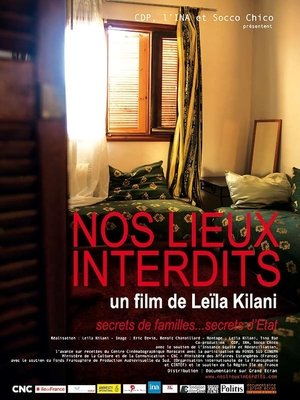
On the border, the line as principle of property and belonging reaches an extreme dimension where it physically defines the sphere of its relations. Those who transgress it reconstruct these imaginary lines on a daily basis, redefining the traditional geography and occupying the non-spaces where others live in a temporary form of existence. These others, the non-citizens, are phantasmtic, exchangeable parts of a flexible market. Made invisible, they are permanently controlled persons. Under the pretext of a greater civilian security, they are kept clear from the public spaces reserved for the citizens with rights and pushed into non-public spaces, which are run by state and military surveillance, multinational operations servicing a European market and non-governmental organisations.
An intimate portrait of Matthew Shepard, the gay young man murdered in one of the most notorious hate crimes in U.S. history. Framed through a personal lens, it's the story of loss, love, and courage in the face of unspeakable tragedy.
This video research is based on a trip to Morocco in July 2005, during which the director documented irregular migration transiting through Morocco, as well as their control. This geographical project focuses on the main migratory axes: Oujda, entry point for migrants in Morocco; Tangier, from where migrants can try to cross the strait or the fences of Ceuta; Rabat, organization space; and Laayoune, the closest point to the Canaries. The video questions the nature and meaning of these extraterritorial enclaves that structure the Moroccan territory.
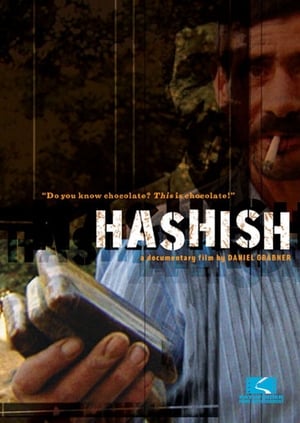
A small village high up in the mountains of Ketama, Northern Morocco. The life of the people here has been shaped by the drug hashish for centuries. Hashish as daily work, hash as exchange currency, hashish as business, hashish as basis and philosophy of a social system, hashish as medium for dreams and hashish as reason for stagnation.
Once a Punk, always a Punk? This is the story of Stof whom we followed for 8 years through the popular districts of Casablanca. He pays his independence at a high price when he finds himself arrested.
The Green March is a film where the destinies of a handful of men and women intertwine, all united by the common goal of peacefully fighting for the freedom of a colonized territory, driven by the same dream: to contribute to the construction of modern Morocco. It is also the story of Zhor, who risked her life 40 years ago to bring her child into the world on the land of occupied Moroccan Sahara.
In the vast expanse of desert East of Atlas Mountains in Morocco, seasonal rain and snow once supported livestock, but now the drought seems to never end. Hardly a blade of grass can be seen, and families travel miles on foot to get water from a muddy hole in the ground. Yet the children willingly ride donkeys and bicycles or walk for miles across rocks to a "school of hope" built of clay. Following both the students and the teachers in the Oulad Boukais Tribe's community school for over three years, SCHOOL OF HOPE shows students Mohamed, Miloud, Fatima, and their classmates, responding with childish glee to the school's altruistic young teacher, Mohamed. Each child faces individual obstacles - supporting their aging parents; avoiding restrictions from relatives based on traditional gender roles - while their young teacher makes do in a house with no electricity or water.
When the junior ice hockey team from the small town of Náchod, in the Czech Republic, sets off in a bus to Morocco to play the away game in an exchange programme, the players and their coach expect an easy victory and a cultural shock: “bring ear plugs”, the coach suggests them with a touch of undisguised condescendence, so as not to hear the call to prayer early in the morning. Both on and off the ice, Rozálie Kohoutová and Tomáš Bojar’s camera focuses on a few teenagers and their exchanges, simultaneously funny and cruel, in a clumsy English.
A portrait of the groundbreaking Moroccan band Nass El Ghiwane, documenting a series of electrifying live performances in Tunisia, Morocco, and France; on the streets of Casablanca; and in intimate conversations. Storytellers through song and traditional instruments, and with connections to political theatre, the band became a local phenomenon and an international sensation, thanks to their rebellious lyrics and sublime, fully acoustic sound, which draws on Berber rhythms, Malhun sung poetry, and Gnawa dances.
This short-length documentary takes us to Agadir, a city in Morocco that was struck by an earthquake in 1960. The film, made by an expatriate Moroccan who lost family and friends in the disaster, is a memorial to that tragedy and to the past he left behind when he came to North America. Partly allegorical, it employs varying techniques to offset reality from fantasy sequences.
Orientalism is a literary and artistic movement born in Western Europe in the 18th century. Through its scale and popularity, throughout the 19th century, it marked the interest and curiosity of artists and writers for the countries of the West (the Maghreb) or the Levant (the Middle East). Orientalism was born from the fascination of the Ottoman Empire and followed its slow disintegration and the progression of European colonizations. This exotic trend is associated with all the artistic movements of the 19th century, academic, romantic, realistic or even impressionist. It is present in architecture, music, painting, literature, poetry... Picturesque aesthetics, confusing styles, civilizations and eras, orientalism has created numerous clichés and clichés that we still find today in literature or cinema.
A documentary that traces the life and times of Bhagat Singh, a committed Marxist who most ably exemplified the spirit of revolutionary resistance against British imperialism in undivided India.
Study of the relationship between observer and landscape in the contemplative experience. The view building the landscape from the necessary distance. The delimitation of its borders against the total continuum of nature. The observer immersed in the path of his gaze across the landscape. Resting the gaze in the details that make the globallity. The view selecting the space included as a landscape.
An intimate conversation between Félix Guattari and psychiatrist Danielle Sivadon.
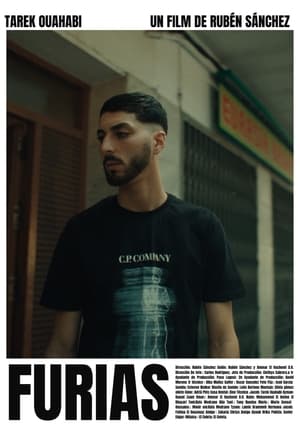
Furias