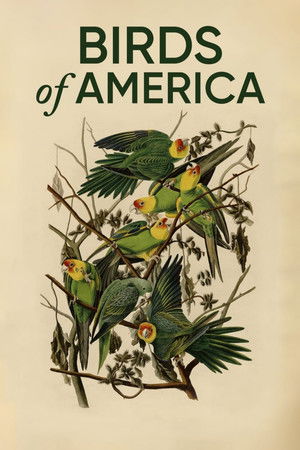
In the first half of the 19th century, the French ornithologist Jean-Jacques Audubon travelled to America to depict birdlife along the Mississippi River. Audubon was also a gifted painter. His life’s work in the form of the classic book ‘Birds of America’ is an invaluable documentation of both extinct species and an entire world of imagination. During the same period, early industrialisation and the expulsion of indigenous peoples was in full swing. The gorgeous film traces Audubon’s path around the South today. The displaced people’s descendants welcome us and retell history, while the deserted vistas of heavy industry stretch across the horizon. The magnificent, broad images in Jacques Loeuille’s atmospheric, modern adventure reminds us at the same time how little - and yet how much - is left of the nature that Audubon travelled around in. His paintings of the colourful birdlife of the South still belong to the most beautiful things you can imagine.
Bird watchers on both sides of the U.S.-Mexico border share their enthusiasm for protecting and preserving some of the world's most beautiful species.
It is a documentary about mostly inner-city birds. It is meant to examine their lives in a more metropolitan context as they become increasingly tangled in our everyday lives.
This documentary follows various migratory bird species on their long journeys from their summer homes to the equator and back, covering thousands of miles and navigating by the stars. These arduous treks are crucial for survival, seeking hospitable climates and food sources. Birds face numerous challenges, including crossing oceans and evading predators, illness, and injury. Although migrations are undertaken as a community, birds disperse into family units once they reach their destinations, and every continent is affected by these migrations, hosting migratory bird species at least part of the year.
In Pica Pica Kristersson invites the viewer to be enthralled for an hour and a half by the vicissitudes of magpie life. Opposing himself to the current nature films that tend to highly compress time in order to end up with a concentrated sequence of action-elements Kristersson leaves rhythm and tempo almost completely up to the magpies themselves. With great integrity he filmed the daily, social and emotional life of a species of birds that has many points of contact with human life. Thus, the movie offers us the oppurtunity to view our own everyday existence through other eyes, from a world right above our heads, but yet so far away.
A short audiovisual portrait of Giulio Nick Piacentini, a young sound engineer with a special interest in duck photography. Realized for the Filmmaking Laboratory at DAMS RomaTre with Antonietta De Lillo.
Portrait of Hermann Heinzel.
In 2016, Dutch birdwatcher Arjan Dwarshuis traveled the world to spot as many birds as possible in the span of one year, with the goal to break the big year world record (6042 species, set by Noah Strycker in 2015).
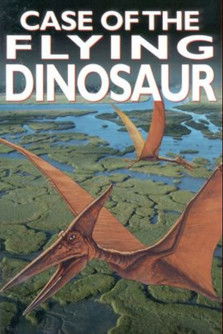
The long running, often bitter scientific debate over the origin of birds and the evolution of flight.
Brothers Axel Emil (13), Eivind (10), and Eirik (8) are obsessed with wildlife and birds. They are out in the forest almost every day taking pictures and looking for birds. But there is one bird they have yet to see: the Golden Eagle, one of Norway's largest birds. In this feel-good wildlife documentary we follow the brothers on their quest to see the Golden Eagle.
Dad goes birdwatching. His son then decides to follow and film him.
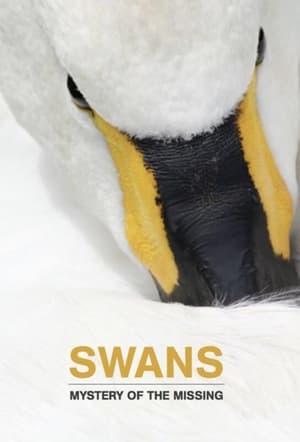
With narration from Paul McGann, this ground-breaking film sets out to solve one of nature's mysterious phenomena: the Bewick swan's dramatic decline. A pioneering group of scientists and conservationists sets out to discover why we have lost nearly half the Bewick population in the last twenty years. Every year, these majestic birds make one of the world's toughest migrations, across perilous land, sea and skies. Somewhere between the harsh Tundra landscape and the south of England lies the key to their disappearance. We join extreme sportswoman Sacha Dench and award-winning wildlife cameraman Benjamin Sadd, as they follow the swans over 7,000 km, on a journey that pushes both humans and swans to the limits of their endurance. Cutting-edge tracking techonology and innovative filming techniques give privileged insight into the birds' hidden world, providing stunning aerial views and the personal stories of swans, Charlotte, Daisy-Clarke and Leho.
Groenkijkers
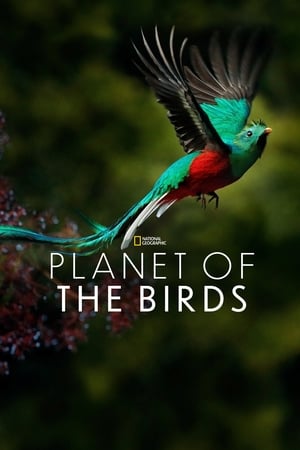
From the North Pole to remote islands, birds can live almost anywhere. How do these resilient animals thrive in such different environments? They have become hardy and versatile through their bodies, feathers, movements, and songs. In this global birding tour, we learn about these nomads of the sky.
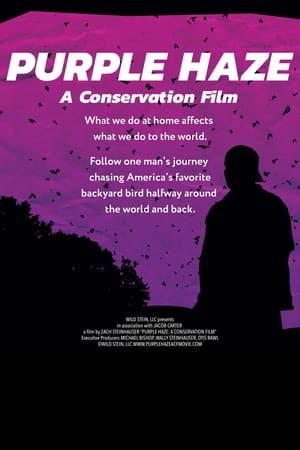
Follow one man’s journey chasing America’s favorite backyard bird halfway around the world and back.
The Atlantic Flyway, the easternmost migration path in North America, is among the most vital ecological phenomenons in the world. Join explorer Tomas Koeck as he examines several unlikely relationships along this massive migratory chain.
Spoonie, the spoon-billed sandpiper, would have long since gone extinct without Dr. Christoph Zöckler and a tight-knit group of international ornithologists. As if that weren’t bad enough, the migration route of this sparrow-sized wading bird—with its peculiar spoon-shaped bill—runs from Russia through North Korea and China all the way to Myanmar, passing through several of the world’s crisis regions of the past decade. The work of the task force is therefore also a political challenge. It requires diplomatic sensitivity in coordinating with the countries along the flyway. In the tragicomic story of Spoonie’s fate, the struggle for threatened biodiversity in an increasingly fragile world is reflected.
Eagles dominate the skies. But what makes these predators so special? Researchers study one special bird—and stunning up-close footage reveals her exceptional strength, eyesight, and flying skills. With intimate access to a new bald eagle family, this film takes you into the nest to witness the drama of chicks struggling to survive.
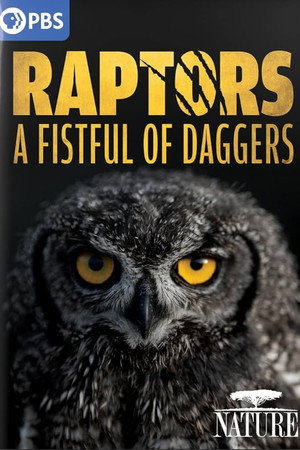
From giant eagles to miniature falconets, meet the many species of raptors. Explore how they survive bitter winters, learn to hunt and undergo epic migrations. Their superpowers of flight, sight, hearing and smell give them dominance over the skies. See the extreme ways in which raptors conquer the toughest habitats on Earth. From snowy owls in the high Arctic to honey buzzards raiding hornet nests in Taiwan, raptors can hunt prey in any climate.
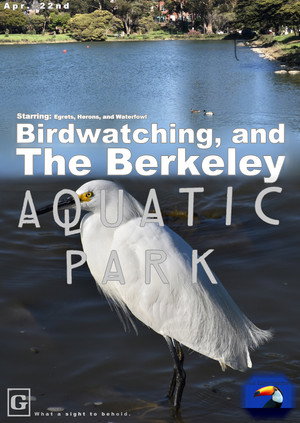
An examination of a park in Berkeley, California, and a memoir.