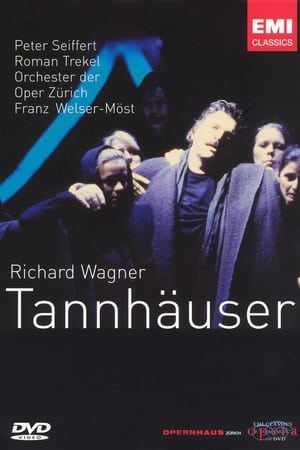
This Wagner opera is rarely performed because of the scandals that engulfed the Magdeburg Theatre when it was performed in 1836 under the title The Novice of Palermo, and became known as a cursed opera from which the composer had to distance himself. Wagner's adaptation of the story reflects the rebellious mood of a Revolutionary Germany, vindicating sensual love and attack the fanatical repression of sexuality by a puritanical and hypocritical authority. As the prose says, "Shame to him whose cruel striking/Kills for faults of his own liking!". One of the most extraordinary musicals based on a text by Shakespeare, especially worthy of a new performance as it is four hundred years since the death of the Bard.
Shostakovich’s satirical opera adapted from the classic short story by Nikolai Gogol. Baritone Eduard Akimov leads the cast as Kovalyov, the hapless bureaucrat whose nose has mysteriously gone missing.
One of the greatest revolutions in the history of mankind happened around 3000 years ago: the transition from polytheism to monotheism through the prophet Moses. God revealed himself directly to Moses, instructing him in absolute truth. Moses was charged with leading the people of Israel to the Promised Land and escaping from Egyptian slavery. Moses came to embody the relationship between the human and divine truth. God’s call to Moses presented a new idea that exploded all previous religious concepts: ‘One God – unique, eternal, intangible, inconceivable’. Moses understands this concept, but is unable to express it, and therefore God appoints Moses’ brother Aaron as his spokesman. They are bound to fail: Aaron can only approach sharing the idea by compromising its meaning, whilst Moses is left to search fruitlessly for “the word I lack …” This production of Arnold Schoenbergs opera was filmed during the Ruhrtriennale 2009.
Valery Gergiev leads the Vienna Philharmonic Orchestra in this production of Puccini's opera, recorded live at the Salzburger Festspiele in 2002. David Pountney's production features performances by Gabriele Schnaut, Paata Burchuladze, Johan Botha and Cristina Gallardo-Domas. This production uses Luciano Berio's 2001 completion of this unfinished opera.
Tosca, suspecting his lover is seeing anothe woman, turn him, painter Mario Cavaradossi, to Baron Scarpia.
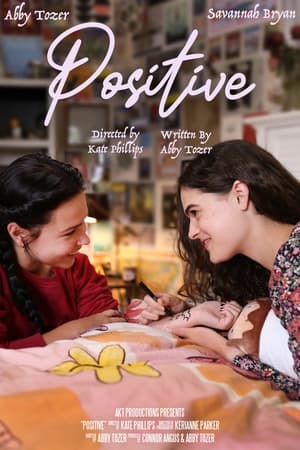
While waiting for a kidney transplant, a young pianist finds an unexpected connection with her doctor — and the courage to fulfill her musical dreams.
Discover Grace Bumbry’s inspiring rise to global opera fame. Spotlighting her historic performances, the film explores the racial barriers she overcame to triumph in her 1966 performance as "Carmen."
Letters, Riddles and Writs is a one act opera for television by Michael Nyman broadcast in 1991.
Gilberto Gil - Concerto de Cordas & Máquinas de Ritmo
Simultaneously filmed English language version of a period operetta, in which a Polish noblewoman is romantically linked with a revolutionary student activist.
Brahms, Ein deutsches Requiem op.45
Newman's poem tells the story of a soul's journey through death, and provides a meditation on the unseen world of Roman Catholic theology. Gerontius (a name derived from the Greek word geron, "old man") is a devout Everyman. Elgar's setting uses most of the text of the first part of the poem, which takes place on Earth, but omits many of the more meditative sections of the much longer, otherworldly second part, tightening the narrative flow.
When Barbe-bleue loses his fifth wife, the turbulent Boulotte is selected at random to be the next one. But Barbe-Bleue falls in love with Hermia – who loves the shepherd Saphir – and soon wearies of Boulotte. So, he asks his alchemist to concoct for him an “anti-wife” philtre. But, as on the previous occasions, it is merely a sleeping potion and Boulotte wakes up the other five “dead” wives. They reappear, dressed up as gypsies and bring the truth to light.
From the Baroque Theater at Český Krumlov Castle: Christoph Willibald Gluck's Orfeo ed Euridice (Orpheus and Eurydice) starring Regula Mühlemann, Bejun Mehta and Eva Liebau, with Collegium Vocale 1704 & Collegium 1704 under the baton of Václav Luks. Directed by Ondřej Havelka A co-production of Clasart / Unitel / ORF in association with Czech Television / SVT / YLE / RSI / Arthaus Music
Prince Abesalom runs into an orphaned Eteri while hunting, falls for her and brings the woman to his palace as his fiancé. The Prince’s aid Murman loses his self-control at Eteri’s beauty and gives her a spelled necklace as a wedding gift. Eteri contracts a mysterious disease that only Murman is capable to heal.
The Nutcracker is Mikhail Baryshnikov's breathtaking and critically acclaimed Emmy-nominated production. This spectacular performance is danced by the magnificent team of Baryshnikov, one of the greatest classical dancers of the century, and Gelsey Kirkland, both showcased at the peak of their careers, with members of the American Ballet Theatre.
J. K. Vaňhal: Koncert G dur pro housle a orchestr
Changing colors according to the music.
Cio-Cio-San, the young Japanese bride of American naval officer Lieutenant Pinkerton, finds her romantic idyll shattered when he deserts her shortly after their marriage. She lives in hope that one day he will return.
Opera in one act, libretto by G. Forzano based on Dante's Divine Comedy. Third part of his opera Triptych. The plot is based on canto XXX of "Inferno" from "The Divine Comedy", which are dedicated to the rogue and deceiver Gianni Schicchi, who was punished for his sins: he impersonated a dying rich man in order to make a forged will on his behalf. Gianni Schicchi is Puccini's only comic opera, a brilliant example of a modern opera buffa based on the tradition of Verdi's Falstaff. The most expressive recitative, bubbling melody, sharp character, impetuous tempo distinguish her music. Recorded live at Glyndebourne Opera House, Sussex, UK on 11 July 2004.