In Nigeria, a young Canadian doctor serves in a local mission hospital and learns much from the experience. Stationed abroad under the Canadian University Service Overseas Plan, Dr. Alex McMahon and his schoolteacher wife find every day a fresh challenge. An interesting study of intercultural help.
The film brings us under the skin and into the mind of La Chana, a talented Gypsy flamenco dancer as she returns to the stage to give a final seated performance after a 30-year break. Along the way, La Chana reveals the secret behind her disappearance when she was at the peak of her career.
An exploration —manipulated and staged— of life in Las Hurdes, in the province of Cáceres, in Extremadura, Spain, as it was in 1932. Insalubrity, misery and lack of opportunities provoke the emigration of young people and the solitude of those who remain in the desolation of one of the poorest and least developed Spanish regions at that time.
In 1973, fresh from his performance in Walkabout, a film that brought outback landscapes to urban audiences, Gulpilil returned the favour by paying a visit to Melbourne with camera in hand, shooting a wry fly-on-the-wall documentary that compares the sights and sounds of the city to those of his home in Arnhem Land.
Are eligible Indigenous bachelors an endangered demographic in the 21st century? That’s the question cheekily posed by Tracey Rigney’s debut documentary short, which invites First Nations individuals to confide what they desire, what holds them back, and their hopes and worries about whether they’ll ever find The One. Endangered first screened at the Melbourne International Film Festival in 2005.
You go to hell, and it's Jacksonville.
Through horses, a man feels an irrepressible duty to move in harmony with his pain. A film exploring the infinite momentum of life via an energy never destroyed, only transformed.
Kurt Vonnegut, Jr., discusses his development as a writer, including references to some of his major novels, his themes and their meaning, his relationship to other writers, problems in sustaining his special vision of American life, and his future. Accompanied by photographs that chronicle the author’s life and selections from home movies taken during his youth.
These film clips tell the story of the human experience of living with HIV/AIDS. People with HIV/AIDS, their husbands and wives, their families, their doctors and health workers talk about how HIV/AIDS has affected their lives. These are the personal video stories from Cameroon and Zimbabwe in which people speak out about their hopes and fears, their struggle against pain and abandonment and their fight for greater awareness and understanding. The film challenges stereotypes and calls for a concerted effort to face up to the epidemic.
On the surface, this collection of shorts by up-and-coming African American filmmakers arrived at a perfect time. The cutting-edge products of the New Black Cinema of the early '90s had disappeared, giving way to embarrassingly stereotypical, scatological fare such as Booty Call and Next Friday. This feature-packed compilation (which includes production notes, interviews with all of the filmmakers, and audio commentary by four) attempts to prove that African American cinema is intent on moving past the lowbrow humor, as six of the seven shorts steer clear of any comedy.
As one of his generation's quintessential Mad Men, television commercial director Joe Sedelmaier's work was iconic, dynamic, and instantly recognizable--some twenty to thirty years later, people are still wondering 'Where's the beef?” He turned the advertising world on its brain-damaged head by casting offbeat non-actors in still-unforgettable spots. His brilliant, frequently hysterical commercials for Wendy's, Alaska Airlines, Federal Express and others were snappy slices of cultural quirk that tapped into the Cold War-fearing, corporate workaholic zeitgeist of the '70s and '80s with a sense of humor that cracked billions of smiles, sold billions of burgers, and sped up the default rhythm of time-based media.
Paula Peters, the trainer, shows a series of tricks executed by her marvelously well trained troop of horses and dogs, assisted by two or three clever monkeys. The horse, a snow white animal, performs most entertainingly, and a graceful wolfhound does some marvelous jumping stunts, while her little poodle dogs and her monkeys also present an entertainment which the children will go wild over.
Right alongside Jerusalem, in a Russian Orthodox Convent in the Mount of Olives, in the middle of the Arab quarter, lives the 82-year-old Estonian nun Mother Ksenya.
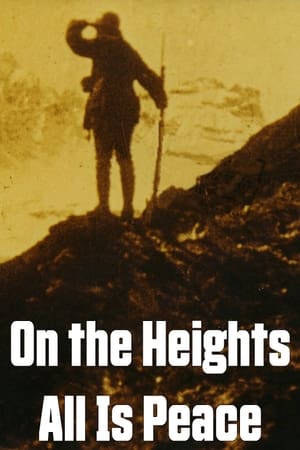
Found footage anti-war film comprising film documents of the Austro-Hungarian and Italian army on the Alpine front, and from first generation picture material by war-film pioneer Luca Comerio.
Working from archives of private film footage from a trip to India by the upper class of the late 1920s, a period of strong anti-colonial outbreak, Yervant Gianikian and Angela Ricci Lucchi deconstruct the images and analyze the attitude and behavior of Westerners in the East.
For one-night-only blood was spilled in the mud.
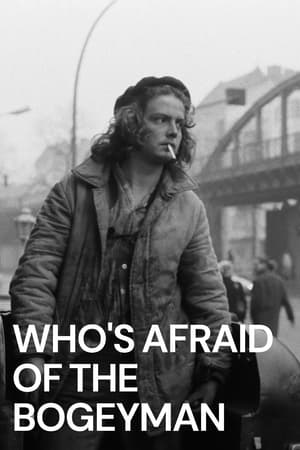
Portrait of a private coal company in East Berlin's Prenzlauer Berg district in 1988/89. The feisty woman boss runs the business with humour and understanding. Her seven male employees respect her. To the outside world, they are all tough guys, but as they describe their jobs and personal situations, above and beyond the hard manual labour, their vulnerability starts to come to light.
Sitting at her typewriter, listening to tango music, she dreams. Buenos Aires and Montevideo are far away, a different world where, long ago, the tango came into being. A dream about dance and music, as well as about unfulfilled desire and wanderlust behind the Berlin Wall.
Photographer Gundula Schulze wrote her graduate thesis on "nude photography of women in East Germany". It's a subject she continues to pursue in her photography. She considers the stereotype of superficial nude photography anachronistic, and talks vividly about being at pains to develop a relationship of trust with the women she photographs. Schulze wants to show what makes up the "whole woman", living up to her position in East Germany. Scenes of women in the professional world have been edited into the film.
Famous Spanish film critic Alfonso Sánchez talks about his personal life, his work and Anouk Aimée. A sentimental tribute to one of the most relevant figures on the Spanish film scene.