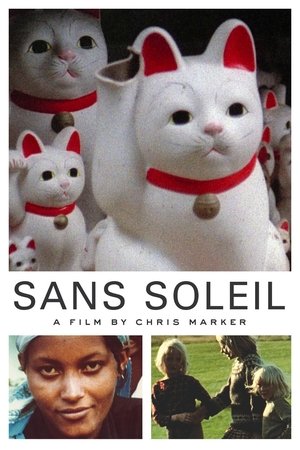
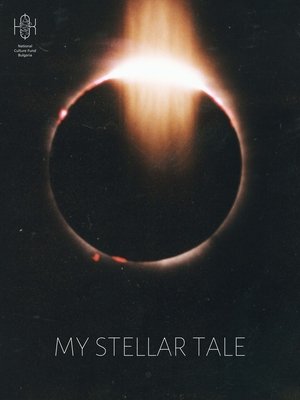
A woman narrates the thoughts of a world traveler, meditations on time and memory expressed in words and images from places as far-flung as Japan, Guinea-Bissau, Iceland, and San Francisco.
This is the story of my grandfather, Tiago Florit, who for 50 years was a film operator at the Teatre Principal de Maó, in Menorca. It is a review of his life, from his birth to his death, in a cinematographic key. A true love story to cinema.
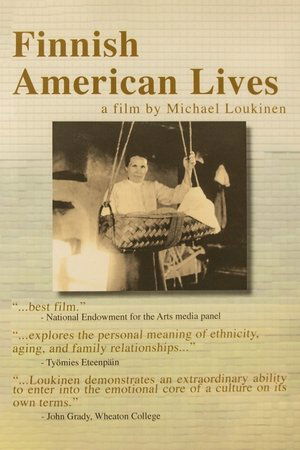
A moving portrait of traditional Finnish American culture in the Upper Peninsula of Michigan, highlighting that fragile community of memory connecting ourselves with parents and grandparents. It uses the “biographical model” of folklore filmmaking to tell the story of Erikki Vourenmaa, a 92-year-old Finnish immigrant, and his family living near Ironwood, Michigan. This three-generation farm family works, celebrates, reflects, and grieves together. The film explores the meaning of family, ethnic history, aging and intergenerational bonds. It contrasts between the immigrant elder, his American-born son and the partially assimilated grandchildren to illustrate change and continuity in the "sauna belt" of the Lake Superior Region. As Dr. Sharon Sherman concluded, “Loukinen’s focus on the bonds between generations will strike emotional chords about family relationships and ethnic identity for numerous cultural groups.”
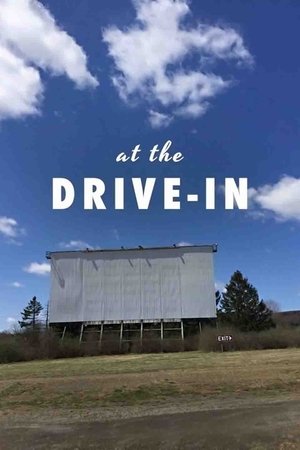
Unable to purchase a $50,000 digital projector, a group of film fanatics in rural Pennsylvania fight to keep a dying drive-in theater alive by screening only vintage 35mm film prints and working entirely for free.
What is the role of an ethnographic filmmaker as an outsider and student of a culture? Is it about representing, demonstrating, and reflecting or exposing, participating, and transposing? Although these are not binary terms of the historic discussions in anthropology, they share a lot to be experimented through shared cine-anthropology and sensory multimodal ethnography.
From the 1st projection to the newest technology IMAX and 4DX, we will travel trough the history of french theaters, asking questions about technological developments throughout history, and finally, the hoped-for future of movie theaters and how they envision themselves in 20 years.
In the Frozen Tomb of Mongolia
This film is a portrait of unique cultural space for Spirits, Gods and People. While permanent theatres are commonly built in most cosmopolitan modern cities, Hong Kong preserves a unique theatrical architecture, a Chinese tradition that has lasted more than a century - Bamboo Theatre.
A 'cine-ramic' roller-coaster ride through the rise, fall and re-birth of projected film.
Filmmaker Binevsa Bêrîvan travels to Armenia to capture the daily life, customs, and history of the country's Yazidi Kurdish community.
Lovci lebek
African Dwarves
An ethnographic documentary about the Mangbetu tribe of the Belgian Congo (now the Democratic Republic of the Congo). The film features a discussion of various rites including the Mangbetu practice of head binding, as well as various examples of traditional music and dance.
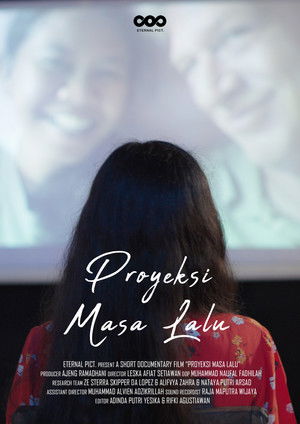
Kurnia, a 37-year-old woman, returns to face her past memories through projected images that bring both emotion and sorrow. On this journey, she recounts the stories of love, acceptance, separation, and regret that shaped who she is today. Remininsing her memories, Kurnia slowly finds the strength to let go of her attachment to the past and attain a sense of acceptance.
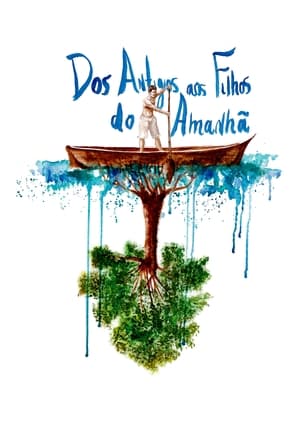
Dos Antigos aos Filhos do Amanhã
A bike messenger, an electrician, a postal worker, a business man and an office worker make their way through an evening in New York City. A collection of eight large-scale moving images projected on the walls of New York's Museum of Modern Art.
A walk through the landscapes of the province of Barcelona, Spain, as well as a testimony of the daily life and customs of its inhabitants.
A walk through the landscapes of the province of Salamanca, Spain, as well as a testimony of the daily life and customs of its inhabitants.
India has one of the largest populations of Indigenous people in the world, known locally as adivasis or tribals. As India's current Hindu nationalist government pushes to redefine India as a homogenous Hindu nation, adivasis’ ways of life are under greater threat. Set among the Rathava and Bhil adivasi communities of western India, broken gods document the social impact of Hindu religious evangelism among India’s Indigenous groups. As Indigenous people join Hindu religious sects, their old gods are literally becoming broken - devotional mural paintings are being whitewashed from homes, and the earthen figurines in honour of village gods and ancestors are being left to fall apart. While for those who convert joining a Hindu sect offers the allure of a better life, those who continue to follow their old ways have become ostracized by their communities. Their broken gods have lost the power to protect them from illness and scarcity.
An unnamed passer-by is forced to trace a circular route inside an abandoned tram station, facing loss and time. The broken walls act as a channel, transmitting fragmentary, blurred and analogical memories.