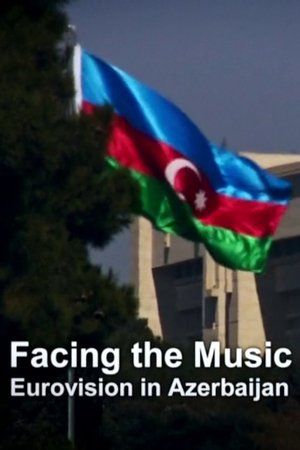
Documentary feature & TV hour filmed in run-up to Eurovision 2012 in Baku, contrasting the Azerbaijan's glitzy image to their grim human rights record through personal stories.
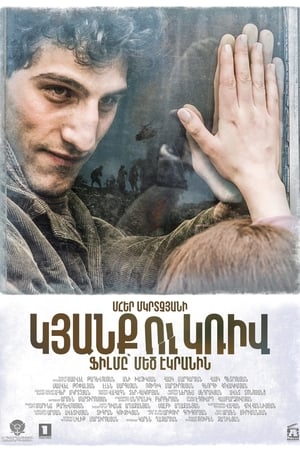
Taking place in 1991, Tigran, who teaches math at a village school to avoid the army, loses the girl he loves. Consumed by abject wretchedness, he decides to enlist as a volunteer in the Nagorno‑Karabakh war to give meaning to his hollow life.
Though both the historical and modern-day persecution of Armenians and other Christians is relatively uncovered in the mainstream media and not on the radar of many average Americans, it is a subject that has gotten far more attention in recent years.
In 2020, when a French robotics student investigates his mother's guarded secret about his true Armenian identity, he jeopardizes his university AI competition to travel to Artsakh and gets entangled in an unexpected full-scale war where he must rely on the evolving consciousness of his AI creation to save his life and learn the truth.
A couple returns to Aghdam, the city they once fled 32 years ago due to the war. It's a story about memory held in people, and about the small, powerful ways the past resurfaces when you finally face it.
The film is about Azerbaijan.
1992. Independent Azerbaijan is fighting separatists in Karabakh. Journalist Miranda arrives from London to shoot a documentary about the Caucasian leopard. Fate brings her together with the scout Emil. Together, they go through severe trials, during which Miranda learns a lot about the Caucasian leopard and the tragic pages of Azerbaijan's recent history.
The film based on Agil Abbas's novel about Nagorno-Karabakh War. The film tells about the heroism of the sons of Azerbaijan, who fought for the Motherland to the last drop of blood in spite of everything in the Karabakh war.
This movie is a story of two brothers who couldn't be anywhere else besides on the front lines during the 44-day Artsakh war fighting for their homeland.
Shot during the Nagorno-Karabakh War, "Fəryad" is only one of its kind. Following the Khojaly Massacre, Ismayil, an officer tasked with collecting the bodies, crosses enemy lines to avenge the brutal murder of a local schoolgirl. There he gets captured by Armenians and waits for the day to be exchanged for an enemy POW.
The film consists of three novels: the first novel about Gobustan, an ancient human settlement. The second novel deals with the theme of the East and women. The third novel tells about January 20, 1990 and the Khojaly tragedy.
The film on the Khojaly tragedy, tells the story of a young officer, unfolding against the backdrop of the terrible events of February 1992.
Sequel to Fəryad (1993). The film tells the story of Azerbaijani victory in the 44-day Patriotic War for the lands of Karabakh, which the Armenian invaders had occupied for nearly 30 years.
"Endless Corridor" is the definitive account of an agonizing human rights tragedy in which hundreds of Azerbaijanis massacred after Armenian Forces stormed the city of Khojaly during the Nagorno-Karabakh War. It happened in 1992, but the full story never been told throughout the world until now.
Samad is a 14-year-old boy, living in a refugee camp in Imishli. After blacking out in the forest, he finds himself in the midst of the Nagorno-Karabakh War that happened ten years ago.
The film tells the story of the golden era of Azerbaijani rap up to the Mende Varam era.
The film is about the inner suffering and conflictions of Yavar, father of a soldier, who can't give the news of his son's death in the war to his heart-sick wife.
As a result of the second Karabakh war, a village should be ceded to Azerbaijan since a new highway is built through the Lachin corridor. The family of Narine, like many other Armenian families, needs to find a new place.
The film "Eternal Mission" tells about the tumultuous fate of the delegation of the Azerbaijan Democratic Republic sent to the Paris Peace Conference in January 1919 under the leadership of Alimardan Bey Topchubashov, the Speaker of the Parliament.
The film is dedicated to the ethnogenesis of a small people, preserving their traditions and language, the Udi people