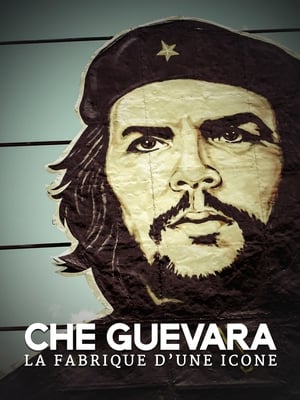
How does a politician – assassinated more than 50 years ago – gradually become a public figure? An extremely vibrant image which shows up where you least expect it. It served as figurehead for the Arab Spring revolutions, from Rabat to Sanaa, whereas we had thought it had been relegated to t-shirts and cigarette lighters. Why has this image become so universal that we are no longer surprised to find it in drawings, graffiti, tattoos and prints on all types of media in all sorts of contexts the world over? How can this image be used to advertise luxury automobiles and also be brandished angrily by indignant agitators? What is the formula that made this figure go viral? This documentary is a journey to investigate and decode a piece of iconography.
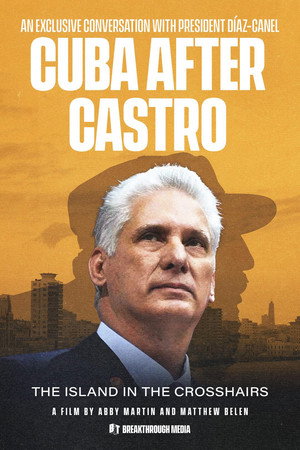
In the first and only American interview with President Miguel Díaz-Canel, Cuba After Castro explores the island’s revolutionary history and turbulent present, while revealing a portrait of the man tasked with steering its future.
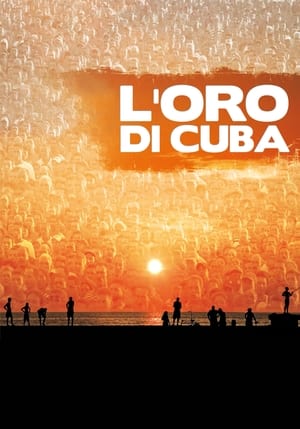
The Cuban Revolution turns fifty years old. Fifty years of history, myths and challenges of a country that has influenced politics and culture around the world, becoming for many the symbol of the revolt against capitalism.A country full of contradictions, but which has always exerted a great fascination for its strong political and cultural identity. "The Gold of Cuba" wants to go deep and reconstruct the most exciting and the mostdramatic moments in the history of the Caribbean island. But it also wants to analyze the present through the testimonies collected from many young people who tell their hopes, opinions, expectations and dreams, trying to imagine the future that awaits this small country with a great history.
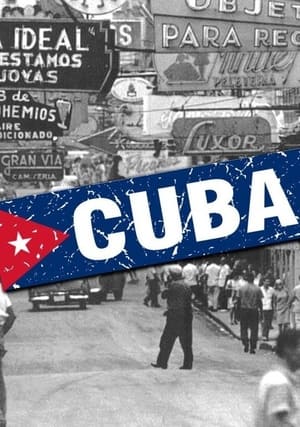
The fifties in Cuba, at the time of the "dias felices", the happy days, the American mobsters were the kings of the country, Hemingway lived there, the Hollywood stars came to hide their secrets, the number of bars and clubs rose amazingly, celebrities came to spend vacation, the business of cigars flourished, gambling was not a vice, everybody was dancing on frenzied music, while rum and cigars were flowing. At the beginning of the fifties, the huge storm that threatened Cuba was unpredictable.
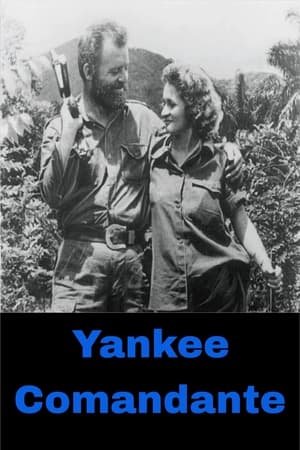
Two people rose to the rank of comandante during the Cuban Revolution. One was Che Guevara. The other was a man from Ohio.
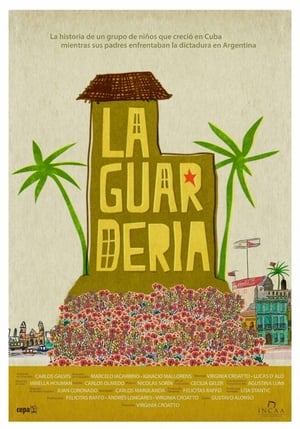
There was a time in Argentina, not so long ago, when the army wasn't only one, official, but many and made up by civilians. In those times of courageous youths determined to fight to the death for that cause upheld around Peronism as wll as some left-wing postulates, revolutionary Cubas was a beacon of hope in the world scheme -a Montonero nation. "A House in Cuba" seeks to recover the curious adventure of a couple of Montonero parents and their small children, who were lovingly sent into exile in order for their parents to take up arms.
Documentary recounting the story of the Cuban Revolution and its impact on the young people of Cuba.
This film was shot in Cuba in 1994. The opportunity came when Russel Porter, an Australian documentary filmmaker, was invited to teach at the international film and television school (EICTV) located some forty kilometers from Havana. He took the opportunity to make a film about life in Cuba today. He examines how people are surviving the hardships caused initially by the "blockade" imposed by the USA over 30 years ago and increased by the more recent loss of trade with the countries of Eastern Europe. The goal was to faithfully and objectively portray the current atmosphere and character of this "little island in the Caribbean." Apart from Russel and producer Denise Patience, the film crew was Cuban: cinematographer Alejandro Perez, sound recordist Lenin de los Reyes, production manager Elaine Santos, and local liaison Alex Alday.
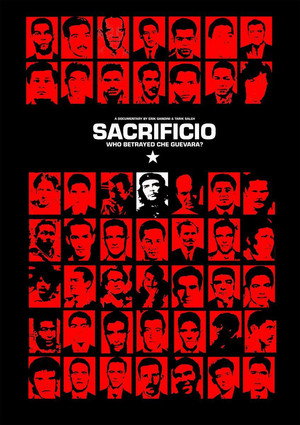
The two young Swedish journalist's Erik Gandini and Tarik Saleh have worked one year with Sacrificio, a film about the events surrounding the death of Che Guevara. They have traveled the world around and met among others the man who shot Che Guevara and the former CIA agent who walks around with Che's last tobacco in his pistol butt. In their attempts to find out what really happened they discover that the man who is accused of having betrayed Che Guevara as a matter of fact lives in Malmö, in the south of Sweden.
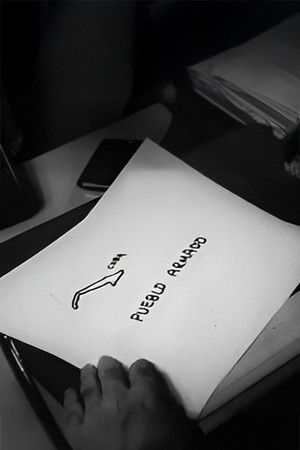
Shot in Cuba in 1961, this documentary follows a volunteer militia brigade organized in defense of the Cuban Revolution. Joris Ivens and his crew observe military training, daily life, and collective discipline among civilian volunteers. The film emphasizes popular mobilization as a defining feature of the revolutionary state.
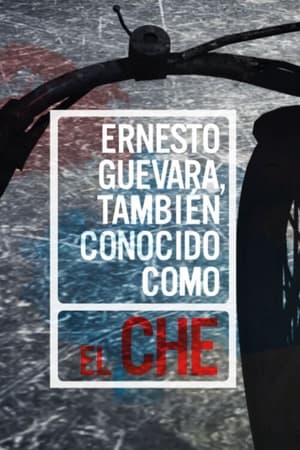
From millions of photos, posters, videos, t-shirts, postcards, records, books, phrases, testimonies, Che watches over us. Beyond all paraphernalia, he returns. Irreverent, mocking, stubborn - morally stubborn - Che will always be the subject of debate. The exclusive teleSUR series “Ernesto Guevara, also known as 'Che'”, aims to address the figure of Ernesto Guevara as it has never been told before. Conversing with the characters who were with him in important moments, visiting the real settings where Che spent his life.
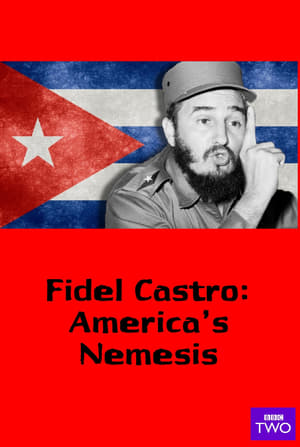
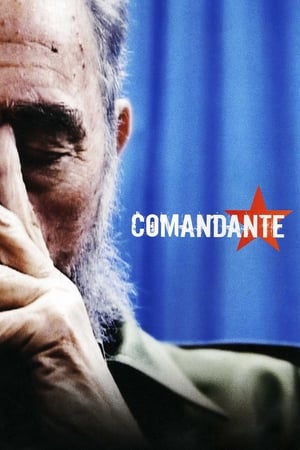
Fidel Castro, the former President of Cuba and one of the most controversial figures of the 20th century, passed away in November. He famously claimed that "history will absolve me", but will it? This special film considers Castro and his legacy.
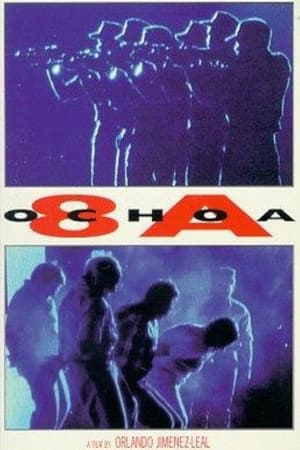
The Kafkaesque world of Cuba under Castro's rule is brought to light in this reconstruction of the 1989 trial and execution of General Arnaldo Ochoa Sanchez, the highest-ranking general and hero of the revolution, and commander of the Angolan and Ethiopian campaigns.
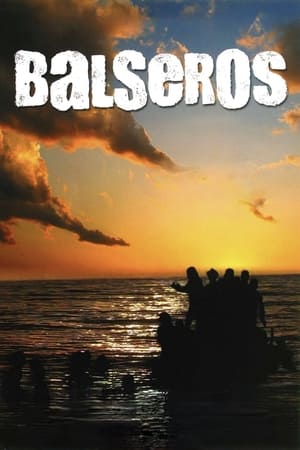
In the summer of 1994, a team of public television reporters filmed and interviewed seven Cubans a few days before their risky venture of setting out to sea in homemade rafts to reach the coast of the United States. Six made it far enough to be picked up at sea by the U.S. Coast Guard. When these balseros (rafters) were finally allowed to go to the United States, the film crew went with them to a string of several cities. Seven years later, the film crew visits them again, to discover that their destiny has been in the United States. Theirs is a true story about some of the authentic survivors of our times, the human adventure of people who are shipwrecked between two worlds.
The Castro revolution was just consolidating its power when, in 1961, over 100,000 students were sent from their schools into the countryside to teach the peasants there how to read. Coinciding with the Bay of Pigs invasion, in this docudrama, 15-year-old Mario (Salvador Wood) has come to a tiny village in the Zapata swamps and gradually wins the villagers over to his task. At the same time, he receives an education in the realities of rural life from the hard-working peasants.
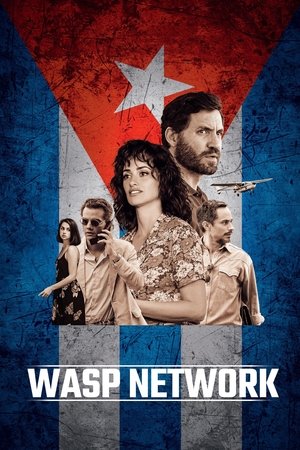
Havana, Cuba, 1990. René González, an airplane pilot, unexpectedly flees the country, leaving behind his wife Olga and his daughter Irma, and begins a new life in Miami, where he becomes a member of an anti-Castro organization.
Oliver Stone spends three days filming with Fidel Castro in Cuba, discussing an array of subjects with the president such as his rise to power, fellow revolutionary Che Guevara, the Cuban Missile crisis, and the present state of the country.
An American lesbian in Cuba explores gender through dance and film, blending personal experiences and cultural symbols with music and Revolutionary cinema and questions how lesbians fit into Cuban cinema.
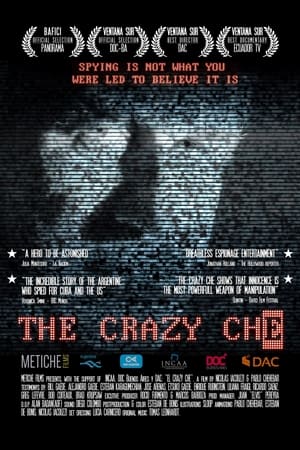
The incredible story of Bill Gaede, an Argentinian engineer, programmer… and Cold War spy.
La teoría cubana de la sociedad perfecta