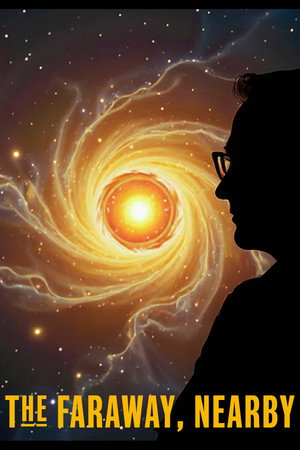
A stop motion/collaged based independent short film plays with the recontextualisation of memories and how time distorts them.
The Mona Lisa Curse is a Grierson award-winning polemic documentary by art critic Robert Hughes that examines how the world's most famous painting came to influence the art world. With his trademark style, Hughes explores how museums, the production of art and the way we experience it have radically changed in the last 50 years, telling the story of the rise of contemporary art and looking back over a life spent talking and writing about the art he loves, and loathes. In these postmodern days it has been said that there is no more passé a vocation than that of the professional art critic. Perceived as the gate keeper for opinions regarding art and culture, the art critic has supposedly been rendered obsolete by an ever expanding pluralism in the art world, where all practices and disciplines are purported to be equal and valid. Robert Hughes, however, is one art critic who has delivered a message that must not be ignored.
Bozarts
After fleeing Cuba with his family when he was 7, Dallas artist Rolando Diaz returns to Havana to revisit his old neighborhood and learn more about the contemporary art scene in the city.
Documents four of Abramovic's solo works, exercises in which her body is the vehicle for a rigorous testing of the self — violently brushing her hair and her face, vocalizing until she can no longer breathe, intoning a stream-of-consciousness flow of memories, moving to a drumbeat until she literally drops from exhaustion.
For Seven Easy Pieces Marina Abramovic reenacted five seminal performance works by her peers, dating from the 1960's and 70's, and two of her own, interpreting them as one would a musical score. The project confronted the fact that little documentation exists from this critical early period and one often has to rely upon testimony from witnesses or photographs that show only portions of any given performance. The seven works were performed for seven hours each, over the course of seven consecutive days, November 9 –15, 2005 at the Guggenheim Museum, in New York City. Seven Easy Pieces examines the possibilities of representing and preserving an art form that is, by nature, ephemeral.
Immigrant residents of a “shift-bed” apartment in the heart of New York City’s Chinatown share their stories of personal and political upheaval. As the bed transforms into a stage, the film reveals the collective history of the Chinese in the United States through conversations, autobiographical monologues, and theatrical movement pieces. Shot in the kitchens, bedrooms, wedding halls, cafés, and mahjong parlors of Chinatown, this provocative hybrid documentary addresses issues of privacy, intimacy, and urban life.
This free-form film is a self-portrait, which revisits more than 40 years of the author’s filmography and questions the major stations of his life, while capturing the political tremors of the time.
A tiny fragment of an actuality film of Tom Merry (William Mechem), a 'lightning sketch' caricaturist performing his act for the camera and producing a large profile caricature of Kaiser Wilhelm II. The loss of the rest of the film has bequeathed us 6 seconds that are of Mechem standing next to the completed portrait and sadly, that is all there is. An early film made by Birt Acres for R.W. Paul. (see release information for further detail).
An unconventional portrait of painter Frida Kahlo and photographer Tina Modotti. Simple in style but complex in its analysis, it explores the divergent themes and styles of two contemporary and radical women artists working in the upheaval of the aftermath of the Mexican Revolution.
Streamed exclusively on her Instagram stories, film maker Janne Elens takes us on a short and intimate journey to her family's abandoned house to reflect on her past and communicate with her deceased grandmother's spirit.
Bas Jan Ader's first fall film shows him seated on a chair, tumbling from the roof of his two-storey house in the Inland Empire.
Bas Jan Ader rides his bike into a canal in Amsterdam.
This short film is part of a mixed media artwork of the same name, which also included postcards of Ader crying, sent to friends of his, with the title of the work as a caption. The film was initially ten minutes long, and included Ader rubbing his eyes to produce the tears, but was cut down to three and a half minutes. This shorter version captures Ader at his most anguished. His face is framed closely. There is no introduction or conclusion, no reason given and no relief from the anguish that is presented.
One of a series of ‘falls’ by Bas Jan Ader that he recorded on film, this work was filmed in West Kapelle, Holland in 1970.
Bas Jan Ader hangs from the branch of a tall tree, until he loses his grip and falls into a river below.
Shot in his garage-studio, the camera records Ader painstakingly hoisting a large brick over his shoulder. His figure is harshly lit by two tangles of light bulbs. He drops the brick, crushing one strand of lights. He again lifts the brick, allowing tension to accrue. The climax inevitable—the brick falls and crushes the second set of lights. Here the film abruptly ends, all illumination extinguished.
Could an algorithm be able to authenticate masterpieces more reliably than human experts? And is it possible to create new painting from a long-dead master? This documentary explores the upheavals caused by the arrival of artificial intelligence in the art world.
A portrait of sculptor Barbara Hepworth revisiting the Yorkshire landscapes that inspired her and her home studio in St Ives, Cornwall.
A personal reflection on 2020's Black Lives Matter protests.