Learn to build a model railroad using the revolutionary Woodland Scenics SubTerrain Lightweight Layout System. Step-by-step, the DVD will show you the most convenient, lightweight way to create a durable hard shell or terrain base that easily accepts coloring, plaster castings and other landscape materials.
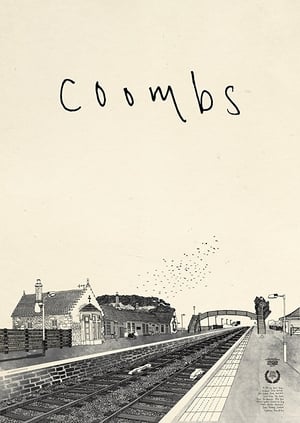
Routine Pleasures, Slow Cinema.
How to build a model railroad.
Education about the railroad. Model railroad footage is combined with real railroad footage.
Ride along as Horseshoe Curve takes you on a captivating behind-the-scenes railroad journey in Pennsylvania's Allegheny Mountains. Trackside views allow you to see first hand some of railroading's greatest accomplishments in action. This special edition of the Dream Plan Build Video Series covers the many miles of scenery from Altoona to Johnstown, PA, complete with dynamic views that will inspire the modeler in you!
Steamin' on Jack Parker's HO Layout, Wire Your Layout for DCC, The Legends of Steamtown National History Site, and more.
Years after a desperate teenage Linda gives up her baby for adoption, she finds herself face-to-face with Martin, a young man claiming to be her long-lost son. Linda embraces Martin and in him finds a welcome reprieve from her unhappy marriage to the neglectful Henry. But soon Martin grows violent and becomes obsessed with Henry -- a philandering man whose only offspring is an expansive model train set that devours his waking hours.
The control of a model railroad can be simple or complex. Bruce Chubb will show you how to wire the average model railroad. Getting the power to the track and the correct rail is the first hurdle. Then Bruce has some pointers on eliminating the track power gremlins. Good mechanical contact and clean materials make soldering easier. Good train performance depends on using the right size wire for the job. Running two trains at once is not hard. Bruce shows you how to hook up the toggles and the power packs, and how to operate the toggles. His suggestions make finding block boundaries easy. Bruce helps you overcome the problem of turning trains. He shows you how to wire a reverse loop for dual cab control. Then he explains a way to make the turntable bridge act as its own reversing switch.
Wayne dreams he can build a small layout with a minimum of expenses and space. He gets some helpful advice from his "Good Sense." There's so much to consider... time period, type of traffic, and scale. Wayne selects a 1950's-era branch line in HO. The Atlas track components cause the size to be 4'6" x 3'8". L-girder is perfect for the Marengo, Milwaukee & Northern. We need 1x1s, 1x2s, 1x3s, 1x4s, 2x2s, and a sheet of 1/2" plywood. "Keep it simple" is good advice for a first-time layout. However, by dividing the layout into 4 blocks we can run two trains. Polyfoam is the base for the scenic landforms. Wayne adds laytex paint, ground foam, and rocks. Artist's acrylic Gloss Medium forms the lake. All the structures get some weathering. Wayne lists some of the problem areas - couplers, track, and trucks - and shows you how to make them work properly. Locomotives can also be a source of trouble if you fail to maintain them.
Amtrak takes MR's Allen Keller to the Dallas Union Station in search of Malcolm. The Denver & Rio Chama Western is Malcolm's dream come true. Distressing, scraping, sanding, painting, and staining make wood look old and weatherd. Malcolm makes plastic into a wood look-alike. "Dirt Dipping" is just one of his secrets for transforming styrene into metal. Acid take some of the metal away, but leaves the paint. Malcolm busts up the masonry with a hammer after he stains and paints it. Malcolm lavishes his skills on a plastic structure kit. The result is a display of combined techniques. Pastel chalks, airbrushing, and "Dirt Dipping" make cars look realistic. Thee romance of the steam locomotive and an old-timer capture Malcolm and his attention. Out of the box the engine needs help. Malcolm adds his artistry with chalks, hand brush, and airbrush. Malcolm and Allen have fun operating trains through the beautiful scenery of the San Juan Central.
Since 1941, four generations have been thrilled and delighted by the Museum's impressive train exhibit. In 2002, an all new train exhibit was introduced. It was greeted with wild enthusiasm by both kids and grown-ups. The Great Train Story shows the importance of railroads today by focusing on four major functions - inter-modal transportation, passenger service, transporting grain, and moving raw materials. Each of these stories is told by taking visitors on a 2200 scale-mil journey between Chicago and Seattle.
Brain Holtz' Denver & Rio Grande Western at Night. Dave Frary says don't be scared of geology or scenery, but there are a few basics yo need to know. Malcolm Fuller shows you how to make the basic support for your scenery. The professional rock maker, John Olson, joins Malcolm to show you how to carve, cast, and color. Dave makes the basic scenery green, brown, and yellow. John returns and adds life to the scene with trees, and bushes. Litter and clutter may not look great in real life, but Gordon Odegard says they add life to a layout. This liquid scene flows on as Bob Hayden makes water the easy way. The extra dimension is in the background, and John makes full use of it. Malcolm's scenery is so good, much of it is done with mirrors. Tying it all together is best explained by John. Stacked track, what should you do? Dave has the answer. Jim Hediger has actually built a layout with two levels. Now he joins the two elevations.
INTRODUCTION - 00:00 - Wayne becomes HO scale and visits Marengo. FREIGHT YARD - 02:40 - Wood is not limited to buildings. CARPENTER SHOP - 03:10 - Scaled-down carpentry. KIT EVALUATION - 07:40 - Wayne tells you how to select a wood kit. WORK AREA - 10:30 - A good work area and set of tools are what you need. WOOD PREPARATION - 14:00 - Smooth, rough, new, worn, painted... decisions to make. GLUING - 22:00 - Globs of glue are not the answer. SUB-ASSEMBLIES - 27:00 - Wane make it all fit together. ROOFS - 31:00 - Wayne's secret for squaring up a roof and hiding mistakes. FINAL DETAILS - 37:20 - The station kit comes to life. SUPER-DETAILED KITS - 38:30 - A prize-winner with lots of details and scenes within scenes. CLOSING - 39:35
Lorell says real railroads have track standards, why not model railroads? Derailments don't have to be part of the hobby. Avoid derailments by planning your bench-work, sub-roadbed, and roadbed. Lorell helps you make your own track templates. Flex-track must be securely mounted to the roadbed or problems will arise. Good soldering practices make the task easier. Unpainted flex-track doesn't look right. Lorell has some suggestions. Scratch-building your track means staining your ties, laying smooth curves, avoiding kinks, and weathering the rail. Lorell covers it all. Lorell shows you how to install and improve commercial turnouts. Then he turns to scratch-built turnouts. Practice with Lorell's method of sub-assemblies: frog, stock rails, and points. You'll soon discover another fascinating part of the hobby. An overview of ways to move the points on all your new turnouts. Lorell offers some tips for super-detailing specific areas of your layout with rocks and paint.
With the creation of the Gorre & Daphetid (Gory and Defeated), John Allen single handedly moved model railroading from a children's pastime to a form of art. These rare films - discovered after a fire tragically destroyed the model masterpiece in 1972 - capture the devotion and sly humor that Allen infused into his miniature universe. Trains in two gauges cross snow-capped mountains and more than 100 soaring bridges. Despite outlaws, train wrecks, trolleys, bustling cities and thousands of miniature people inhabit this world. Get a peek into the mind of its creator to see his innovative techniques now in common use by model railroaders around the globe. From track-side close ups to sweeping vistas, the expert photography of Richard Reynolds and Glenn Beier will inspire train fans and model railroaders alike - indeed anyone with an imagination!
A documentary about vivid punk and alternative rock scene of Subotica, the northernmost Serbian city, through the periods of communism, tyranny of the 1990s regime, and economic transition at the beginning of XXI century. Seen through the eyes of its witnesses, these musicians and creative artists deliberately refused the imposed way of behavior, hence staying "invisible" to everyday people.
The movie revolves around the factory worker figure evolution from post-WWII in Italy, with the emigration from southern to northern regions, the years of economic boom, the strikes, the riots and the infamous march of the 40000 in Turin in 1980.
This short documentary depicts the stories of two hibakusha, survivors of the 1945 atomic bomb attacks on Hiroshima and Nagasaki. This film follows them on their mission to New York as representatives of the Japanese Peace Movement at the second United Nations Special Session on Disarmament held in June 1982.
This feature documentary profiles an Aboriginal community coming to terms with a legacy of sexual abuse, incest and family violence. The film follows the Ditidaht First Nation over a seven-year period, after a respected elder is found guilty of sexual assault. Award-winning filmmaker Maurice Bulbulian records the community's stories, becoming a part of their healing process. With the hope and courage of participants, the powerful interviews in this film play a key role in helping the community overcome the cycle of abuse. The continuing, devastating effects of the residential school system are also revealed; in this system, physical, emotional and sexual abuse were all too often routine.
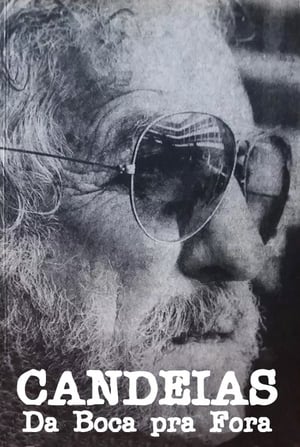
Candeias: Da Boca pra Fora