Nima Yooshij (Iranian poet) for his son’s 1st birthday. He says: “my son, by now, you have seen a spring, a summer, an autumn and a winter. From this point on, everything is simply a repetition except kindness.”
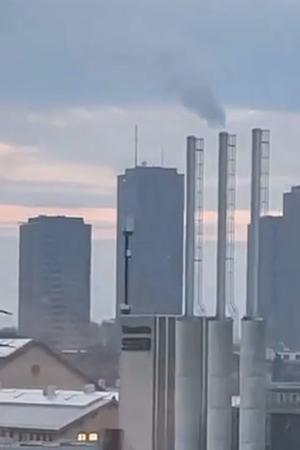
A new exploration of familiar places located in the region of Rhône and Isère throught an reinvention of digital nuances, a study of perceptions and fluidity around the nature of motion in landscapes and human interactions.
Cameraman Claude Gabriëls, well known for his work with Henri Storck and Paul Meyer, has made this beautiful evocation of a snowy day in Brussels.
A ritual of grids, reflections and chasms; a complete state of entropy; a space that devours itself; a vertigo that destroys the gravity of the Earth; a trap that captures us inside the voids of the screen of light: «That blank arena wherein converge at once the hundred spaces» (Hollis Frampton).
A documentary like no other. Starting with the bizarre practices and fantasies of a group of filmmakers working under the label Experimental Film Society, it spins off into a manifesto of light and sound. This dazzling journey through a view of cinema as cosmic ritual and erotic delirium is also an idiosyncratic celebration of the medium itself. Rouzbeh Rashidi’s ornate visual style unleashes a parade of visionary scenes that redefine movie magic as a fevered hallucination.
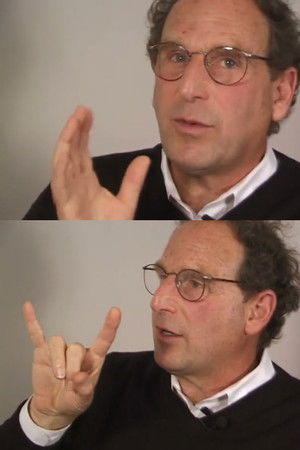
Stan Brakhage is a film maker whose work is shown mainly at film festivals. His work has been likened to poetry. Brakhage explains his techniques and his motivation.
Women from the different Spanish regions dress in their traditional costumes to attend the triumphal parade celebrating the victory of Francisco Franco and the rebel side over the Second Republic in 1939; the deeds of past heroes are remembered; and a patriotic poem by Nicaraguan poet Rubén Darío is recited.
In 1975, as America faced social and political upheaval, filmmakers turned chaos into art.
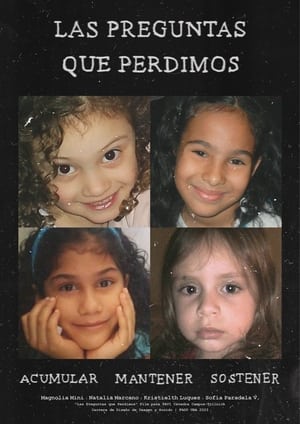
Las Preguntas que Perdimos
The Hypergaussian Wars is an AI-generated feature-length audiovisual work exploring algorithmic warfare, obsolete media and the transformation of images through repetition, saturation and collapse. Built from thousands of generated images, synthetic landscapes and references to 14th–16th century painting, the film stages a continuous conflict between historical visual culture and contemporary computational systems. Fragments of obsolete video games, ruined architectures, military simulations and post-human figures circulate through increasingly unstable environments. Rather than telling a linear story, the film operates as an image system in which visual excess progressively erodes meaning. The Hypergaussian Wars reflects on memory, obsolescence, artificial intelligence and the persistence of images after their original function has disappeared.
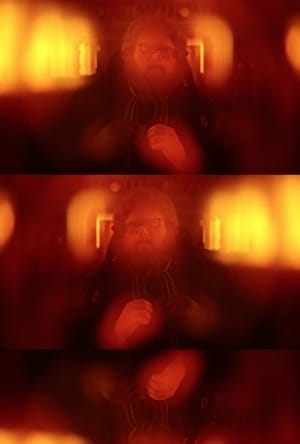
Twenty images of a camera running next to a chemical platform and capturing abstract light throught improvised gestures and asymmetrical motion
Filmmaking icon Agnès Varda, the award-winning director regarded by many as the grandmother of the French new wave, turns the camera on herself with this unique autobiographical documentary. Composed of film excerpts and elaborate dramatic re-creations, Varda's self-portrait recounts the highs and lows of her professional career, the many friendships that affected her life and her longtime marriage to cinematic giant Jacques Demy.
The author's erotic imagination is mixed between desire and magazine clippings, and the trade of collage becomes a ship that travels from outer space to the city itself.
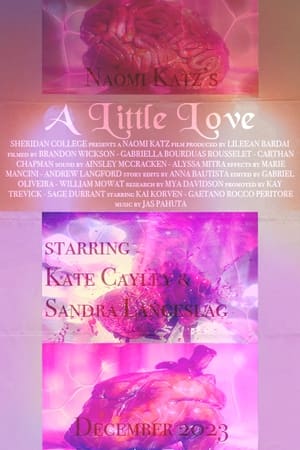
Through interspersed conversation and prose, this experimental documentary follows a poet and a neuroscientist as they explore the definition of love, what it means, and why it matters.
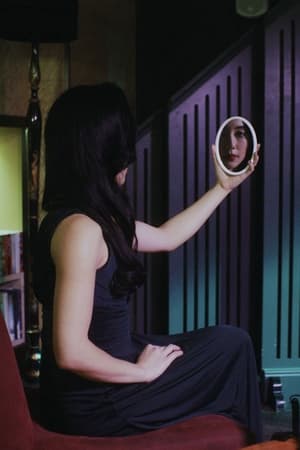
A sitting man listens to his thoughts, but can't catch any of them.
'Afloat' is an experimental film that paints a portrait of Japanese performance artist: Ayumi Lanoire. The film opens as a telephone call between Ayumi and Person X, which meanders the audience through the various layers that make up her personas leading one to wonder whether she is in fact a myth or reality.
After concluding the now-legendary public access TV series, The Pain Factory, Michael Nine embarked on a new and more subversive public access endeavor: a collaboration with Scott Arford called Fuck TV. Whereas The Pain Factory predominantly revolved around experimental music performances, Fuck TV was a comprehensive and experiential audio-visual presentation. Aired to a passive and unsuspecting audience on San Francisco’s public access channel from 1997 to 1998, each episode of Fuck TV was dedicated to a specific topic, combining video collage and cut-up techniques set to a harsh electronic soundtrack. The resultant overload of processed imagery and visceral sound was unlike anything presented on television before or since. EPISODES: Yule Bible, Cults, Riots, Animals, Executions, Static, Media, Haterella (edited version), Self Annihilation Live, Electricity.
Fifteen images of a camera running in a park and in obscurity searching the space of light through distorsion and the sensory of rapid motion.
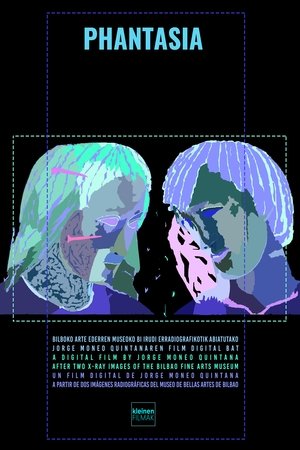
X-ray images were invented in 1895, the same year in which the Lumière brothers presented their respective invention in what today is considered to be the first cinema screening. Thus, both cinema and radiography fall within the scopic regime inaugurated by modernity. The use of X-rays on two sculptures from the Bilbao Fine Arts Museum generates images that reveal certain elements of them that would otherwise be invisible to our eyes. These images, despite being generally created for technical or scientific purposes, seem to produce a certain form of 'photogénie': they lend the radiographed objects a new appearance that lies somewhere between the material and the ethereal, endowing them with a vaporous and spectral quality. It is not by chance that physics and phantasmagoria share the term 'spectrum' in their vocabulary.
Tommy sets out to document walking. He meets a colorful cast of characters, attaches microphones to his feet, and contends with what it means to capture movement on film.