O Retorno da Terra Tupinambá
The film reveals the astonishing beauty and profound ecological importance of the Pantanal: the largest tropical wetland on Earth, spanning over 17 million hectares across Brazil, Bolivia and Paraguay. The wetland is home to several groups of Indigenous peoples as well as rare and endangered wildlife, including species found nowhere else. But the Pantanal has suffered more fire damage than any other ecosystem. Told through the journeys of two environmental defenders, and blending beautiful cinematography with insights from scientists, Indigenous leaders and activists, the film is a wake-up call and an invitation to stand alongside those working to protect one of the last truly wild places on the planet.
Documentário Brasil Tupinambá
A chronicle on the days without Jorge Julio López, key witness and complainant on the first trial on genocide in Argentina, dated in 2006. López, who had survived through concentration camps on the late seventies argentinian dictatorship, disappeared for the second time the day the court decision meant to condemn his kidnappers was about to be read.
Assassino na Pista de Dança
Criadores de Saci
"Chicha, Hope and Pain" addresses the emblematic figure of Chicha Mariani, founder of the "Grandmothers of the Plaza de Mayo." It is structured in two phases: that of hope, that of the young journalist Juan Martín Ramos Padilla, who wrote Chicha's biography; and that of pain, that of a woman who fought for 42 years of her life, not only to recover her stolen granddaughter, but also to restore justice and dignity.
On May 31, 2007, hundreds of armed men, from the Federal Police, in a true war operation, pulled out of the factories, the members of the Factory Commission elected by the workers, swearing in a federal intervener. The workers and their leaders talk about their struggles, day to day in the occupied factories, the reduction of working hours from 44 to 30 hours per week, the agreement with the Chavez government of Venezuela to build a house factory, Petrocasa . They also narrate the terror during the intervention, all kinds of humiliation to which they were exposed, anguish and perspectives.
A short film that follows Tiana, a young woman navigating the fragile space between self-discovery and belonging in contemporary Brazil. After distancing herself from a turbulent past, she tries to rebuild her identity while confronting expectations imposed by family, society, and her own desire for freedom. As new relationships open doors to intimacy and vulnerability, Tiana must decide whether to embrace the version of herself she has long hidden or continue living in the shadows. The film explores gender, transformation, and queer resilience through a tender, character-driven lens.
Gerais da Pedra
Ijó Dudu: Memórias da Dança Negra na Bahia
Two Danish comedians join the director on a trip to North Korea, where they have been allowed access under the pretext of wanting to perform a vaudeville act.
During the 2018 Brazilian presidential elections, a woman floats in waters far from home. When everything seems calm, a wave hits and carries her to the depths of her being. Water and Salt is a journey through the consciousness of someone whose country is under threat from a fascist government.
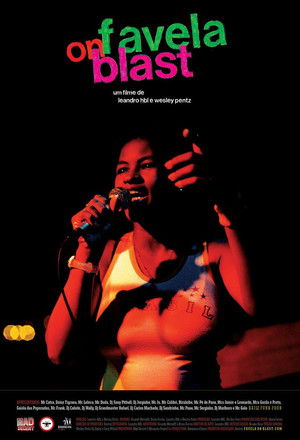
For 20 years, a subculture has emerged in Brazil under society's radar. It is the culture surrounding 'funk carioca', a musical rhythm which mixes the American electronic funk of the 1980s with the most diverse influences of Brazilian music. 'Baile funk' is one of the most interesting musical movements in the world, but it comes from what is at times one of the most violent and poorest places in the world: the slums of Rio de Janeiro (favelas). This music is the personalization of the raw element. Bombastic rhythms coming from the American Miami Bass and samples are fused with powerful rap vocals using Brazilian slang. This documentary tells stories of sex, love, poverty, and pride among Rio's marginalized people. They have their own language, style, and heroes. It's a film that's fast, heavy, and violent like the city itself.
"Subversivas" is a documentary that reveals the brazilian military dictatorship from the perspective of women. Teresa Angelo, Gilse Cosenza, Thereza Vidigal, Angela Pezzuti and Delsy Gonçalves joined the resistance to the military regime in different ways. Their memories bring out events that marked that time and their life. These statements reveal their effort for freedom and democracy not only in political actions, but also in their family, work and everyday relationships, imbued with a belief and search for a fair and free country.
The first biographical documentary film about the greatest Brazilian sailor by miles traveled. Setting sail from Salvador - Bahia - Brazil, Capital of the Blue Amazon, the Ukrainian Brazilian personality Aleixo Belov has already circumnavigated the globe five times, three of them alone, aboard a little sailboat built in his own backyard.
When the revolution in Nicaragua won its victory nearly 40 years ago, the world began to dream. A young generation was taking the reins in a country of grand utopias. From West Germany alone, 15,000 “brigadists” travelled to help rebuild the war-torn country: liberals, greens, unionists, social democrats, leftists and church representatives harvested coffee and cotton, built schools, kindergartens and hospital wards. No movement has mobilised so many people. What became of the hopes and dreams of the revolutionaries and their supporters?
Nas Entranhas de Nicolópolis
Fernando Lemos, a Portuguese surrealist artist, fled from dictatorship to Brazil in 1952 searching for something better. The movie follows the last moments of his journey and the struggle for the preservation of his legacy, trying to fulfill his last great desire: to be a good dead man.
A documentary about the controversial businessman Henning Boilesen Jr. and his involvement with the military regime as one of its most enthusiastic supporters, financing it and participating in the tortures of political prisoners. Those actions later culminated in his assassination in 1971 by members of militant groups opposed to the regime.