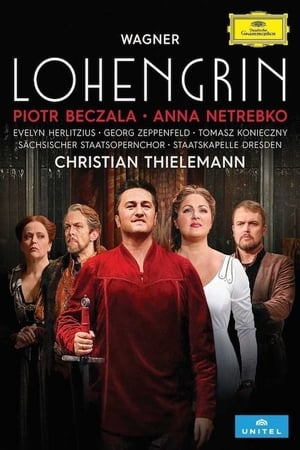
Soprano Anna Netrebko appears in her highly anticipated Met role debut as Leonora, the tortured heroine who sacrifices her own life for the love of the Gypsy troubadour. Dmitri Hvorostovsky sings Count di Luna, Yonghoon Lee is Manrico in his Met role debut as the title character, Dolora Zajick sings her signature role of the gypsy Azucena, and Štefan Kocán is Ferrando. Marco Armiliato conducts Sir David McVicar’s Goya-inspired production.
Matthew Bourne choreographs this version of Tchaikovsky's ballet performed at Sadler's Wells Theatre. Bourne sets the first part of the story in 1890, the year in which Tchaikovsky completed his version of Charles Perrault's classic fairy tale, with Beauty pricking herself on the poisoned rose in 1911 and awakening 100 years later in the contemporary world.
Radiant mezzo-soprano Susan Graham and dashing Italian tenor Marcello Giordani are unlucky lovers in La Damnation de Faust, Hector Berlioz’s classic take on dancing with the devil.
Valery Gergiev conducts Mariusz Trelinski’s thrilling new production of these rarely heard one-act operas. Anna Netrebko stars as the blind princess of the title in Tchaikovsky’s lyrical work, opposite Piotr Beczala as Vaudémont, the man who wins her love—and wakes her desire to be able to see. Nadja Michael and Mikhail Petrenko are Judith and Bluebeard in Bartók’s gripping psychological thriller about a woman discovering her new husband’s murderous past.
Renée Fleming sings one of her signature roles, the title character in Dvořák’s sumptuously melodic Rusalka. The story of the opera, which is about a water spirit’s tragic romance with a human prince, is drawn from several folktale sources including Hans Christian Andersen’s “The Little Mermaid.” Star conductor Yannick Nézet-Séguin leads a cast that also includes Piotr Beczala as the handsome Prince whom Rusalka yearns to love; Dolora Zajick as the cackling swamp witch Ježibaba; Emily Magee as the Foreign Princess, Rusalka’s rival; and John Relyea as Rusalka’s father, the Water Sprite.
Directed by Andy Sommer. Starring Heike Grötzinger, Gerhard Siegel, Alexander Tsymbalyuk. Bavarian State Opera, Munich, February 2013
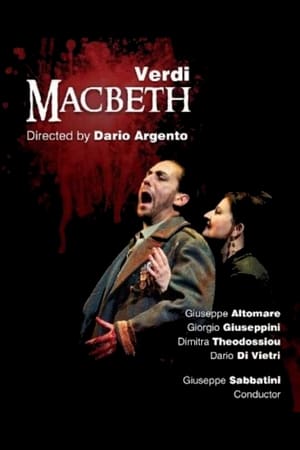
This hard-edged postmodern production of Giuseppe Verdi's haunting masterpiece brings the story of Shakespeare's bloody tragedy to vivid life, characterized by spine-tingling atmospherics and a triumphant debut by American baritone Thomas Hampson in the title role. This Zurich Opera House production also features a mesmerizing turn by Paoletta Marrocu as the beautiful, power-hungry Lady Macbeth, while striking sets and costumes further enhance the duality of the main character whose rise and fall mirror the darkest impulses of man. Replete with supernatural mystery, sexual tension, and violent power plays, this timeless story remains gripping and chilling for today's audiences and boasts some of the most astonishing music of Verdi's legendary body of work.
County Durham, England, 1984. The miners' strike has started and the police have started coming up from Bethnal Green, starting a class war with the lower classes suffering. Caught in the middle of the conflict is 11-year old Billy Elliot, who, after leaving his boxing club for the day, stumbles upon a ballet class and finds out that he's naturally talented. He practices with his teacher Mrs. Wilkinson for an upcoming audition in Newcastle-upon Tyne for the royal Ballet school in London.
A collaboration between award-winning American filmmaker Sofia Coppola and Italia haute couture king Valentino comes in the form of a revival of Giuseppe Verdi's classic opera, La Traviata. Captured live from the Teatro dell'Opera di Roma.
Inspired by Mary Shelley’s Gothic masterpiece, Frankenstein is the world premiere of Liam Scarlett’s new full-length ballet. A story of betrayal, curiosity, life, death and, above all, love, exploring the very depths of human nature. Federico Bonelli dances the role of Victor Frankenstein, Laura Morera is his Elizabeth, and Steven McRae is the creature. Koen Kessels conducts Lowell Liebermann’s newly commissioned score in this co-production between The Royal Ballet and San Francisco Ballet.
In the spring of 1913, Parisian businessman Gabriel Astruc opens a new theater on the Champs Elysées. The first performance is the premiere of Igor Stravinsky's 'The Rite of Spring', danced by the Ballet Russes. The rehearsal process is extremely fraught: the orchestra dislike Stravinsky's harsh, atonal music; the dancers dislike the 'ugly' choreography of Vaslav Nijinsky. The volatile, bisexual Nijinsky is in a strained relationship with the much older Sergei Diaghilev, the Ballet Russes' charismatic but manipulative impresario. Public expectation is extremely high after Nijinsky's success in 'L'apres-midi d'un faune'. Finally, 'The Rite of Spring' premieres to a gossip-loving, febrile, fashion-conscious Parisian audience sharply divided as to its merits.
John Adams’s mesmerizing score, in the powerful production of Penny Woolcock, tells the story of one of the pivotal moments in human history—the creation of the atomic bomb. Conducted by Alan Gilbert in his Met debut, this gripping opera presents the human face of the scientists, military men, and others who were involved in the project, as they wrestled with the implications of their work. Baritone Gerald Finley gives a powerful star turn in the title role as the brilliant J. Robert Oppenheimer.
In Baden-Baden, Nayo Titzin follows the producers of the opera Don Giovanni, created for the Innsbruck Festival of 2006. He is looking for a musical truth... What if Mozart's masterwork Don Giovanni had been interpreted in a wrong way for more than two centuries? Conductor René Jacobs, famous for his performance of Così fan tutte and laureate of a Grammy Award for his innovative recording of The Marriage of Figaro, comes back with new ideas on the comprehension of one of the greatest operas of all times. In this relevant documentary, Nayo Titzin clarifies and highlights all the brightness of those melodies and recitatives. Rewarded with many praises in the international press, this production shows the dramaturgical perfection of the "opera of the operas," the absolute of the genre, as Wagner once said. Once more, the Bulgarian director offers a fun and subtle report, and makes sure that everyone will understand this myth.
This all-star cast is framed by Peter Hall’s gritty, realistic production and conducted by James Levine, who brings out all the surging emotion and gripping drama in Bizet’s score. At the center of the story is Agnes Baltsa, whose smoky mezzo is tailor-made for the gypsy Carmen, an independent woman who glories in obeying only her own rules, but who is haunted by fate. Superstar tenor José Carreras is Don José, the solider from a small town who catches Carmen’s eye and is destroyed by his growing obsession with her. Samuel Ramey is the charismatic matador Escamillo, who lures Carmen away from Don José with tragic result. Leona Mitchell is Micaëla, the simple girl from Don José’s hometown who cannot save him. March 21, 1987 Matinee Broadcast.
The 1987 Glyndebourne production of Ravel's L'enfant et les sortilèges, designed by Maurice Sendak and directed by Frank Corsaro.
In February 1972, the American president Richard Nixon went to China to meet Mao Zedong. In the context of the war in Vietnam and the cold war, this encounter marked a turning point in Chinese‑American relations. John Adams, a major musical figure of the last forty years, made this event of contemporary history the subject of his first opera. Nixon in China tackles the political thaw instigated by ping-pong diplomacy, begun by the invitation of the American table tennis players by their Chinese counterparts, one year before the presidential visit. A mesmerising work in which the pulsations and repetitions typical of minimalism are combined with melodic lines of great lyricism. For its entry into the Paris Opera repertoire, this work has been entrusted to the director Valentina Carrasco, who underlines the importance and the mediating power of Chinese national sport in history.
Simultaneously filmed English language version of a period operetta, in which a Polish noblewoman is romantically linked with a revolutionary student activist.
When Barbe-bleue loses his fifth wife, the turbulent Boulotte is selected at random to be the next one. But Barbe-Bleue falls in love with Hermia – who loves the shepherd Saphir – and soon wearies of Boulotte. So, he asks his alchemist to concoct for him an “anti-wife” philtre. But, as on the previous occasions, it is merely a sleeping potion and Boulotte wakes up the other five “dead” wives. They reappear, dressed up as gypsies and bring the truth to light.
Disciplined Italian composer Antonio Salieri becomes consumed by jealousy and resentment towards the hedonistic and remarkably talented young Salzburger composer Wolfgang Amadeus Mozart.
In a castle high on a hill lives Edward; a boy created by an eccentric inventor. When his creator dies he is left alone and unfinished with only scissors for hands until a kindly townswoman invites him to live with her suburban family. Can Edward find his place in the well-meaning community which struggles to see past his curious appearance to the innocence and gentleness within?