The common European adder, the only venomous snake native to Estonia, has often been feared and hated among the people. "Tavaline rästik" attempts to see behind the fears and introduce this unique reptile.
Unlike our dream of becoming a great filmmaker, the movie boards that adults talk about are tough. We are looking for our idol, Bong Joon-ho...
It was a family secret, hidden for decades - until now. With the help of commercial DNA bases, SVT's US correspondent Carina Bergfeldt sets out in search of her secret half-brother, who according to a rumour exists. The hunt came to affect her whole life.
Delves into the world of makeshift oil refineries and the stark realities of life in war-torn northern Syria,. Mahmood is a prominent figure in these operations, navigating complex working conditions and local dynamics.
Although first glance reveals little more than stones and sand, the desert is alive. Witness moving rocks, spitting mud pots, gorgeous flowers and the never-ending battle for survival between desert creatures of every shape, size and description.
Takes us to locations all around the US and shows us the heavy toll that modern technology is having on humans and the earth. The visual tone poem contains neither dialogue nor a vocalized narration: its tone is set by the juxtaposition of images and the exceptional music by Philip Glass.
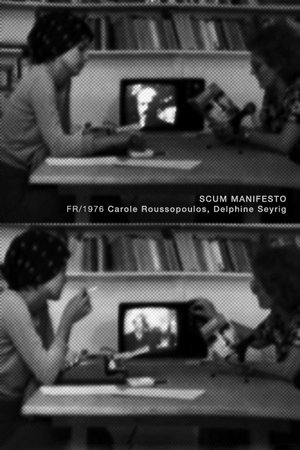
Delphine Seyrig reads passages from a Valerie Solanas’s SCUM manifesto.
A group of African American students at the University of Arizona reveals the importance of political spaces within Universities in times of intolerance.
In this tape, Ko Nakajima and Video Earth Tokyo interview a homeless man. The subject is initially angry and frustrated, but gradually opens up and shares stories about his life. Under A Bridge was later broadcast on cable television.
A look at what it's like to be gay and black in America.
An epic story of adventure, starring some of the most magnificent and courageous creatures alive, awaits you in EARTH. Disneynature brings you a remarkable story of three animal families on a journey across our planet – polar bears, elephants and humpback whales.
Deep Blue is a major documentary feature film shot by the BBC Natural History Unit. An epic cinematic rollercoaster ride for all ages, Deep Blue uses amazing footage to tell us the story of our oceans and the life they support.
We follow a team of scientists on a gruelling expedition into a remote rainforest in Mozambique. They're hoping to prove that Mount Mabu's animals and insects are unique and in need of official protection.
This film looks at the world of children with hearing loss and the importance of early diagnosis. With its straightforward, rigorous cinematic style and intimate approach to the subject, the film focuses on the human rather than the technical side of the problem of hearing impairment.
This beautiful and poignant film was commissioned by TENI (Transgender Equality Network Ireland) and is a conversational piece which explores gender identity and transgender experiences in Ireland.
A short silent documentary on the making of the 1931 Abel Gance directed film, "La Fin du Monde".
Glauco Mattoso, a blind sadomasochistic poet, agrees to participate in a documentary about his own life, but the conditions he imposes raise difficulties to the work of the young director.
In the Moroccan desert night dilutes forms and silence slides through sand. Dawn starts then to draw silhouettes of dunes while motionless figures punctuate landscape. From night´s abstraction, light returns its dimension to space and their volume to bodies. Stillness concentrates gaze and duration densify it. The adhan -muslim call to pray- sounds and immobility, that was condensing, begins to irradiate. And now the bodies are those which dissolves into the desert.
The Lanexang Kingdom country has been divided into three Kingdoms: the Vientiane Kingdom, the Luang Prabang Kingdom, and the Champasak Kingdom. Each of these three has developed its capital city into great cornerstones of the nation of Laos. Explore these three old capitals and other unique areas of Laos from breathtaking heights, such as Xiengkouang, where the scars of the war remain.
Alcoholism and its Ill-Effects was considered to be one of the most popular science propaganda (or educational) films produced in Russia before the revolution of 1917. Alexander Khanzhonkov, the most prominent Russian film producer of that era, financed a special department dedicated to non-fictional cinema, despite the fact that such films were not commercially successful. Unfortunately, not a single copy of the film has survived to the present day. All that remains are 12 frames, which were used by Izvolov to create this reconstruction. He also used extracts from critical reviews, published at the time of the film’s release, to produce a soundtrack.