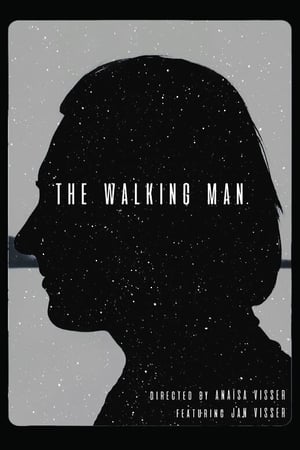
In the haunting stillness of post-Soviet suburbia, a lone man walks with purpose — toward the river. With each heavy step across the gray, lifeless field, he carries not only his own weight, but the burdens of an entire generation. He does not speak. He does not turn back. We do not know his name. But we know where he’s going. The River awaits. A meditation on isolation, purpose, and the absurdity of existence, "Идущий к реке" captures the Slavic soul in a single low-res frame. What started as a simple clip from a local Russian TV segment became a viral icon of stoicism, despair, and meme-worthy introspection.
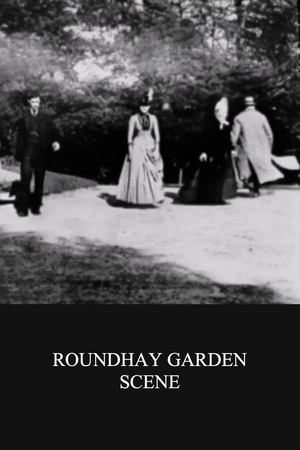
The earliest surviving motion-picture film, and believed to be one of the very first moving images ever created, was shot by Louis Aimé Augustin Le Prince using the LPCCP Type-1 MkII single-lens camera. It was taken on paper-based photographic film in the garden of Oakwood Grange, the Whitley family house in Roundhay, Leeds, West Riding of Yorkshire (UK), on 14 October 1888. The film shows Adolphe Le Prince (Le Prince’s son), Mrs. Sarah Whitley (Le Prince’s mother-in-law), Joseph Whitley, and Miss Harriet Hartley walking around in circles, laughing to themselves, and staying within the area framed by the camera. Roundhay Garden Scene is often associated with a recording speed of around 12 frames per second and runs for about 2 to 3 seconds.
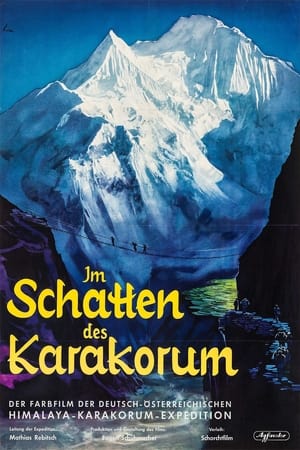
In 1954, a German-Austrian expedition led by Mathias Rebitsch set off for the difficult-to-access Karakoram Mountains, geographically north of the Himalayas. They come across the Hunza, a people who live in the valley of the same name and believe they are descended from the soldiers of Alexander the Great. The documentary conveys impressions of the poor life of the Hunza people, the harvest, a court hearing, festivals and the children's everyday school life. Finally, the expedition sets off again and sets up its main camp on the moraine ridge of a glacier, where they measure the glacier and the earth's magnetic field. Finally, some men from the research community set off for a sub-peak of Batura.
A flickering dance of intriguing imagery brings to light the possibilities of ordinary movements from the everyday which appear, evolve and freeze before your eyes. Made entirely from archive photographs and footage from the earliest days of moving image, All This Can Happen (2012) follows the footsteps of the protagonist from the short story 'The Walk' by Robert Walser. Juxtapositions, different speeds and split frame techniques convey the walker's state of mind as he encounters a world of hilarity, despair and ceaseless variety.
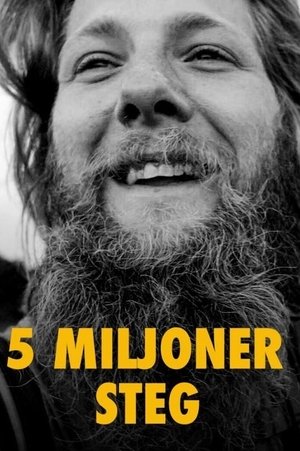
Sven has a dream. Once in his life he wants to walk the Camino de Santiago - the Way of St. James. But that seems impossible, Sven has Usher syndrome, a disease which slowly, inexorably robs him of hearing and vision. Profoundly deaf and completely blind since 2010, he can only communicate using a special hearing aid in the spoken language.
A lonely individual embarks on a scenic drive up a mountain, seeking fresh air and a renewed perspective. At the summit, they wander through serene surroundings, allowing the natural landscape to provide a mental reset and offer clarity—a deliberate retreat to refresh both mind and spirit.
Venerdì Santo - Bronte
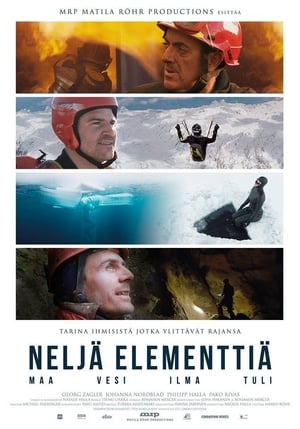
A journey into four classical elements through the four main characters of the film. The main characters in the movie represent each of their own elements.
A man ventures out into the streets of a pandemic-ridden London.
For over 6 years, Matt Green, 37, has been walking every street in New York City – a total of more than 8000 miles. The World Before Your Feet tells the story of one man’s unusual quest and the journey of discovery, humanity, and wonder that ensues.
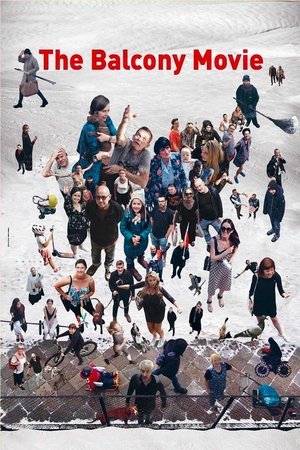
Composed from the conversations that the director holds with people passing by in the street under his Warsaw apartment, each story in 'The Balcony Movie' is unique and deals with the way we try to cope with life as individuals. All together, they create a self-portrait of contemporary human life, and the passers-by present a composite picture of today's world.
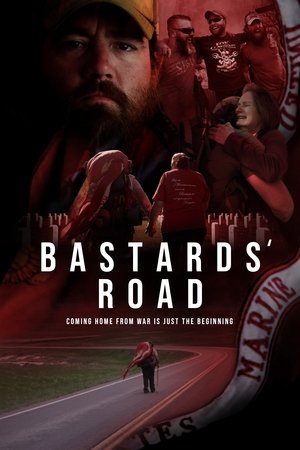
Walking 5,800 miles around the United States, Veteran Jonathan Hancock uses the solitude of the road and the company of his fellow Marine brothers and the families of their fallen to successfully manage his wounds from war.
The ninth opus of his Walker Films series, which was shot at Centre Pompidou.
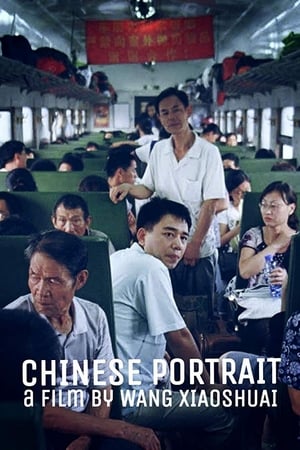
Shot over the course of ten years on both film and video, the film consists of a series of carefully composed tableaux of people and environments. Pedestrians shuffle across a bustling Beijing street, steelworkers linger outside a deserted factory, tourists laugh and scamper across a crowded beach, worshippers kneel to pray in a remote village. With a painterly eye for composition, Wang captures China as he sees it, calling to a temporary halt a land in a constant state of change.
The last remaining production of Le Prince's LPCC Type-16 (16-lens camera) is part of a gelatine film shot in 32 images/second, and pictures a man walking around a corner. Le Prince, who was in Leeds (UK) at that time, sent these images to his wife in New York City in a letter dated 18 August 1887.
Buried Seeds, a film by Andrei Severny, is a timeless story of human passion, willpower, and resolve in the face of adversity. The film follows Michelin Star Chef Vikas Khanna's on his journey as an immigrant. Born with clubbed feet in Amritsar, Vikas is bullied by his classmates. Khanna takes refuge in his grandmothers kitchen and discovers his passion for the vivid traditions of Indian cuisine. At the age of 29, Vikas moves to New York with nothing in his pocket and ends up in a homeless shelter. Through years of struggle and hard work Vikas opens his first Indian restaurant in Manhattan. Over time Vikas Khanna grows to become one of the most influential chefs in the world and a cultural ambassador of his nation. While wealth and glory may be transient, what truly defines him is the will to create himself every single day.
Every Christmas, Bruce Mertz lights up the neighborhood with the 50,000 lights covering his house. For decades he's obsessively added to his display, creating beautiful, towering fixtures that people travel across the country to see. In this offbeat, touching portrait, we learn what drives him, and discover how a kid who grew up on a farm with no electricity became Mr. Christmas.
Documentary about the two big resources in the North Atlantic, fish and oil, and the impact of their exploitation on the environment in various countries on both sides of the Atlantic.
This video has won festival prizes in Chicago and Rotterdam and has been declared Norway’s finest video for tourists by “Aftenposten”, one of Norway’s largest newspapers, witch wrote: “The reality of this region, communicated by craftsmen who know what they are going, is by itself fantastic enough. Here you will see real people – fishermen and Sami – in our best known travel destination, in magnificent, flowing scenes revealing rapturous artistic flair. Three cheers!” Life in this part of the country is totally dependent on nature. Winter storms, cold polar nights, the midnight sun and warm summer days. Communities that rebuilt themselves after being totally destroyed during World War II. You can take part in all of this and experience life at the North Cape, the northern outpost of Europe. You will find yourself watching this video time and time again…
What does a retired police officer, a dog trainer, the founder of a political party and anti-government protesters have in common? They've all met on the streets of Bucharest, 23 years after the Romanian Revolution, determined to reclaim the public space. Vlad Petri is following their stories for one year, from the first days of the anti-government protests to the final days of the Referendum against the President. The film raises questions about the role of the public space, the power of the individual and the understanding of democracy in a society caught between a communist past and an uncertain future.